

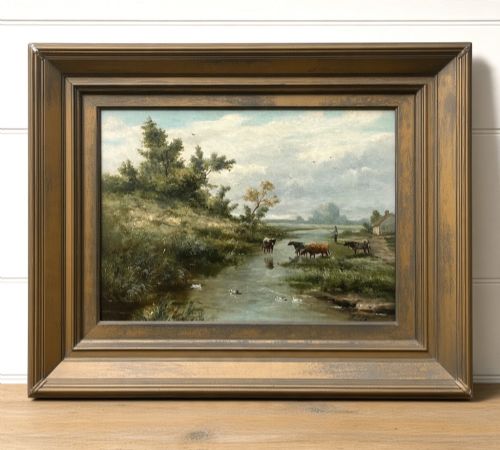
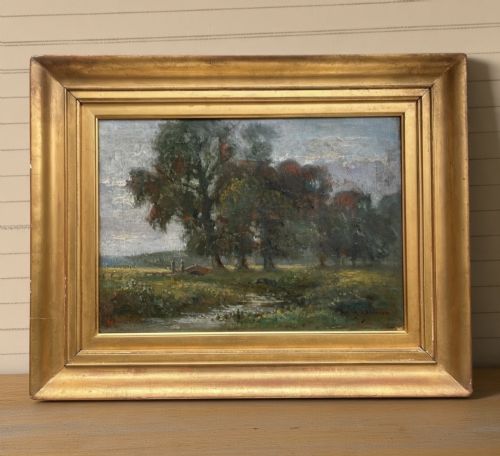
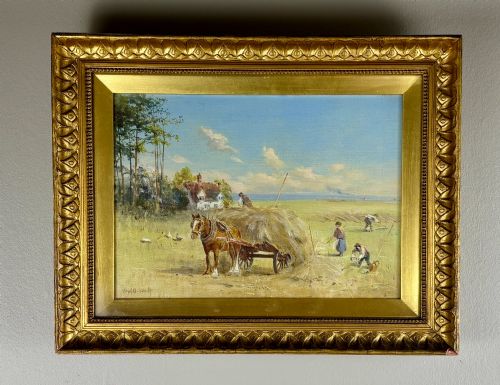
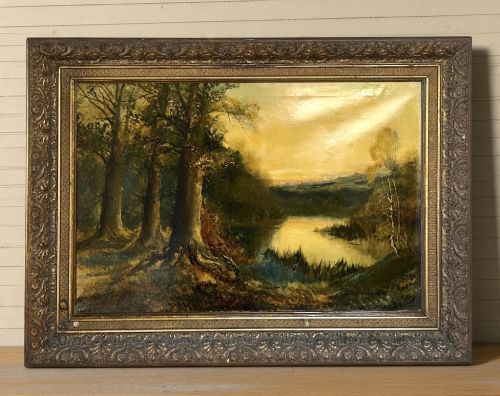
Vintage Gilt Frame Painting
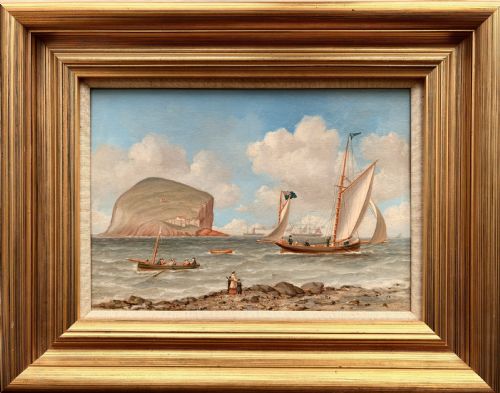
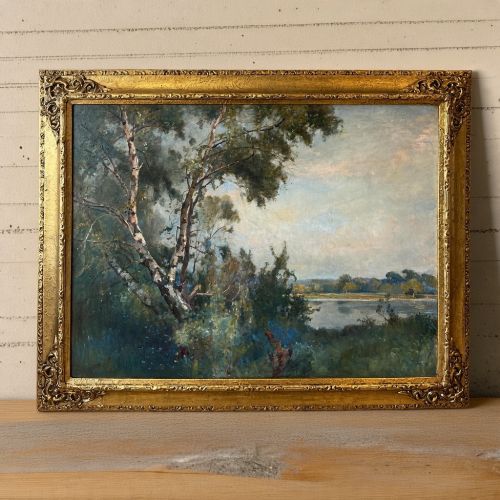
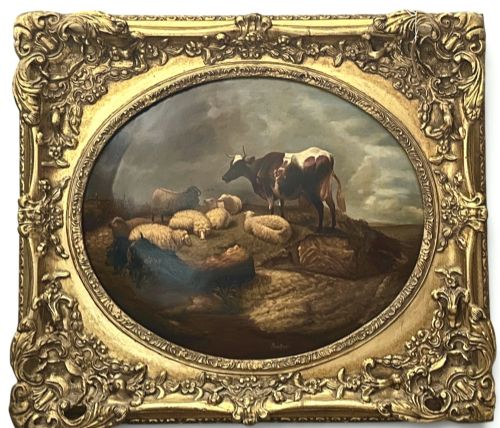
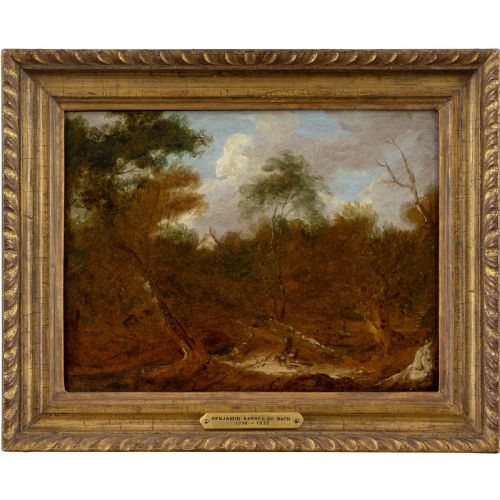
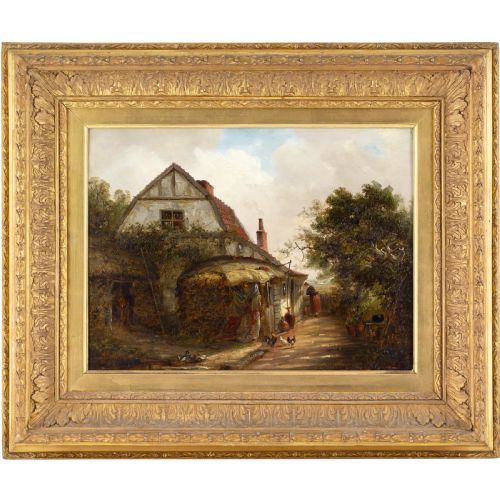
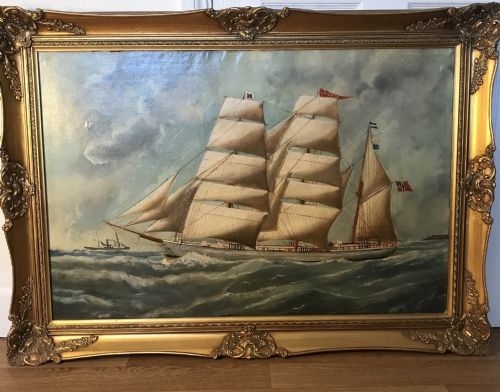
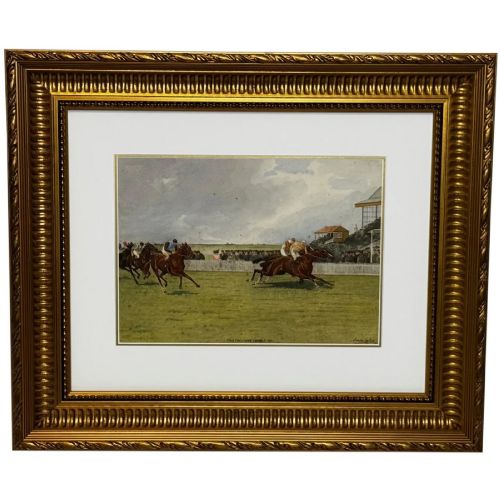
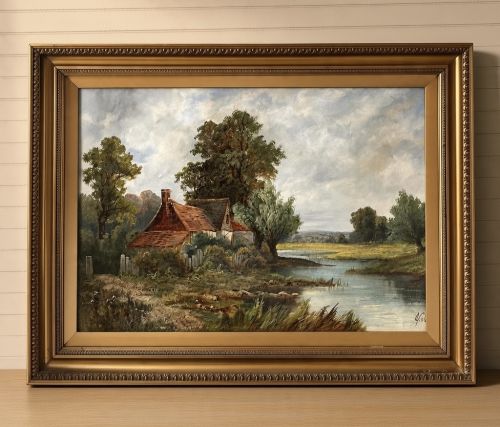
A vintage gilt frame painting brings the warmth of nineteenth-century pastoral scenes and mid-century coastal landscapes directly into a room.
Vintage Gilt Frame Painting
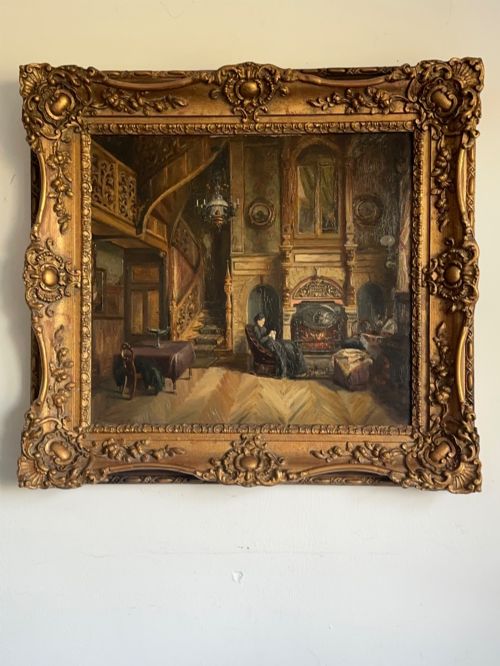
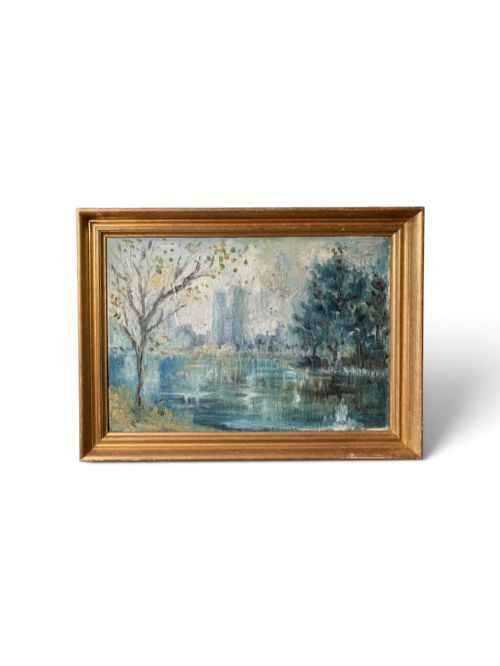
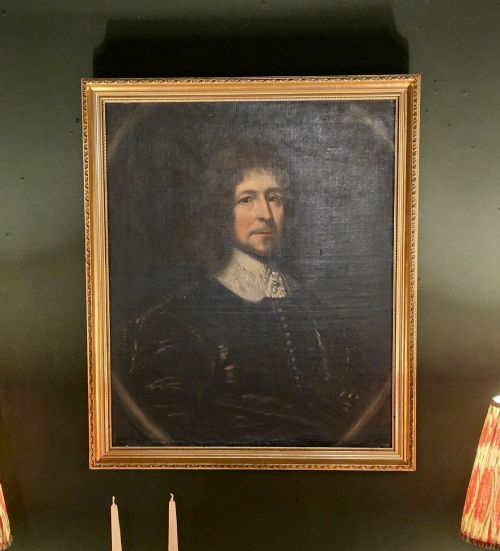
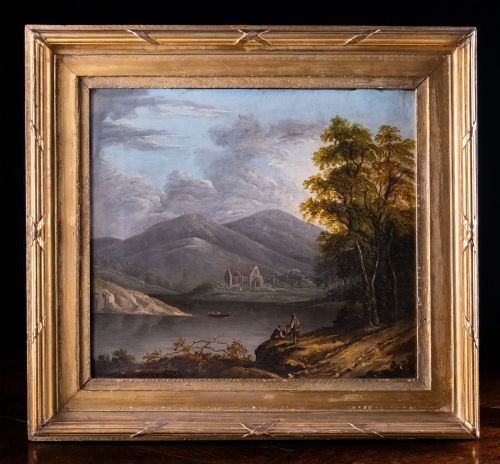
A vintage gilt frame painting spans oil on canvas, oil on board, and watercolour works housed within ornate or gilded surrounds. The selection ranges from Victorian maritime scenes and Edwardian rural views to mid-century impressionist landscapes and genre portraits.
Buyers will encounter works originating from British, French, Italian, and Spanish schools across the nineteenth and twentieth centuries. These pieces combine traditional subject matter, such as river landscapes and hunting dogs, with period framing that defines their overall character.
Materials and construction methods
The primary supports consist of canvas, wooden board, paper, and panel, carrying layers of oil paint or watercolour pigments. Frames are typically constructed from wood and gesso, finished with metallic leaf or gilt paint to create the distinctive golden border.
Artists employed traditional brushwork on prepared surfaces, while framers shaped timber mouldings to house and protect the artwork. The combination of oil paint or pigment with sturdy wooden supports ensures long-term preservation of the painted surface.
Vintage Gilt Frame Painting Retail Price Guide 2026
Typical asking prices for vintage gilt frame painting among the pieces listed under this phrase on Sellingantiques today, from the lower quarter to the upper quarter. They describe what is for sale here now, not the wider market.
Listings feature works spanning the nineteenth century through the mid-twentieth century, including Victorian maritime scenes and Edwardian watercolours.
Distinguishing quality in gilt-framed art
Quality rests in the precision of the brushwork and the harmony between the artwork and its housing. Superior pieces demonstrate confident handling of light and form by named or accomplished artists, paired with original gesso frames that retain their depth of detail.
The integrity of the canvas or board surface and the preservation of the gilding dictate the overall standard. Finer examples maintain crisp detail in both the painted composition and the moulded frame decoration without heavy later restoration.
Hugh Barry scott·Henry Cooper·Henri Schafer·Edward J Humphries·Frederick John Aldridge·Charles Wyatt Warren·George Hamilton Constantine·Giovanni Milone·Jessie Hamilton·Edwin Marsh·Francois Boucher·Tom Rowden·Louis Reid Deuchars·Andrew Beer·Moss Williams·Achille Bron·John Stone·William Calcott Knell
The Vintage Gilt Frame Painting Glossary
- Giltwood
- Wood carved and coated with gold leaf or a gold-coloured metallic finish. This material forms the ornate borders characteristic of traditional picture framing.
- Oil on Canvas
- Pigment mixed with drying oil applied to a stretched cloth support. This technique allows for rich colour blending and textured brushwork.
- Gesso
- A plaster mixture applied to wood frames as a base for gilding. It provides a smooth surface for intricate moulded details.
- Genre Painting
- Artwork depicting scenes from everyday life involving ordinary people. These subjects often capture domestic interiors or social interactions.
- Post Impressionist
- A stylistic approach following impressionism that emphasises symbolic content and distinct brushstrokes. Works in this category show individualistic interpretations of light and form.
Vintage Gilt Frame Painting: Frequently Asked Questions
How do I clean a gilt frame?
Dust the surface gently with a soft dry brush to remove loose particles without disturbing the metallic finish. Avoid using water or liquid solvents on gilded wood, as moisture can lift the delicate gold leaf.
For stubborn grime, consult a professional conservator rather than applying household cleaners. Gentle maintenance preserves the original gesso and surface sheen.
Can I hang these paintings in direct sunlight?
Direct sunlight causes fading in oil paints, watercolours, and paper supports over extended periods. Position artworks on interior walls away from bright windows to protect the pigments.
UV-filtering glass or acrylic can offer additional protection for works on paper and watercolours. Stable indoor temperatures also prevent the wooden stretcher and frame from warping.
Are original frames important?
Original frames maintain the historical integrity and aesthetic balance intended by the artist or period. Matching a nineteenth-century canvas with a contemporaneous gilt gesso frame enhances the overall character.
Even when frames show minor age-related wear, their originality contributes to the authenticity of the piece. Collectors often value works that retain their matching period housings.
How do I identify the age of a painting?
Examine the canvas preparation, stretcher construction, and materials used on the reverse of the work. Nineteenth-century pieces typically feature hand-hammered tacks and older framing methods.
Artist signatures, inscriptions, and labels on the backboard provide further clues for dating. Stylistic elements and clothing details in portraits also point to specific decades.