





Edwardian Rural Oil Painting
An edwardian rural oil painting records the quiet valleys, harvests and cottage scenes of the British countryside through the brushwork of the period.
Edwardian Rural Oil Painting
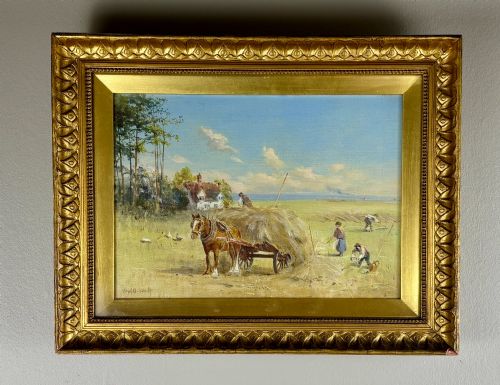
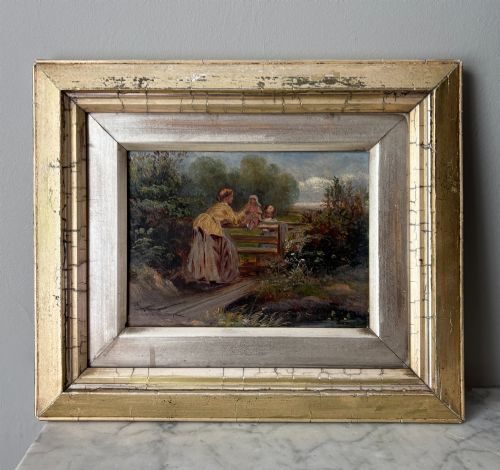
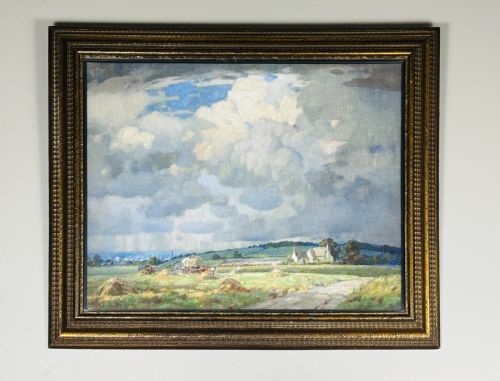
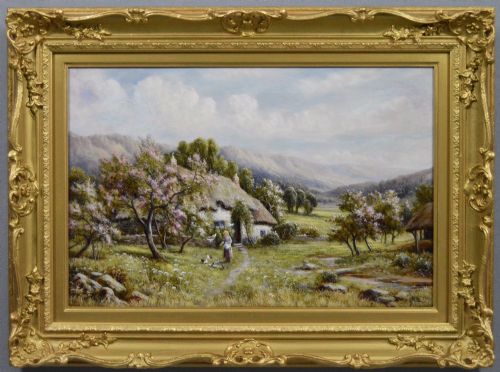
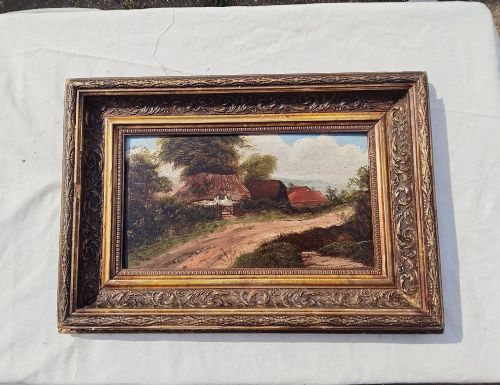
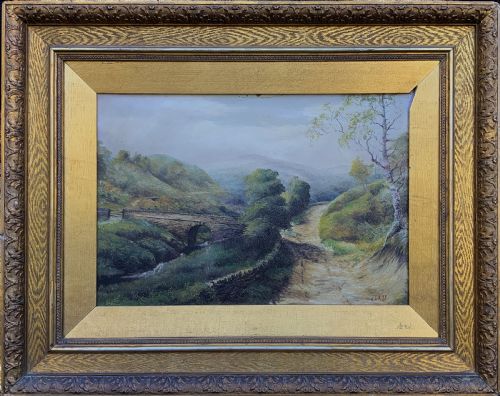
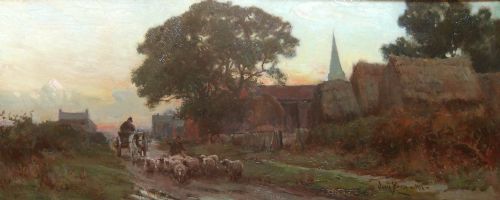
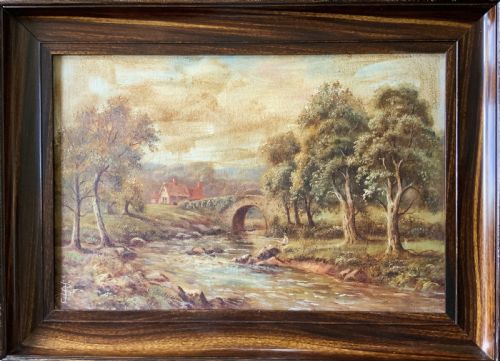
When you search for an edwardian rural oil painting, you find works depicting agricultural life, streams, and village cottages across nineteenth-century and early twentieth-century periods. The subjects centre on hayfields, heavy horses, and farmsteads observed by British artists.
You are most likely to meet canvases and boards dated from nineteen hundred to nineteen thirty, painted in styles spanning British impressionism and traditional landscape schools. These pictures capture open fields, livestock by water, and the quiet routines of rural communities.
Materials and application
The works utilise oil paint applied to canvas, wood, board, or card, often held within gilt wood or giltwood frames. Pigments were brushed to build texture, capturing the light of day or the fading tones of eventide across fields and rooftops.
Artists worked either outdoors in the open air or developed their compositions from sketches of specific locations such as Wharfedale, Kent, and Sussex. Support materials varied between woven canvas stretched over wooden bars and rigid boards or cards.
Edwardian Rural Oil Painting Retail Price Guide 2026
Typical asking prices for edwardian rural oil painting among the pieces listed under this phrase on Sellingantiques today, from the lower quarter to the upper quarter. They describe what is for sale here now, not the wider market.
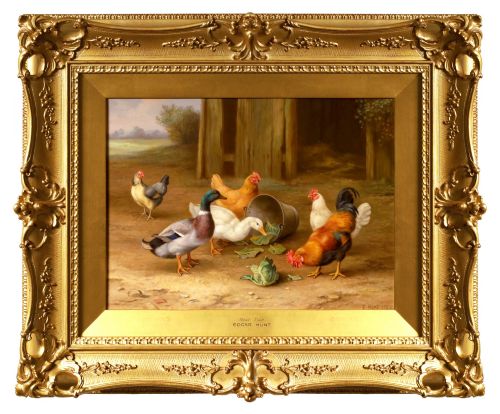
Geese and heavy horses frequently demand the painter's attention, supervising rural life with quiet dignity.
Quality and execution
Quality rests on the confidence of the brushwork and the artist's ability to render atmosphere, light, and perspective within a rural scene. Stronger examples display considered composition and handling of pigment, particularly in depicting skies, foliage, and livestock.
The distinction between standard works and superior pieces lies in the precision of the local detail, such as the architecture of a thatched cottage or the movement of heavy horses at work.
Herbert Royle·William Sydney Cooper·Ernest Higgins Rigg·Frederick James Knowles·Owen Bowen·William Greaves
The Edwardian Rural Oil Painting Glossary
- Canvas
- A heavy woven fabric stretched across a wooden frame to serve as a painting support. It provides a textured surface that accepts oil paint well.
- Giltwood
- Wood carved and coated with gold leaf or a gold-coloured finish to form a decorative frame. Such frames complement the warm tones of traditional landscape oil paintings.
- British Impressionism
- A painting style influenced by French movements but adapted by British artists to capture local light and outdoor scenes. It employs looser brushstrokes and brighter palettes.
- Oil on Board
- A technique where pigment is applied to a rigid wooden or cardboard panel rather than woven fabric. This support was practical for artists working outdoors.
Edwardian Rural Oil Painting: Frequently Asked Questions
What subjects appear in these paintings?
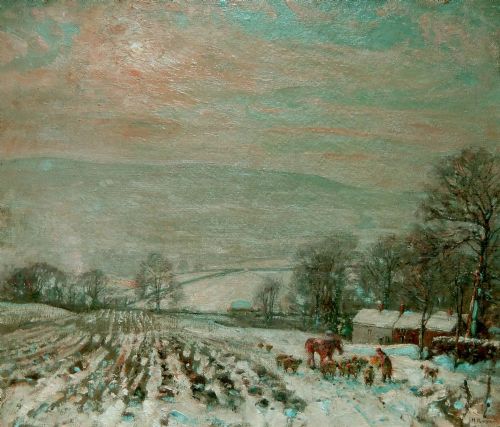
The compositions show rural life, including haymaking, farmsteads, cottages, rivers, and grazing sheep or cattle. Many pieces record specific regions across Britain, from Yorkshire valleys to Kentish streams.
Figures working in the fields or near village rooftops also frequently appear, captured during daylight, sunset, or winter conditions.
How should I hang an oil painting?
Hang the picture away from direct sunlight and damp walls to protect the canvas, board, and gilt wood frame. Secure it to the wall using appropriate fixings suited to the weight of the frame.
Keep the painting at a stable room temperature to prevent the wood and canvas from expanding or contracting over time.
How can I tell the period of a painting?
Look to the artist's recorded dates, the style of the brushwork, and the framing materials used. Many works are signed by the artist or accompanied by period inscriptions on the reverse.
Paintings from the early twentieth century often reflect British impressionist tendencies, while nineteenth-century pieces may lean towards traditional pastoral schools.
Were these painted outdoors?
Many artists worked directly in the landscape, observing the changing light of hayfields and rivers firsthand. This practice allowed them to record natural atmospheric conditions accurately.
Other works were developed in studios using preliminary sketches and studies gathered during travels through the countryside.