




Vintage German Ceramics
These vintage german ceramics span delicate Rococo Revival figurines and robust stoneware bottles, offering tactile connection to centuries of European kiln traditions.
Vintage German Ceramics
Vintage german ceramics encompass a diverse range of fired clay objects, spanning decorative figurines, tableware, and lighting from various European periods. When exploring vintage german ceramics, collectors frequently encounter hard-paste porcelain figures, ornate centrepieces, and salt-glazed stoneware bottles originating from renowned manufacturing regions.
The selections available range from eighteenth-century Meissen sculptural groups to twentieth-century Art Deco half dolls and animal studies. Stylistically, the inventory moves between elaborate Rococo Revival ornamentation and clean, geometric twentieth-century forms.
Table lamps, wall sconces, and beer steins demonstrate the practical application of these ceramic skills alongside purely ornamental display pieces. Each item reflects the distinct aesthetic preferences of its specific decade of production.
How they were made
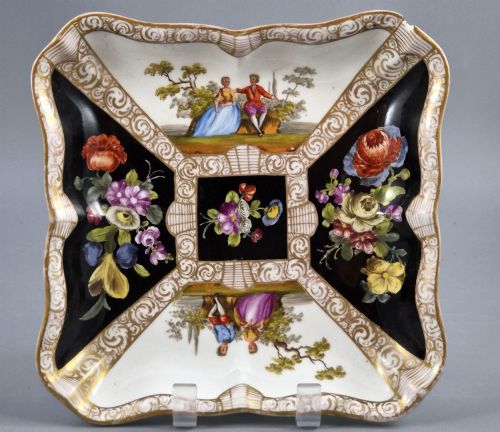
Hard-paste porcelain forms the structural foundation for many pieces, fired at exceptionally high temperatures with feldspathic ingredients to achieve a dense, vitrified body. Artisans applied coloured glazes and intricate hand-painted enamels over or under the glaze before secondary firings to set the pigments.
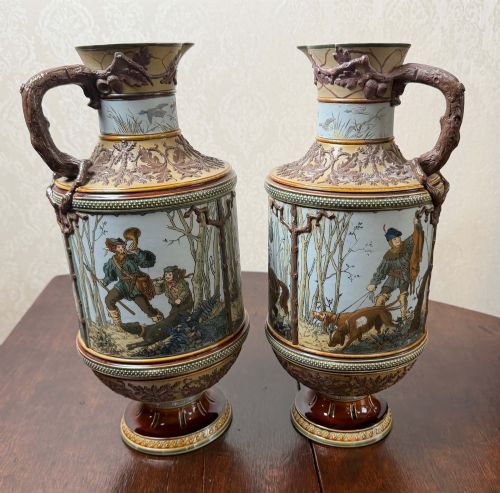
Stoneware items utilise salt glazing, where common salt is introduced into the kiln during high-temperature firing to produce a distinctive orange-peel texture on the surface. Delicate elements such as lace figures incorporate actual fabric dipped in slip before firing, burning away entirely to leave fragile ceramic threads.
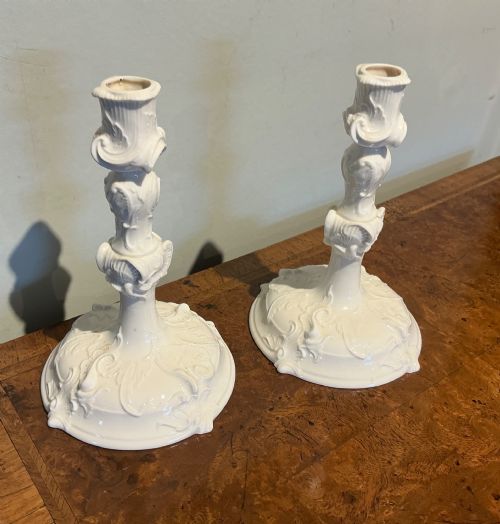
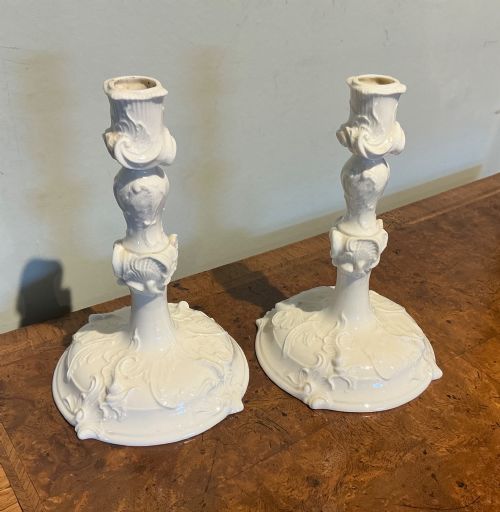
Gilding with gold leaf highlights specific architectural and sculptural details on mirror frames, urns, and centrepieces. Moulders employed press-moulding and slip-casting techniques to shape complex multi-figure groupings and symmetrical candlesticks.
Vintage German Ceramics Retail Price Guide 2026
Typical asking prices for vintage german ceramics among the pieces listed under this phrase on Sellingantiques today, from the lower quarter to the upper quarter. They describe what is for sale here now, not the wider market.
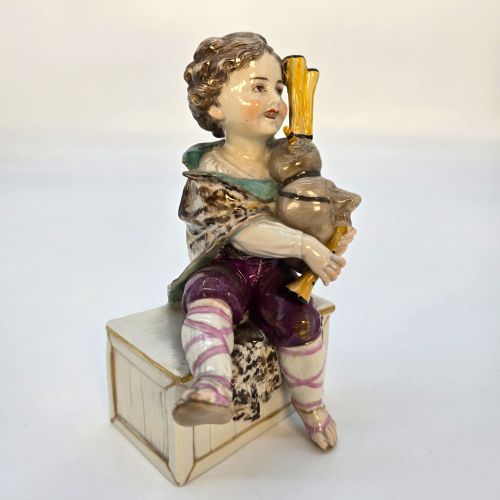
Even earnest porcelain musicians and harvesters occasionally share shelf space with a watchful spitz dog lamp holding vigil.
What varies in quality
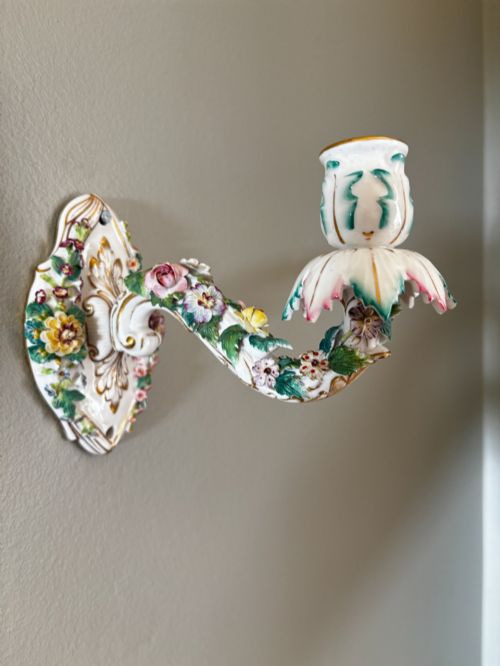
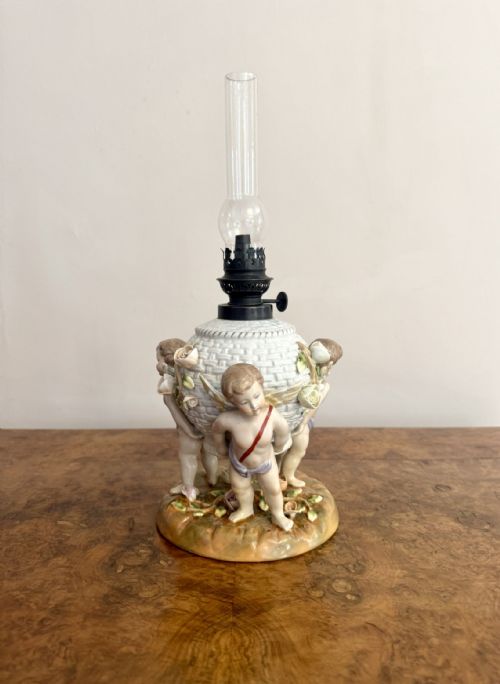
The complexity and scale of modelled elements, such as applied porcelain roses and intricate putti groupings, separate standard utilitarian items from exhibition-grade centrepieces. Heavier gilding and well-preserved enamel saturation indicate higher workshop standards during production.
Structural stability in large forms, such as fifty-centimetre figures or multi-branch candelabras, relies on expert kiln placement to prevent warping during intense firing processes.
Karl Ens·Nymphenburg·Meissen·Sitzendorf·Volkstedt Rudolstadt Factory·Mettlach Pottery·Paul Müller Selb·KPM·Richard Eckert·Müller Volkstedt MV Co·Fasold and Stuach·Rosenthal·Schierholz·Ernst Bohne Söhne
The Vintage German Ceramics Glossary
- Hard-paste porcelain
- A durable ceramic composition of kaolin and petuntse fired at high temperatures. This material produces a brilliant white body that resists scratching and absorbs minimal moisture.
- Salt glaze
- A vitreous coating formed on stoneware by introducing salt into the kiln during the final stages of firing. The sodium reacts with the clay body to create a textured, glossy finish.
- Putti
- Depictions of chubby male toddlers, often winged, frequently employed in European art from the Renaissance onwards. These figures populate decorative centrepieces and candle sconces.
- Blanc-de-chine
- A French term describing white porcelain lacking polychrome enamel decoration. This style relies entirely on the purity of the glaze and the precision of the underlying sculptural form.
- Faience
- Tin-glazed earthenware produced across Europe, known for its opaque white background and absorbent porous body. Artisans paint directly onto the unfired tin glaze to create colourful pictorial scenes.
Vintage German Ceramics: Frequently Asked Questions
How do I identify Meissen porcelain?
Meissen pieces frequently feature the underglaze blue crossed swords mark, hand-painted on the unglazed base. This emblem has undergone minor variations across different centuries of production.
Beyond the mark, look for exceptional sculptural detailing, particularly in hand-modelled flowers, facial expressions, and naturalistic postures on figurines.
Were these porcelain animals functional?
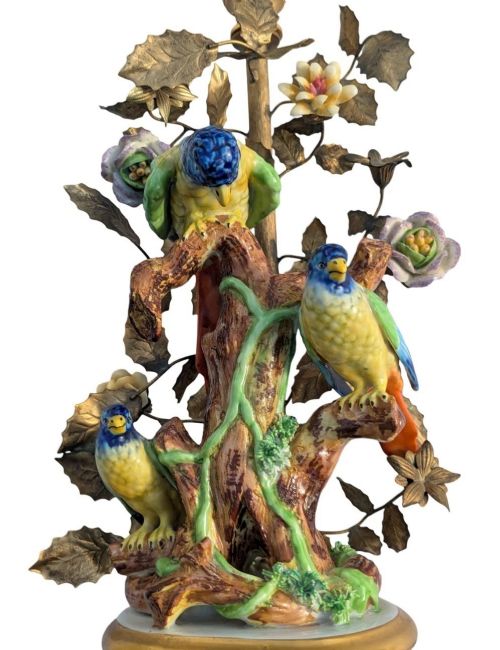
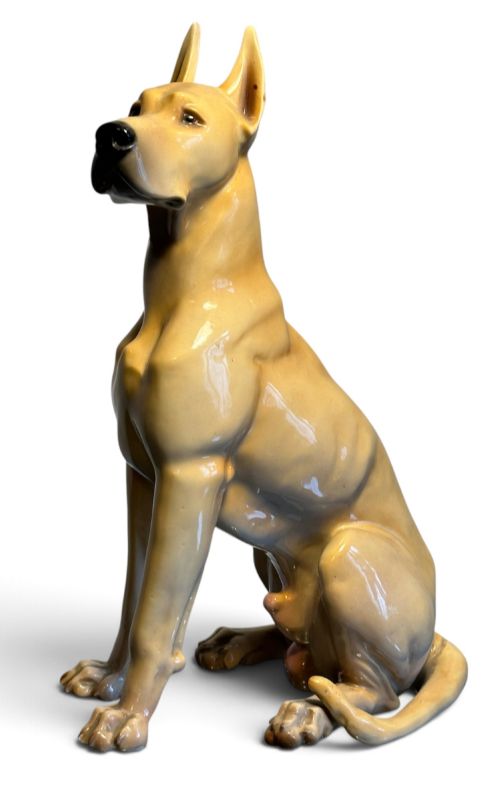
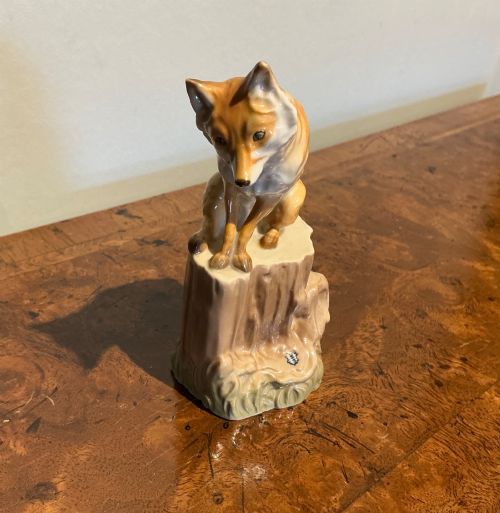
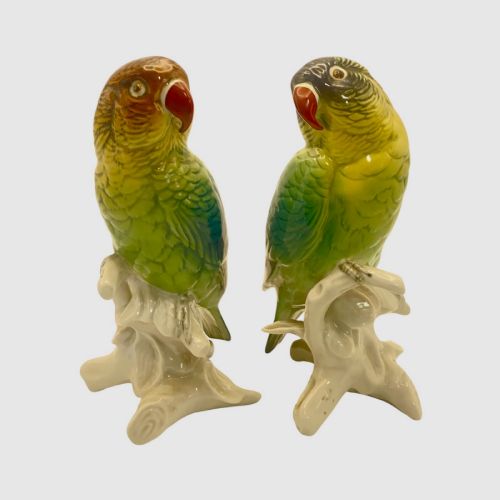
Most German porcelain animal figures, such as greyhounds, foxes, and parrots, served purely as decorative ornaments for mantelpieces and display cabinets. Some variations incorporated practical elements, acting as the bases for table lamps or oil lamps.
Larger animal models demonstrated the technical capability of the factory's modellers in capturing anatomical accuracy and lifelike textures.
What is an Art Deco half doll?
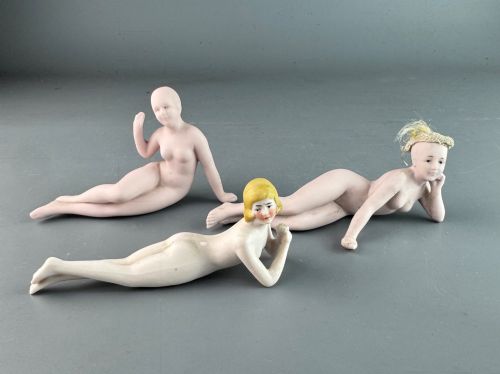
Half dolls are waist-up porcelain figures produced primarily during the early twentieth century as decorative covers for powder boxes, tea cosies, or whisk brooms. They often depict fashionable women in distinct Art Deco styles, featuring expressive facial painting and sculpted hairstyles.
Many examples include hollow bases designed to attach easily to fabric skirts or containers.
How should I clean antique porcelain?
Dust antique porcelain gently with a soft, dry brush to remove surface particles without risking abrasion. Avoid immersing pieces with fragile applied elements, such as lace or delicate flowers, in water.
For sturdier items, use lukewarm water and mild soap, ensuring you dry the ceramic thoroughly with a soft cloth afterwards.