
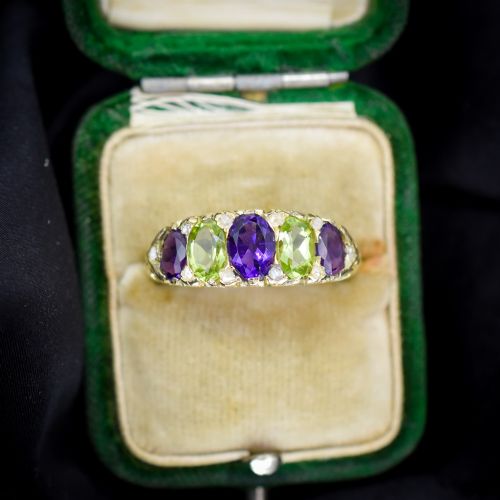
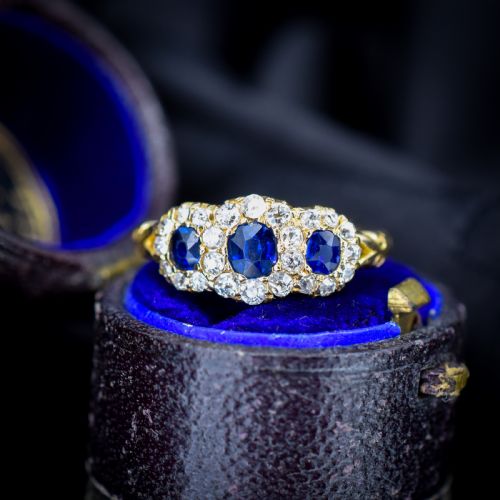
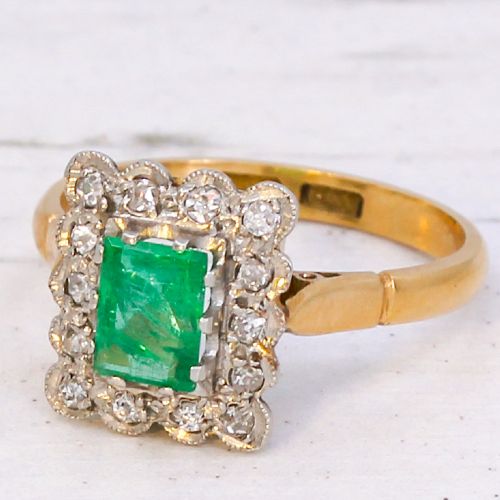
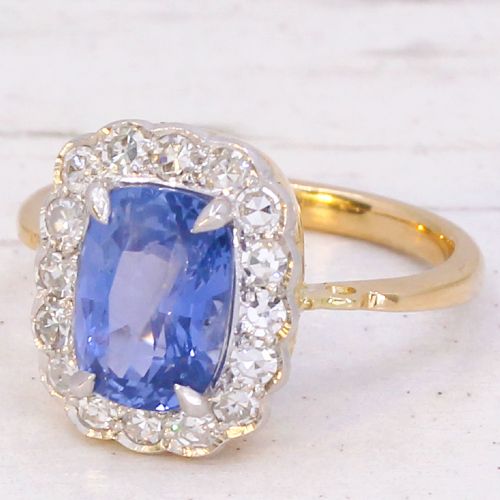
Vintage Gemstone Cluster Ring
A vintage gemstone cluster ring brings together central coloured stones and surrounding diamonds set in gold or platinum.
Vintage Gemstone Cluster Ring
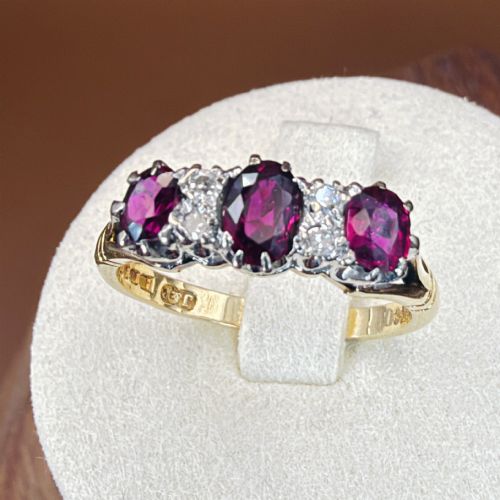
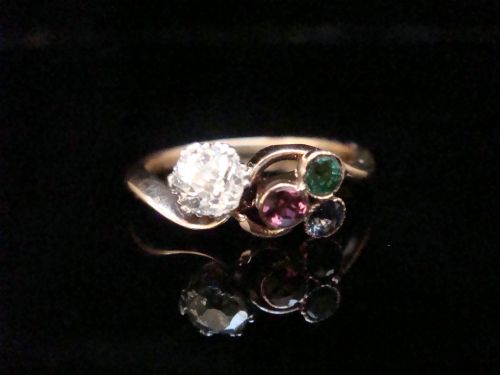
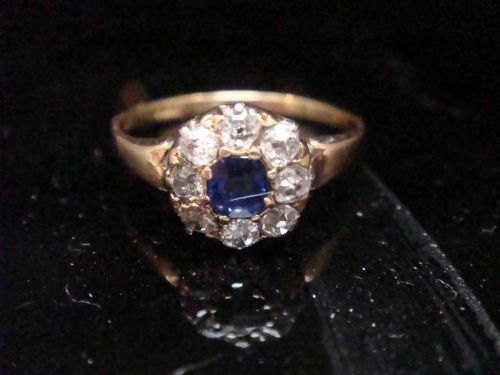
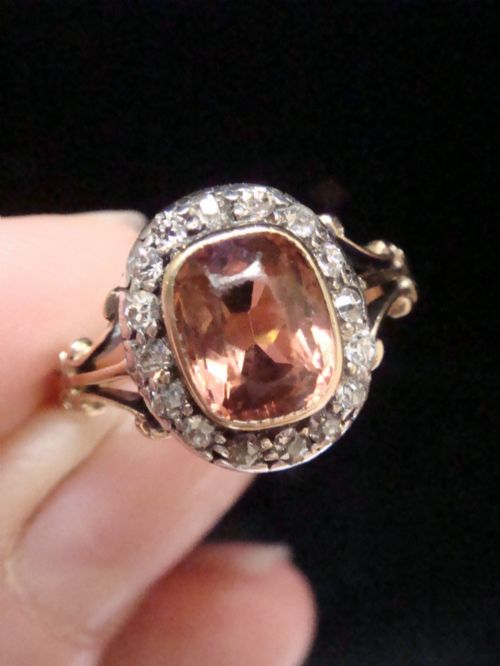
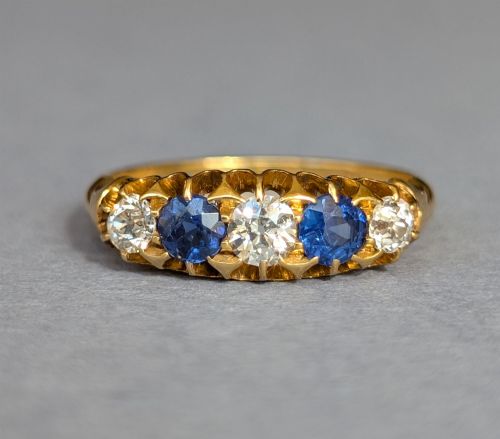
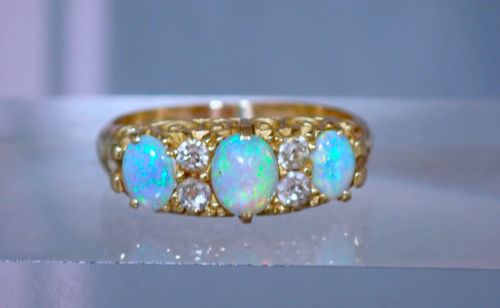
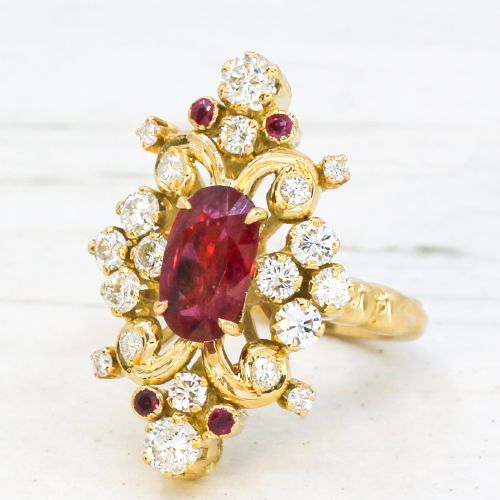
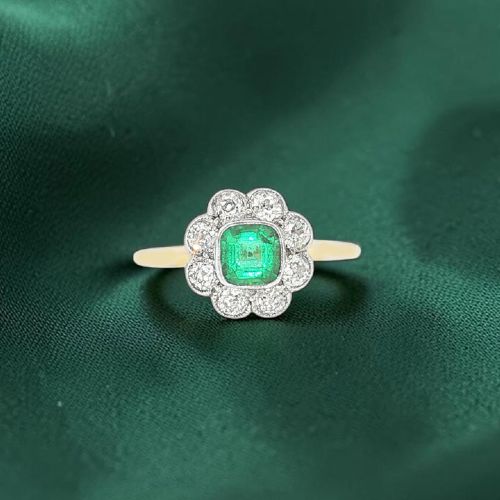
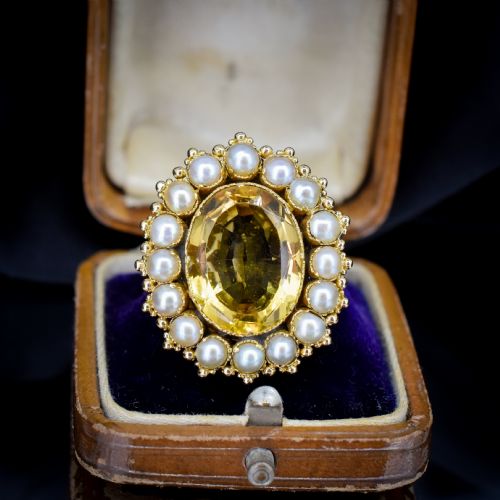
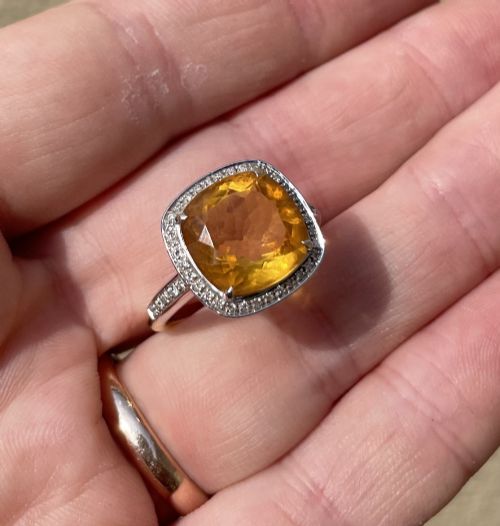
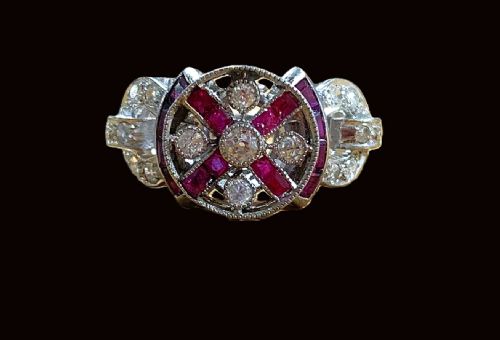
A vintage gemstone cluster ring groups a central stone, such as sapphire, ruby, emerald, or citrine, within a border of smaller diamonds or contrasting gems. These pieces span periods from the Georgian and Victorian eras through Edwardian, Art Deco, and mid-century designs up to the 1970s.
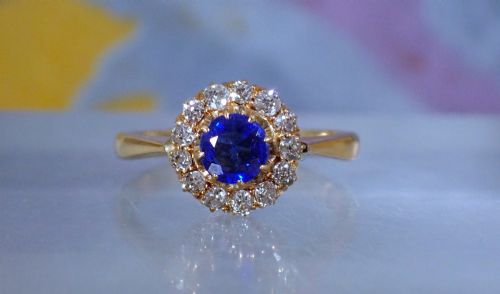
The most frequent examples found on this page combine 18ct yellow gold or platinum settings with sapphire, ruby, or emerald centrepieces surrounded by old cut or brilliant cut diamonds. Forms range from traditional circular daisy clusters to oval halos, floral arrangements, and geometric Art Deco shapes.
Buyers seek these rings for their distinct historical character, varied gemstone combinations, and traditional hand-set craftsmanship that sets them apart from modern jewellery production.
Materials and construction
Goldsmiths utilised 18ct yellow gold, white gold, and platinum to fabricate the structural mounts and claws that hold the cluster together. Platinum gained favour during the Edwardian and Art Deco periods for its strength in delicate, lace-like mountings.
Gemstones including natural sapphires, rubies, emeralds, opals, and amethysts are secured alongside old cut, brilliant cut, and single cut diamonds. Many stones are set by hand into closed or open-backed settings typical of their respective decades.
Vintage Gemstone Cluster Ring Retail Price Guide 2026
Typical asking prices for vintage gemstone cluster ring among the pieces listed under this phrase on Sellingantiques today, from the lower quarter to the upper quarter. They describe what is for sale here now, not the wider market.
Precious metals utilised include 18ct yellow gold, 18ct white gold, 14ct gold, 9ct gold, and platinum.
Quality factors in cluster rings
The overall quality rests on the origin and clarity of the central gemstone, particularly unheated sapphires or emeralds with minimal treatment, paired with well-matched surrounding diamonds. Proportions matter significantly, where the scale of the central stone balances harmoniously with the outer halo.
The finesse of the metalwork distinguishes finer examples, visible in the precision of the claw work, the symmetry of the cluster arrangement, and the preservation of original hand-cut facets on the stones.
The Vintage Gemstone Cluster Ring Glossary
- Cluster ring
- A ring featuring a central stone encircled by a border of smaller stones. This arrangement maximises visual impact and light reflection.
- Old cut
- A diamond cut style prevalent in the Georgian, Victorian, and Edwardian periods. It typically displays a smaller table and larger culet than modern brilliant cuts.
- Halo
- A ring of smaller accent stones, usually diamonds, encircling a larger centre gemstone. This design style enhances the perceived size and brilliance of the middle stone.
- Daisy ring
- A specific cluster formation resembling a flower, with a round central gemstone surrounded by petals of white diamonds set in yellow gold or platinum.
- Boat ring
- A navette or marquise-shaped cluster ring that tapers towards the ends of the finger. The elongated silhouette is characteristic of Georgian and Victorian design.
Vintage Gemstone Cluster Ring: Frequently Asked Questions
How do I date a vintage gemstone cluster ring?
Dating relies on stylistic clues, metal choices, and stone-cutting techniques visible in the setting. Edwardian pieces often use platinum-topped gold with delicate pierced work, while mid-century examples feature bolder yellow gold forms.
Hallmarks stamped inside the band provide official assay office stamps and date letters that pinpoint the exact year of manufacture.
What is the difference between an old cut and a modern cut diamond?
Old cut diamonds are shaped by hand with fewer, larger facets designed to catch candlelight rather than electric illumination. They possess a distinctive charm with a high crown and open culet.
Modern brilliant cuts engineered in the twentieth century prioritise mathematical precision for maximum light return under modern lighting.
Are these gemstones natural?
The stones found in these historic rings are natural earth-mined gems from traditional sources like Burma, Ceylon, and Colombia. Many listings specify unheated origins for rubies and sapphires.
Treatments such as minimal oil in emeralds are noted where applicable to reflect the genuine state of the gemstone.
Can I wear a vintage cluster ring every day?
Daily wear is possible with careful consideration of the ring's age, stone hardness, and setting style. Harder stones like sapphires, rubies, and diamonds withstand regular use well.
Softer gems such as opals, pearls, or emeralds require extra mindfulness to avoid knocks during strenuous daily activities.