


Vintage Gemstone Clasp Necklace
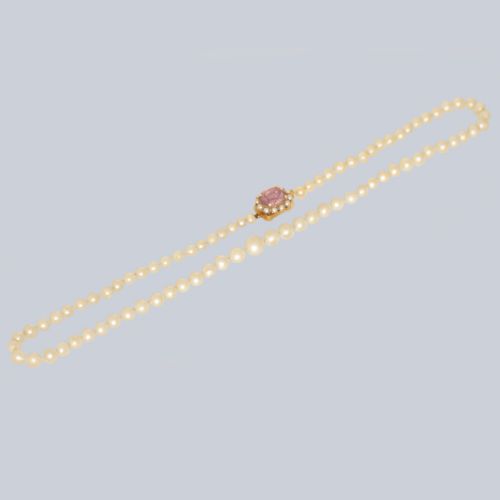
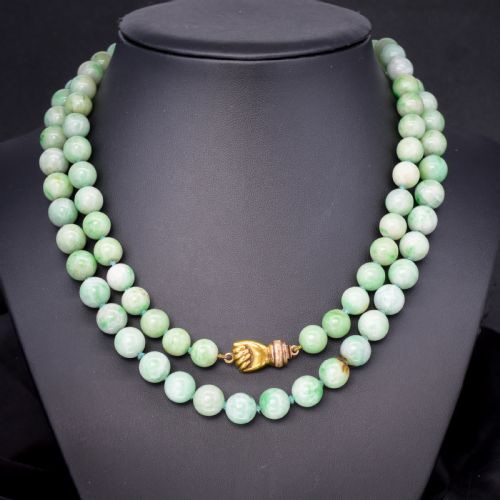
These vintage gemstone clasp necklace pieces bring together pearl strands and precious metal clasps set with stones.
Vintage Gemstone Clasp Necklace
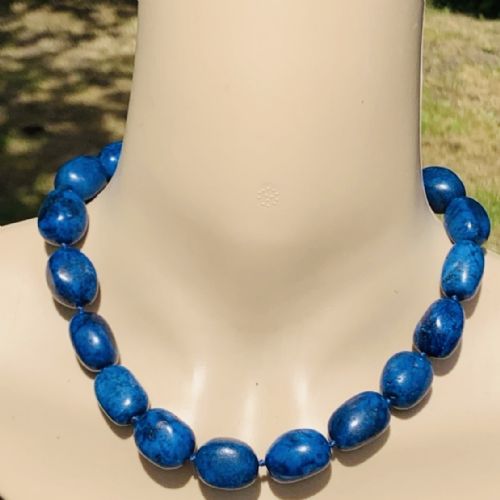
The selections span the Edwardian era through to the 1960s, covering Victorian, Art Deco and Mid-Century styles. Pearls dominate the strands, often accented by amethyst, tourmaline, garnet, lapis lazuli and turquoise.
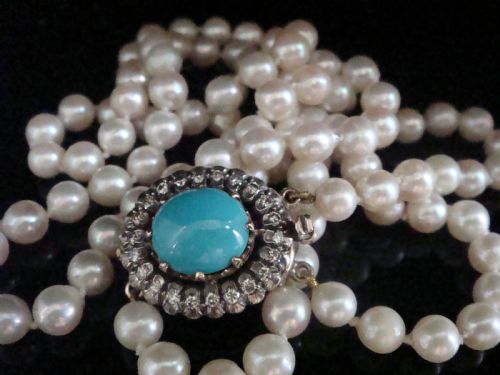
Buyers most frequently encounter pearl strands secured by gold or silver clasps inset with diamonds, rubies, sapphires and emeralds. These items function as dual-purpose jewels where the fastening serves as the primary focal point.
How they were made
Goldsmiths and jewellers utilised 9ct gold, 18ct gold, platinum and silver to construct the decorative clasps. These mounts secure gemstones such as diamonds, amethysts, rubies and sapphires using claw, bezel and flush settings.
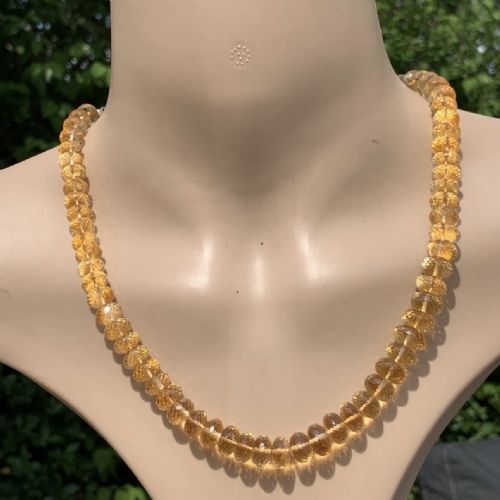
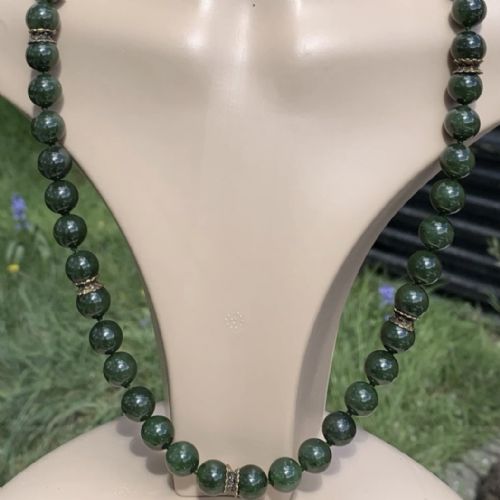
Beads are shaped from materials including nephrite jade, lapis lazuli, citrine, turquoise and tourmaline, alongside cultured and natural pearls. Strands are typically knotted between individual beads to secure them in place.
What varies in quality
Quality rests upon the proportion and calibre of the materials used in both the strand and the clasp. Substantial gemstone weight, intricate metalwork and certified stones elevate a piece above standard production.
The craftsmanship of the clasp mechanism determines structural integrity and ease of wear. Hand-carved jade components and complex multi-stone floral or geometric mounts demonstrate higher levels of artisan skill.
The Vintage Gemstone Clasp Necklace Glossary
- Clasp
- The fastening device of a necklace, which in these pieces often incorporates gemstones and precious metals to double as an ornament.
- Nephrite jade
- A dense mineral used for carved beads and figa hand motifs. It provides a smooth, tactile finish to heavier strands.
- Cultured pearl
- An organic gem formed with human assistance inside an oyster or mollusc. These form the primary strand material across multiple decades represented.
- Faceting
- The cutting of flat polished surfaces onto transparent gemstones like citrine. This technique increases light reflection across the stone.
- Choker
- A short necklace length designed to sit high on the neck. Several multi-strand pearl variants follow this shorter format.
Vintage Gemstone Clasp Necklace: Frequently Asked Questions
How do I wear a vintage gemstone clasp necklace?
These necklaces allow you to position the gemstone clasp at the front or side as a pendant feature, or wear it traditionally at the back of the neck. They pair easily with evening wear or tailored daytime clothing.
Consider the length of the strand when styling, as multi-row choker styles sit higher on the collarbone while longer beaded strands drop lower.
What materials make up these necklaces?
The strand components consist mainly of cultured pearls, nephrite jade, lapis lazuli, turquoise, tourmaline and citrine. Metal elements utilise 9ct gold, 18ct gold, platinum and silver.
Clasps frequently incorporate secondary accent gems such as diamonds, rubies, sapphires and amethysts set into the precious metal mount.
How can I tell the period of a necklace?
Dating relies on material combinations, hallmark stamps, stone cuts and overall design styles like Art Deco geometry or Mid-Century floral motifs. Edwardian and Victorian pieces show distinct metalwork techniques compared to 1950s and 1960s items.
Certificates from gemmological laboratories also provide specific testing details that help verify the era of manufacture.
Are the pearls natural or cultured?
The inventory includes both cultured pearls and traditional bead strands alongside mineral beads like jade and lapis lazuli. Laboratory certificates often accompany specific pieces to confirm pearl origins and gemstone treatments.
Examining the uniformity and lustre under magnification helps identify the pearl type used in the strand.