
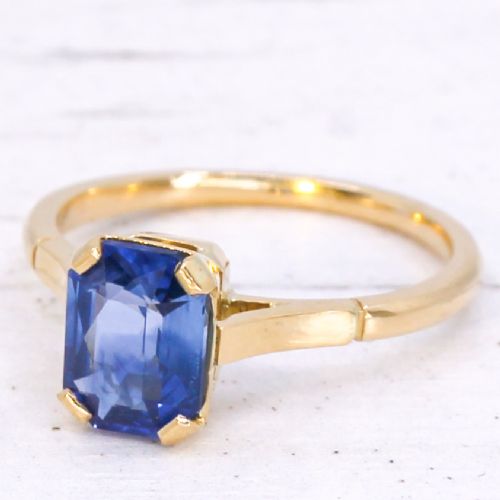
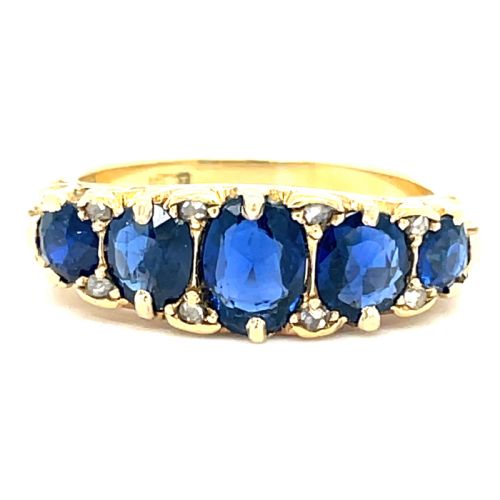
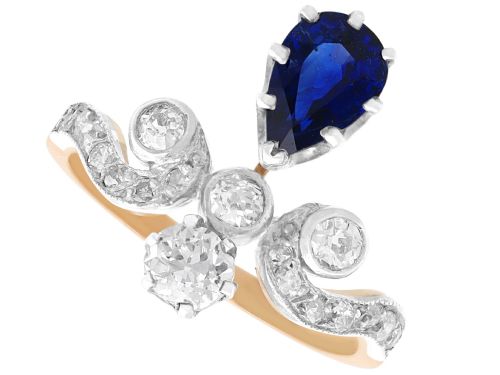
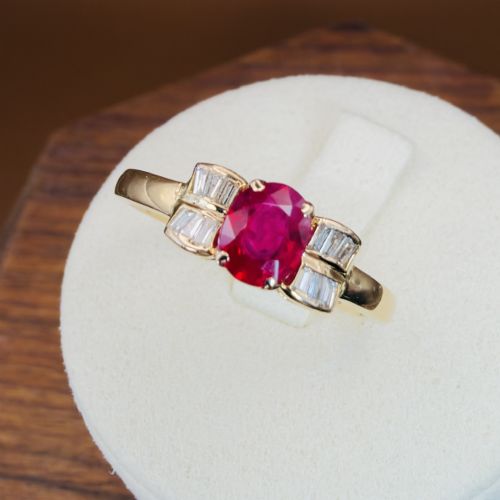


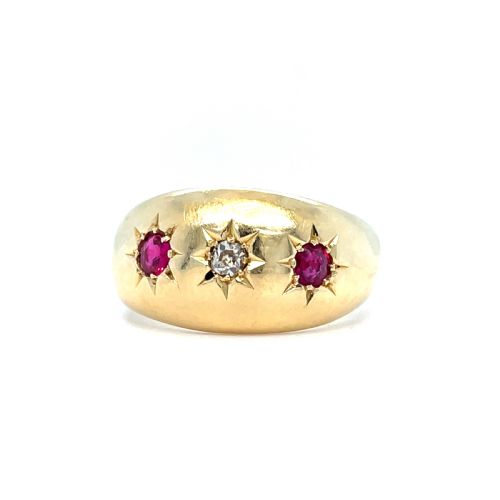
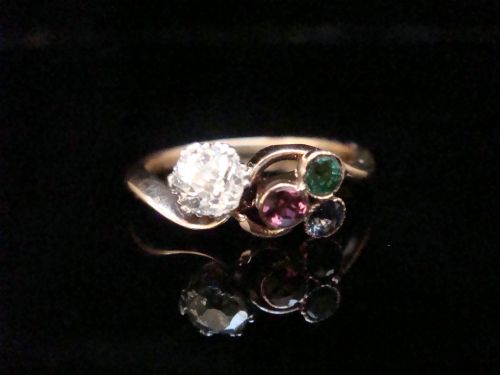
Vintage Gemstone Band Ring
A vintage gemstone band ring brings together coloured stones and precious metals from periods spanning the Victorian era to the mid-twentieth century.
Vintage Gemstone Band Ring
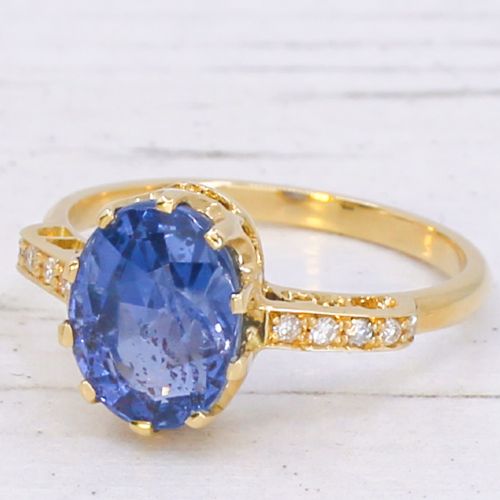
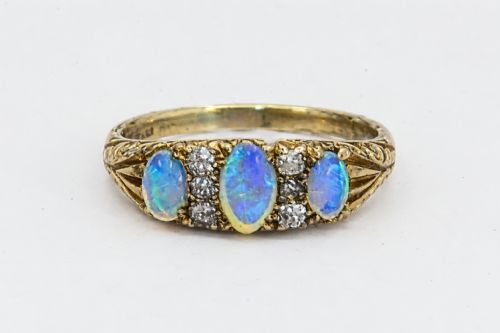
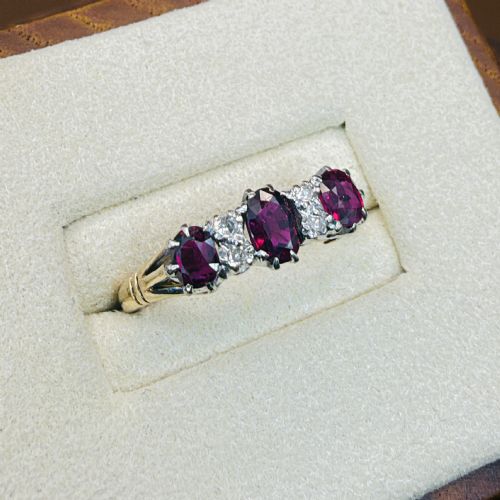
A vintage gemstone band ring spans centuries of jewellery design, encompassing Victorian, Edwardian, Art Deco, and mid-century aesthetics. These pieces typically combine precious metals like 18ct yellow gold, white gold, platinum, and sterling silver with stones such as rubies, sapphires, emeralds, and diamonds.
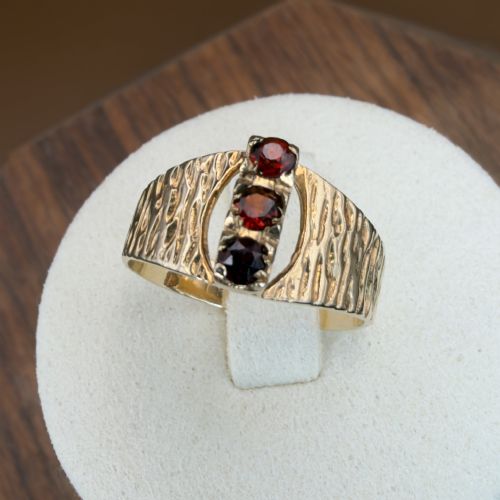
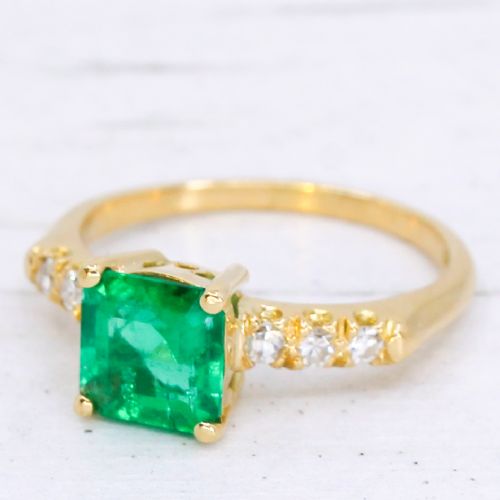
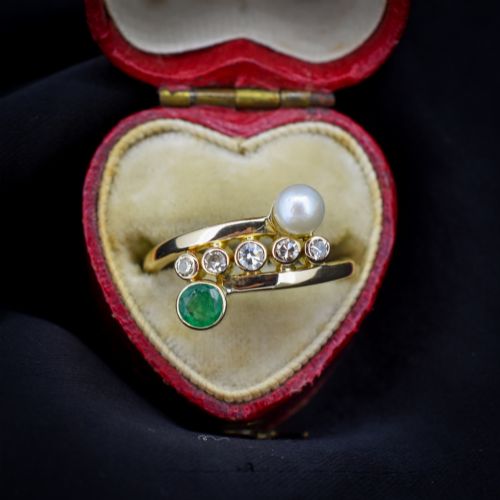
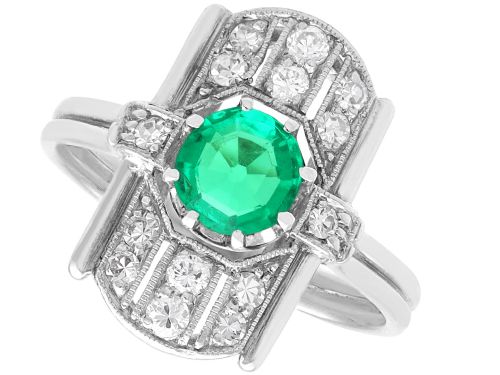
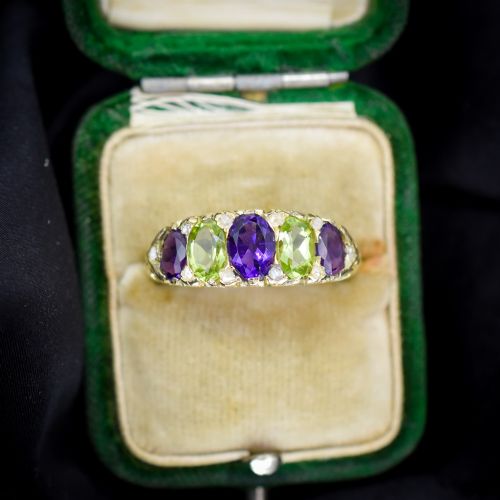
The selection on this page ranges from multi-stone cluster and five-stone settings to patterned bands and starburst designs. Buyers frequently encounter Edwardian and late Victorian examples alongside pieces from the 1950s and 1960s, showing a broad sweep of historical forms.
Materials and construction
Goldsmiths of the nineteenth and twentieth centuries constructed these bands primarily in 18ct gold, platinum, and sterling silver, often setting gemstones by hand. Stones such as old-cut diamonds, rubies, sapphires, and opals were secured using claw, flush, or cluster settings tailored to the specific geometry of the cut.
Techniques evolved from the detailed hand-engraving and starburst motifs of the Victorian period to the geometric lines of Art Deco and the cleaner profiles of mid-century manufacture. Many pieces incorporate specific regional hallmarks from assay offices in locations like Birmingham and London to verify metal purity and date of creation.
Gemstones recorded across the pieces include natural opals, unheated sapphires, diamonds, rubies, and turquoise.
Variations in quality
Quality in these bands rests upon the preservation of the original stones, the crispness of any engraved or cast metalwork, and the structural integrity of the setting. Hand-cut stones such as old-cut diamonds or unheated sapphires display individual optical characteristics that distinguish them from later uniform production.
The longevity of a piece depends on how well the metal has retained its thickness around the settings and whether hallmarks remain legible. Superior examples maintain the original balance between the gemstone weight and the precious metal shank without heavy modern alterations.
The Vintage Gemstone Band Ring Glossary
- Band ring
- A ring of uniform or near-uniform width around the finger, frequently decorated with channel-set or flush-set gemstones.
- Old-cut diamond
- A diamond cut by hand before modern machinery standardised proportions, characterised by a smaller table and higher crown.
- Cluster ring
- A ring design featuring a central gemstone surrounded by a tight formation of smaller stones, often diamonds.
- Hallmark
- An official stamp applied to precious metals indicating the purity, assay office, and year of manufacture.
- Trilogy ring
- A ring featuring three primary gemstones set in a row, traditionally symbolising the past, present, and future.
Vintage Gemstone Band Ring: Frequently Asked Questions
How do I date my gemstone band ring?
Dating relies on a combination of hallmarks, metal types, and the specific cut of the gemstones. Official assay marks stamped inside the band often provide the exact year of manufacture.
Stylistic elements, such as the mounting techniques of the Victorian or Edwardian periods, further narrow down the decade of creation.
Are these rings suitable for daily wear?
Many of these pieces were built for everyday use from durable metals like 18ct gold and platinum. Softer stones like opals or pearls require more care to avoid impact and moisture damage.
Checking the security of the settings with a jeweler ensures the stones remain firmly in place over time.
What is an old-cut diamond?
An old-cut diamond refers to stones shaped by hand prior to the invention of modern automated cutting techniques. These diamonds feature smaller tables and distinct facets that catch candlelight warmly.
Their organic geometry gives antique rings a characteristic depth distinct from twentieth-century brilliant cuts.
How should I clean a vintage ring?
Gentle cleaning with warm water, mild soap, and a soft brush removes everyday oils without harming the metal or stones. Ultrasonic cleaners should be avoided for pieces containing opals, emeralds, or pearls.
Storing the ring separately prevents scratching from other jewellery in your collection.