



Vintage Games Table Oak
These vintage games table oak pieces offer clever folding mechanics and solid timber construction, bringing traditional parlour entertainment directly into a modern home.
Vintage Games Table Oak
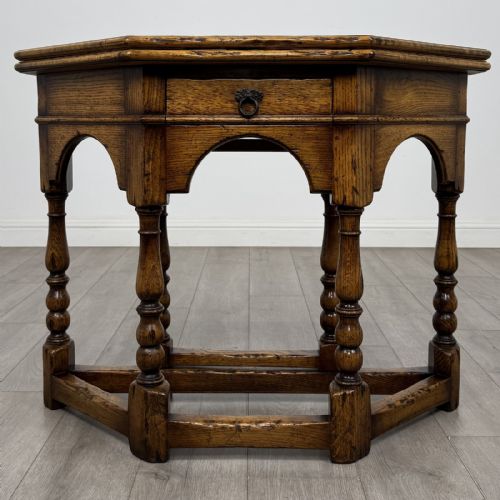
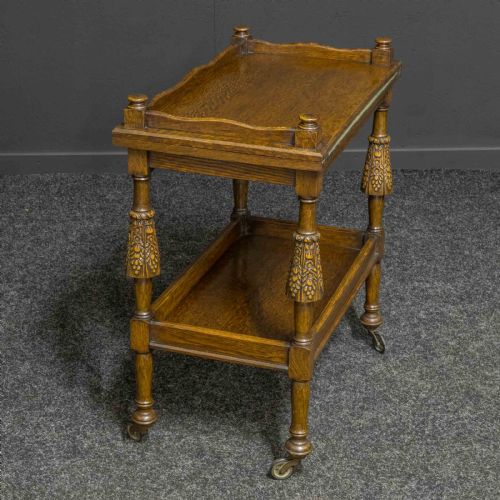
When you search for vintage games table oak, you are looking at functional furniture designed for parlour entertainment, card playing, and social pastimes. The examples found here span from the Victorian and Edwardian eras into the early twentieth century, incorporating George IV pieces alongside 1930 designs.
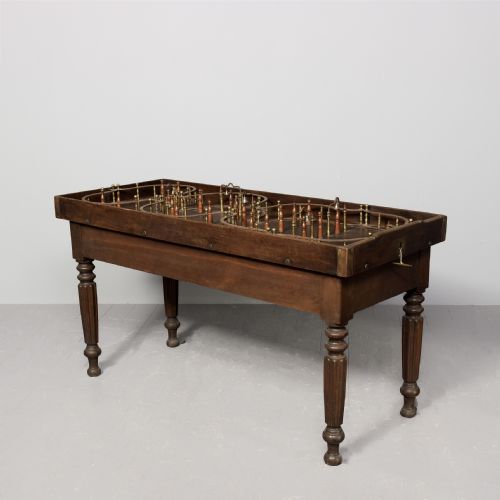
You will encounter various practical forms on this page, most notably folding card tables, envelope tables, and revertable coffee tables. Some listings also present distinct items such as skittles games, game blocks carved from tree trunks, and compartmentalised compendium boxes.
Originating predominantly from English and French workshops, these pieces often combine domestic utility with ingenious mechanisms. An Edwardian envelope table or a 1900 Arts and Crafts card table demonstrates how makers adapted sturdy timber for leisure and hospitality.
How they were made
Makers relied on solid oak as the primary structural timber, chosen for its durability and prominent grain pattern. This was frequently combined with brass and iron hardware, such as hinges and folding brackets, to support movement.
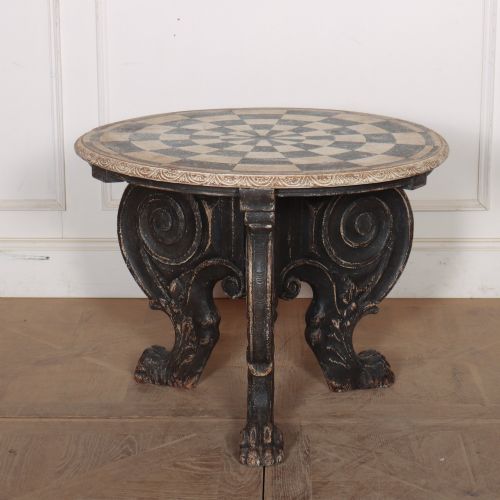
Interiors and playing surfaces often incorporated baize alongside painted wood, bone details, cut crystal, and silver plate for specific compendium fittings. Carving was utilised selectively, visible in German carved lamp tables and French country tree trunk game blocks.
Vintage Games Table Oak Retail Price Guide 2026
Typical asking prices for vintage games table oak among the pieces listed under this phrase on Sellingantiques today, from the lower quarter to the upper quarter. They describe what is for sale here now, not the wider market.
Listings feature oak combined with brass, iron, baize, painted wood, cut crystal, silver plate, and bone across Victorian, Edwardian, and 1930 periods.
What varies in quality
The sophistication of the folding mechanism largely separates standard production from finer examples, particularly in envelope tables and revertable surfaces that shift smoothly between roles. Precision in the joinery ensures that leaves and foldover tops align without wobble.
Material selection and decorative execution further define the hierarchy, distinguishing plain utility items from elaborately carved Jacobean revival styles or pieces outfitted with complete games compendiums and quality brass hardware.
The Vintage Games Table Oak Glossary
- Envelope table
- A card table with a square top formed of four triangular flaps that rotate and fold open like an envelope. This clever mechanism reveals a lined playing surface beneath.
- Baize
- A coarse woolen fabric, typically green, used to line the playing surfaces of card and games tables. It provides a soft, non-slip texture for dealing cards and moving pieces.
- Games compendium
- A fitted box or cabinet containing multiple board games, card games, and accessories in one portable unit. These often feature internal partitions lined in velvet or baize.
- Revertable table
- A dual-purpose piece of furniture with a top that flips, reverses, or converts between a standard surface and a dedicated games or coffee table.
- Arts and Crafts
- A design movement prioritising traditional craftsmanship, visible grain, and honest construction over mass-produced ornamentation. Pieces from this style emphasise structural simplicity.
Vintage Games Table Oak: Frequently Asked Questions
What is an envelope games table?
An envelope table is a square card table featuring four triangular flaps that pivot open to reveal the playing surface. This clever design protects the baize interior when closed.
Such tables became popular during the Edwardian period as compact furniture for drawing rooms and parlours.
How do I care for oak games tables?
Keep wooden furniture away from direct heat sources and strong sunlight to prevent the timber from drying out and splitting. Dust regularly with a dry cloth and occasionally feed the oak with appropriate wax.
Protect baize linings by avoiding moisture and brushing gently to remove dust.
What periods do these tables span?
The selection includes pieces from the 19th century, Victorian and Edwardian eras, through to the 1920s and 1930s. Styles range from George IV and Baroque Revival to Arts and Crafts and French Country.
Each period brings distinct woodworking techniques and hardware choices to the design.
How were games compendiums used?
A games compendium served as a portable cabinet holding equipment for chess, checkers, backgammon, dominoes, and card games. Families gathered around these fitted boxes for evening entertainment in the parlour.
They often included bone markers, cribbage boards, and specialised compartments for each game.