
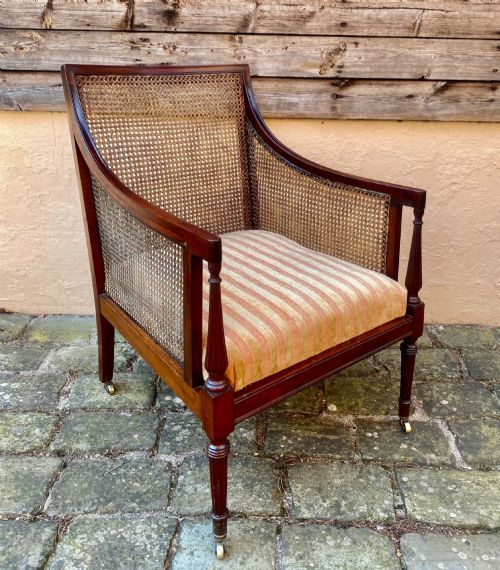


Vintage French Library Chair
These vintage french library chair examples combine sturdy timber frames with supple leather and velvet upholstery for daily study or fireside reading.
Vintage French Library Chair
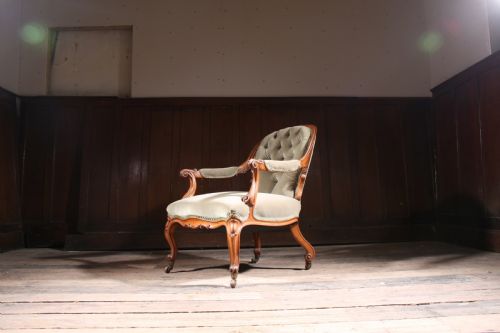
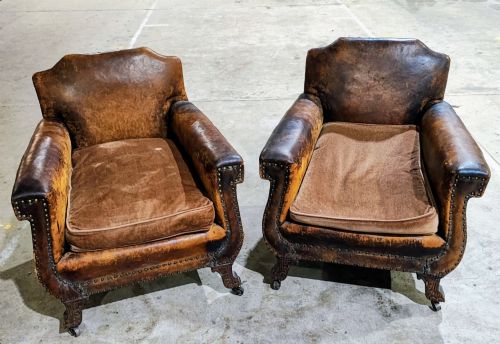
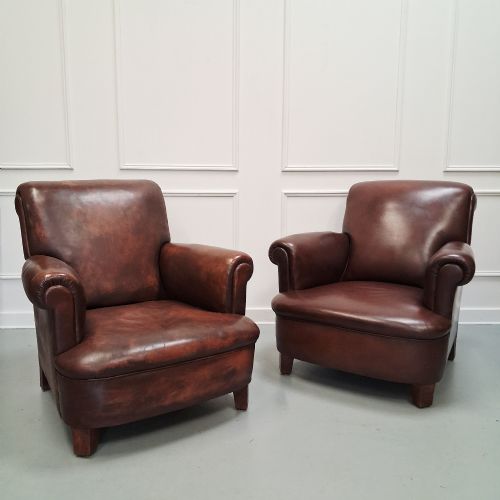
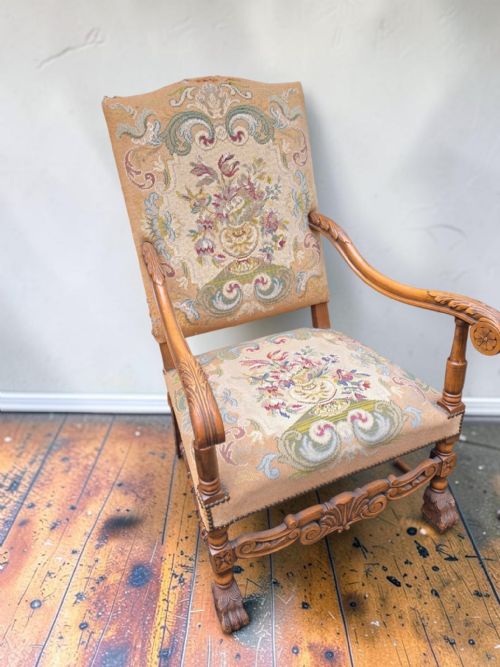
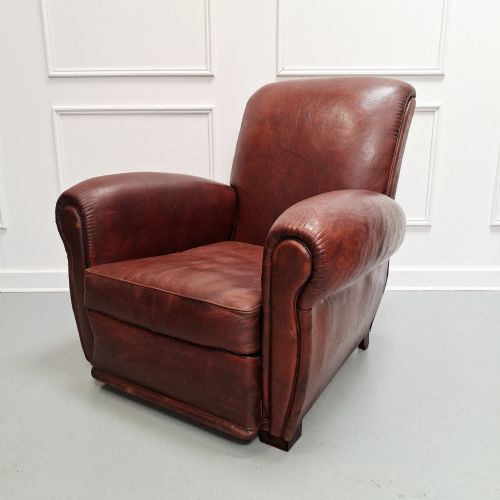
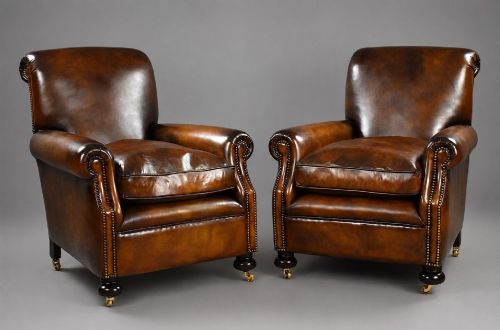
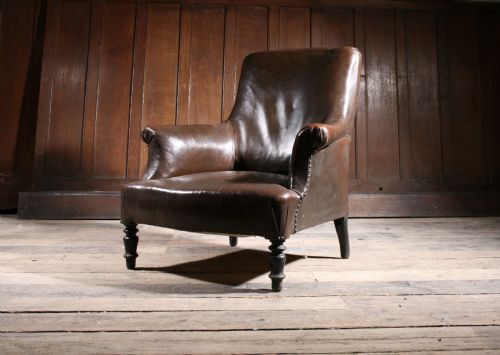
A vintage french library chair brings substantial seating into a study or drawing room, appearing in forms ranging from heavy club chairs to carved open armchairs. Buyers searching this phrase encounter sturdy timber frames upholstered in leather, fabric, or tapestry.
The pieces listed here span periods from the eighteenth century through the Edwardian era and the nineteen-thirties. Walnut and mahogany frames dominate, alongside distinctive styles such as Louis XVI, Directoire, and Art Deco.
Armchairs and desk chairs make up the primary selection, often appearing as pairs or with matching footstools. These seating options suit reading spaces and home offices alike.
Materials and construction methods
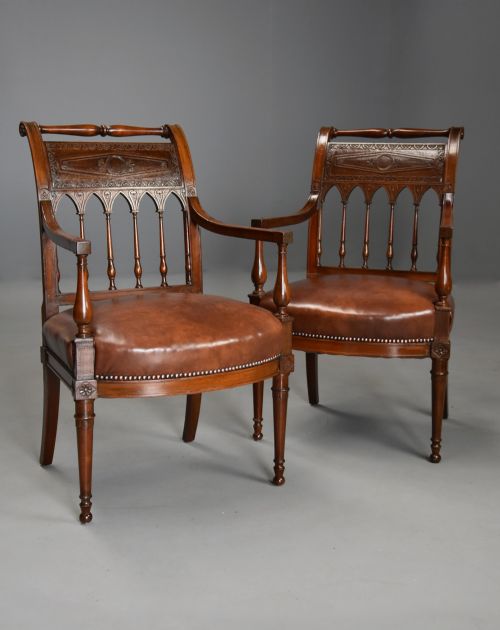
Makers built these frames using solid timber such as walnut, mahogany, and rosewood, often employing carved decoration along the arms and back rails. Wood framing provides the structural skeleton needed to support daily use.
Upholstery methods rely on traditional leather, velvet, and woven tapestry fastened with brass details or careful stitching. Buttoned leather finishes add texture and durability to the seating surface.
Reclining mechanisms and specialised desk chair pivots appear in specific mid-nineteenth-century examples. These mechanical elements combine with sturdy wooden joinery to ensure longevity.
Current listings feature pieces spanning the eighteenth century through the nineteen-thirties, constructed from walnut, mahogany, and rosewood.
Evaluating construction and finish standards
Quality rests in the selection of dense hardwoods and the crispness of hand-carved wooden details on walnut and mahogany frames. Superior examples display balanced proportions and tight joinery that resists wobble.
The grade of leather or fabric dictates the tactile experience of the piece, with thick hides ageing through regular use to develop a rich patina. Expertly upholstered panels maintain proper tension across the backrest and seat without sagging.
The Vintage French Library Chair Glossary
- Club chair
- A deep, comfortable armchair upholstered in leather with padded arms and a low back. These seats originated in twentieth-century clubs and smoking rooms.
- Directoire style
- A transitional design period bridging Louis XVI and Empire styles, characterised by classical restraint and clean geometric lines. Furniture from this era uses restrained ornamentation.
- Balloon back
- A chair back shaped in a continuous oval curve resembling a blown balloon. This nineteenth-century silhouette supports the spine while offering a graceful aesthetic.
- Louis XVI style
- A neoclassical design vocabulary defined by straight tapered legs, carved fluting, and rectangular or oval backrests. Pieces in this tradition reflect classical architectural proportions.
Vintage French Library Chair: Frequently Asked Questions
Where should I place a library chair?
These armchairs suit studies, home libraries, and fireside reading corners where comfortable seating is paramount.
Their robust timber frames and supportive leather or fabric upholstery handle daily sitting while adding traditional character to a room.
How do I care for leather upholstery?
Keep leather conditioned using appropriate balms to prevent drying and cracking over the years. Avoid placing the chair in direct sunlight to protect the natural tone of the hide.
Regular dusting with a soft cloth maintains the surface finish without damaging the grain or the underlying padding.
Are these chairs suitable for a desk?
Desk chairs within this selection offer appropriate height and arm clearance for writing tables and workspaces. Their stable wooden bases provide reliable support during long hours of reading or administration.
Many feature supportive backrests and padded armrests designed specifically for seated work.
How do I identify a Louis XVI style chair?
Look for straight tapered legs, often fluted, and geometric framework that departs from earlier curving rococo excesses. The backrests typically form oval, square, or shield shapes with restrained classical carvings.
Walnut and mahogany frames frequently display this architectural symmetry.