






Vintage Frameless Wall Mirror
These vintage frameless wall mirrors bring clean geometry and reflective depth to a room, offering the distinct styling of the early twentieth century.
Vintage Frameless Wall Mirror
A vintage frameless wall mirror is a reflective glass piece designed to hang directly on a vertical surface without a traditional timber or metal outer frame. You will frequently encounter examples from the Art Deco period, alongside Victorian pieces and designs from the 1920s and 1930s.
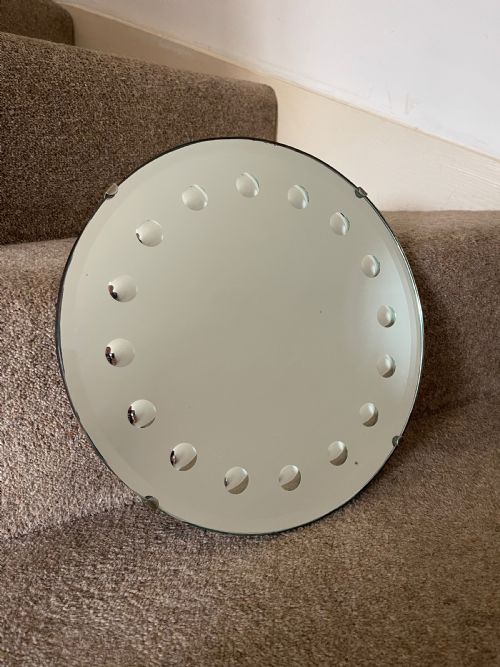
The inventory includes various forms such as round mirrors, circular wall mirrors, octagonal shapes, and large diamond wall mirrors. Many of these items serve as wall mirrors or overmantle mirrors, while some function as a wall mirror or display stand.
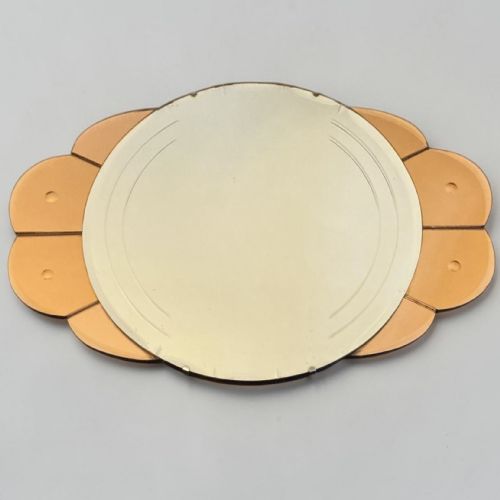
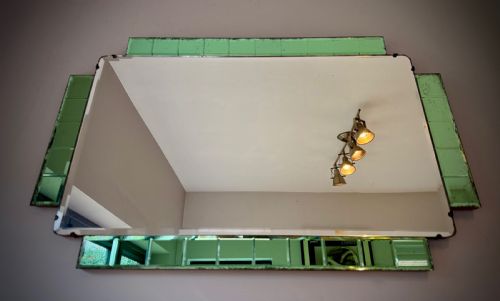
Origins span across English and French workshops, featuring distinctive variations like peach coloured glass panels, emerald green glass, and two tone combinations. You also find specialised pieces including sorcerer type mirrors and designs incorporating embossed glass or an embossed soldier motif.
How vintage frameless wall mirrors were made
Construction relies heavily on glass, mirrored glass, peach glass, silvered glass, and chrome, supported by wood backing and metal structures. Original fittings secure the glass panels, which often display bevelled edges produced by skilled edge grinding.
Etched details and embossed glass techniques decorate the surfaces of specific pieces, while coloured glass panels in emerald green or peach are integrated into the primary mirror plate. These construction methods produce distinct visual layers without relying on an external frame.
Some mirrors come complete with an embossed soldier standing guard inside the glass.
What varies in quality in vintage frameless wall mirrors
Quality differences appear in the clarity and preservation of the silvered glass and the precision of the bevelled edges. Mirrors retaining their original fittings and undamaged coloured glass panels demonstrate a higher degree of authenticity.
The complexity of the glass work, such as etched motifs or multi-tone constructions, distinguishes standard circular plates from more unusual items like embossed soldier designs or large diamond configurations.
The Vintage Frameless Wall Mirror Glossary
- Bevelling
- The practice of angling and polishing the outer edge of a mirror glass plate. This technique creates a sloped border that catches the light.
- Overmantle mirror
- A large horizontal mirror designed to sit directly above a fireplace mantelpiece. These pieces often anchor the decorative scheme of a reception room.
- Silvered glass
- Glass coated on the reverse with a reflective metallic compound. This chemical layer produces the mirror effect.
- Peach glass
- Tinted mirror glass possessing a warm, pinkish-orange hue. It appears frequently in pieces associated with the 1930s.
- Original fittings
- The historical screws, brackets, or backing components that came with the piece during its initial manufacture. Retaining these elements aids in structural integrity.
Vintage Frameless Wall Mirror: Frequently Asked Questions
How do I hang a frameless mirror safely?
These pieces require secure wall fixings that match the weight of the glass plate and any wooden backing. Using appropriate brackets ensures the mirror sits flush without putting stress on the edges.
Original fittings should be inspected for strength before installation. Consulting a professional structural hanger is advisable for very large formats.
What periods do these mirrors come from?
The selection spans from Victorian examples dated around 1880 through to the 1920s and 1930s. Art Deco aesthetics dominate the majority of the available items.
Stylistic markers such as geometric shapes and coloured glass help identify the decade of production. French and English origins are common among these periods.
Can I place these mirrors in a bathroom?
Humid environments can affect the silvered glass and original wooden backings over time. Careful placement away from direct steam helps preserve the reflective coating.
Checking the condition of the edges prevents moisture ingress. Surface condensation should be wiped away promptly to maintain the glass.