





Vintage Four Table Nest
A vintage four table nest offers a clever multi-tier solution for compact living spaces, sliding together neatly when floor space matters.
Vintage Four Table Nest
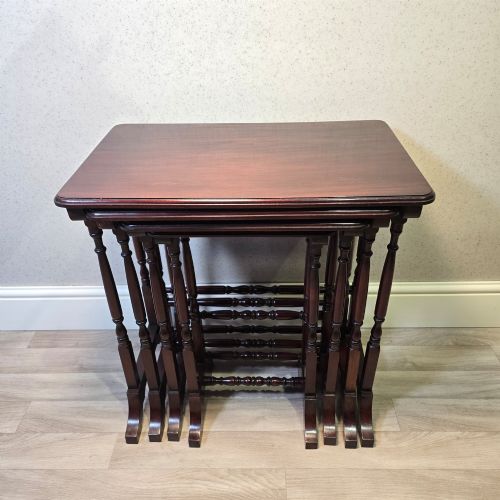
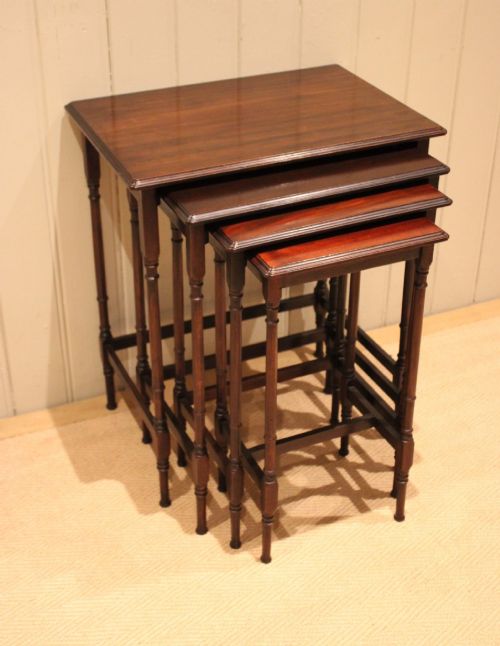
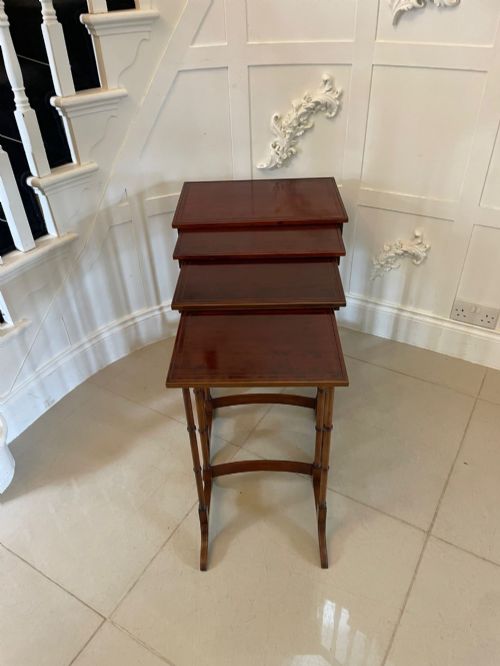
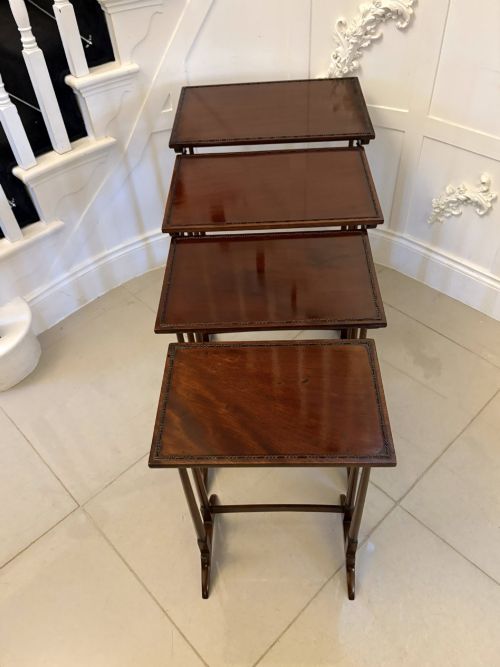
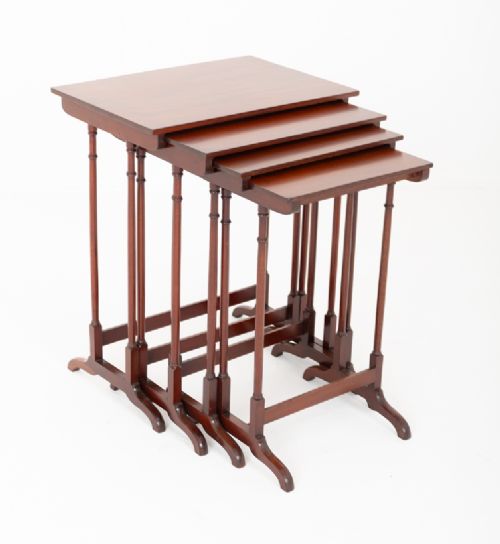
A vintage four table nest comprises four graduated tables designed to slide beneath one another into a single compact footprint. The versions most commonly encountered on this page belong to the Edwardian period, constructed primarily in mahogany.
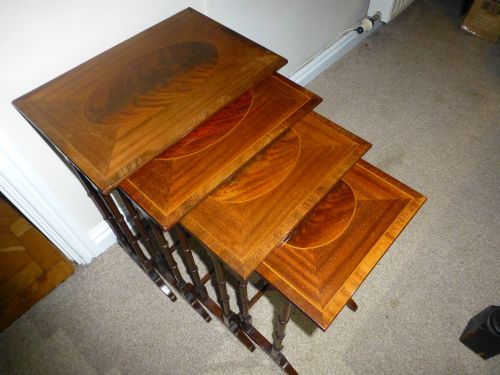
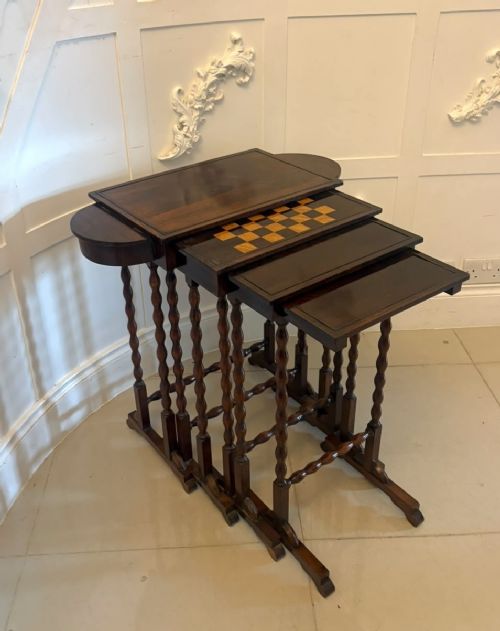
Makers designed these sets as quartetto tables, serving multiple guests simultaneously for tea or card games before storing away compactly. Examples span from Victorian and Edwardian decades through to Art Deco and Chinoiserie interpretations.
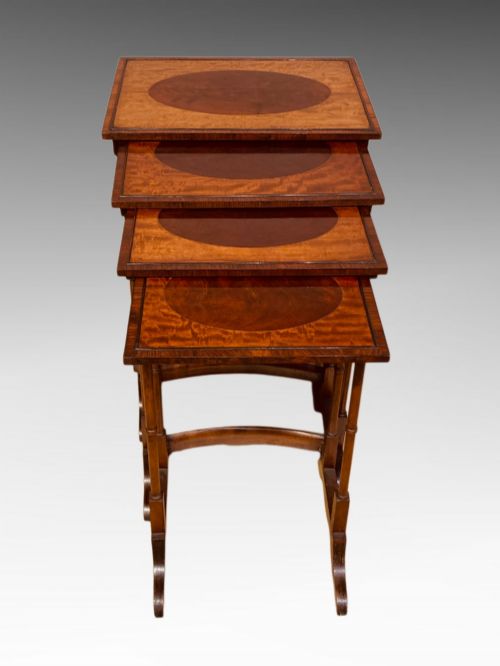
The form appears in various woods including walnut, rosewood, and satinwood, alongside occasional carved hardwood oriental pieces. Each smaller table steps down in height and width to fit precisely beneath its predecessor.
What varies in quality
The grade of timber and precision of the nested fit separate standard utility sets from finer cabinet work. Marquetry crispness and the choice of figured mahogany or rosewood indicate workshop ambition.
Structural integrity in the smaller legs and the condition of decorative lacquering or inlay determine the standing of an individual set. Tables retaining their original sliding clearances and matching timber grain through all four tiers represent the upper tier of the craft.
Vintage Four Table Nest Retail Price Guide 2026
Typical asking prices for vintage four table nest among the pieces listed under this phrase on Sellingantiques today, from the lower quarter to the upper quarter. They describe what is for sale here now, not the wider market.
The Vintage Four Table Nest Glossary
- Quartetto
- A matching set of four tables designed to nest together. This term appears frequently in Edwardian and nineteenth-century descriptions.
- Inlay
- Material such as light wood or brass embedded into the primary timber surface to create decorative patterns. Stringing is a narrow variety often seen on mahogany edges.
- Chinoiserie
- European imitation of traditional Chinese artistic styles and motifs. It typically involves lacquered surfaces and painted decoration.
- Parquetry
- Geometric wood mosaic work used for decorative tabletops. French walnut examples often utilise this technique.
Vintage Four Table Nest: Frequently Asked Questions
How do I clean a wooden nest?
Dust surfaces regularly with a soft, dry cloth to prevent grit accumulation on the finish. Avoid silicone-based sprays that build up residue over time.
Feed the timber periodically with appropriate beeswax to maintain the moisture and lustre of the polish. Keep the furniture away from direct heat sources and strong sunlight to prevent veneer lifting.
What is a quartetto table?
A quartetto table is a nineteenth or early twentieth-century term specifically denoting a nest of four tables. Makers designed them for flexible entertaining in parlours and drawing rooms.
Each table diminishes in scale so the entire group occupies the floor space of just one small table. They became particularly popular during the Edwardian era for serving afternoon tea.
How do I date these tables?
Dating relies on timber choice, leg profiles, and decorative techniques characteristic of specific periods like Victorian, Edwardian, or Art Deco. Edwardian pieces frequently showcase inlaid mahogany, while nineteenth-century items may feature rosewood or lacquer.
Construction methods underneath the tabletops, such as screw types and jointing styles, offer further clues to the decade of manufacture. Comparing the hardware and finish against verified pieces from the same era confirms the period.
Can I use them as coffee tables?
These tables function well as flexible surface space around a main seating area for drinks and books. The smallest units move easily beside armchairs while the main table stays central.
Care should be taken with moisture and heat, using coasters to protect antique polished surfaces from rings. Their modular nature allows you to separate the tiers across a room when hosting guests.