







Vintage Footstool Storage
These vintage footstool storage pieces combine hidden interior capacity with period upholstery, offering a practical seat and a discreet place to tuck away household clutter.
Vintage Footstool Storage
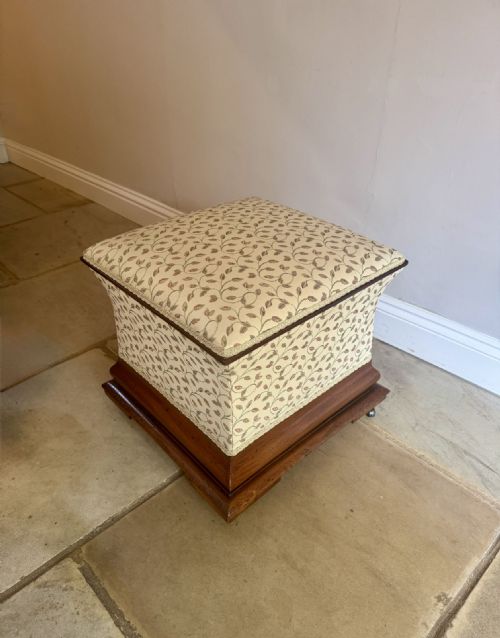
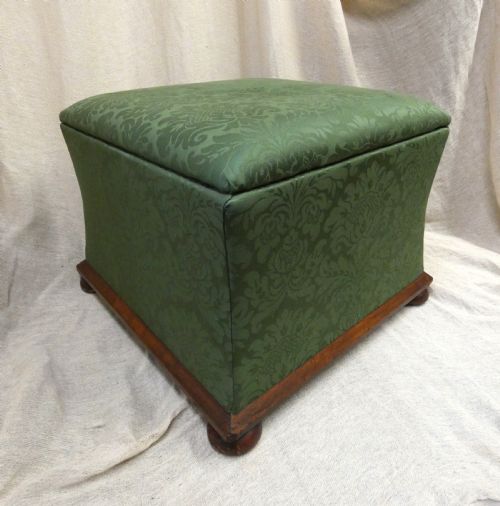
When searching for vintage footstool storage, buyers find a practical hybrid of seating and concealed interior space spanning periods from the Regency era through to the early twentieth century. These pieces serve multiple domestic functions, operating variously as blanket boxes, window stools, piano seats, and dressing stools.
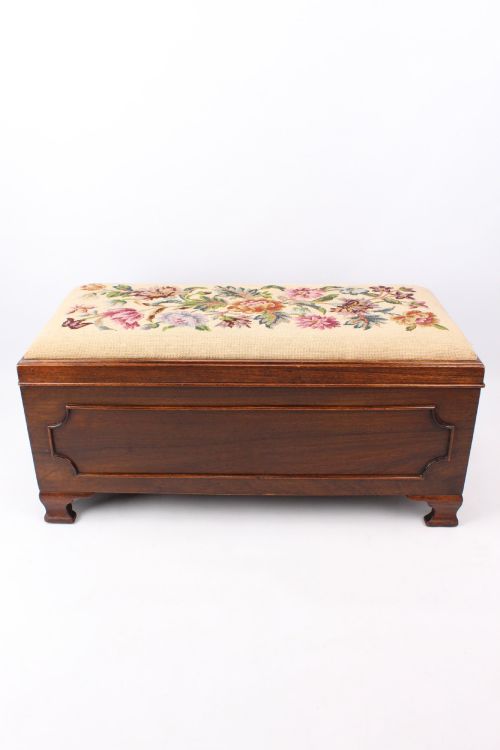
The most common form met here is the mahogany or walnut framed Victorian ottoman, frequently featuring hinged upholstery that opens to reveal a lined storage compartment. Alongside these substantial nineteenth-century examples appear lighter early twentieth-century slipper boxes and walnut Art Deco piano stools.
Origins range widely across English workshops, encompassing substantial country house furniture and more modest domestic items. Woods such as mahogany, oak, and hardwood provide the structural carcasses, while traditional textiles finish the tops.
Materials and construction methods
Construction relies heavily on solid hardwoods, with mahogany and walnut forming the structural frames and internal storage boxes of the nineteenth-century examples. Joinery techniques from the period ensure robust carcass frames capable of withstanding both seating loads and regular access to the compartment within.
Upholstery forms a vital part of the construction, utilising traditional webbing, stuffing, and hand-stitched borders beneath decorative outer textiles. Tops are finished with needlework, gros-point tapestry, leather, velvet, or wool fabric, often secured with brass tacking.
Vintage Footstool Storage Retail Price Guide 2026
Typical asking prices for vintage footstool storage among the pieces listed under this phrase on Sellingantiques today, from the lower quarter to the upper quarter. They describe what is for sale here now, not the wider market.
Several examples double as work boxes for bygone needlework enthusiasts, concealing secrets beneath their needlepoint lids.
Distinctions in quality
Quality reveals itself in the scale of the timber frame and the sophistication of the joinery, distinguishing heavy country house pieces from simpler domestic boxes. Timber selection plays a part, with figured mahogany and rich walnut veneers commanding higher regard than plain utilitarian hardwoods.
The integrity of the internal compartment and the survival of original upholstery textiles determine the standing of an individual piece. Items retaining period needlework, gros-point tapestry, or hand-dyed leather exhibit a superior degree of original craftsmanship compared to later re-coverings.
Hallett & Sons
The Vintage Footstool Storage Glossary
- Ottoman
- A low upholstered seat or bench without back or arms, typically featuring a hinged top that opens to reveal an interior storage well. These pieces function equally as footrests and low tables.
- Gros-point
- A heavy, durable needlepoint stitch worked on coarse canvas, frequently used for the robust decorative top covers of nineteenth-century footstools and ottomans. This heavy threadwork withstands regular friction from feet and seating.
- Slipper box
- A compact wooden box seat, often fitted with a hinged lid, historically used in bedrooms for sitting while putting on footwear. They provide enclosed space within a minimal footprint.
- Canterbury stool
- A low compartmented piece of furniture combining a seat with divisions originally intended for sheet music or folios. The upper section is typically upholstered for sitting.
- Needlework
- General term for decorative stitching applied to canvas or fabric using wool or silk threads. In these listings, needlework tops often display floral or geometric patterns.
Vintage Footstool Storage: Frequently Asked Questions
What were these storage stools originally used for?
These pieces served practical domestic purposes in period interiors, functioning as window seats, bed ends, and piano benches. The internal compartments held blankets, needlework, sheet music, or personal items out of sight.
In larger country houses, substantial ottomans provided mobile seating in reception rooms while keeping extra textiles close at hand. Smaller variants sat in dressing rooms and parlours to assist with footwear or musical practice.
How do I date a vintage ottoman?
Dating relies on identifying the underlying timber, framing style, and turning characteristics of the legs or feet. Regency and William IV pieces often display heavier proportions and specific classical motifs, whereas Victorian examples introduce rich mahogany framing and deep buttoning.
Mid-nineteenth-century items frequently feature robust mahogany carcasses with original gros-point tapestry tops. Later Edwardian and 1920s pieces tend toward lighter framing, simpler inlaid decoration, or Art Deco walnut veneers.
Are the upholstery tops original?
Survival of original upholstery varies considerably, with many pieces having undergone re-covering over the decades to match changing domestic interiors. Evidence of original textiles includes hand-dyed leather, period gros-point needlework, and traditional tacking methods.
When a piece retains its original needlework or leather top, it offers a direct link to its period of manufacture. However, many fine frames have been professionally re-upholstered in complementary velvet or wool to suit modern use.
How do I live with a storage footstool?
These pieces integrate easily into modern living spaces by offering dual functionality as both a coffee table alternative and a discreet storage container. Placing one before a sofa provides a convenient surface for resting feet or holding trays.
The internal compartment handles everyday clutter such as spare throws, magazines, or books. Their sturdy wooden frames and durable fabric tops withstand daily domestic activity while adding period character to a room.