




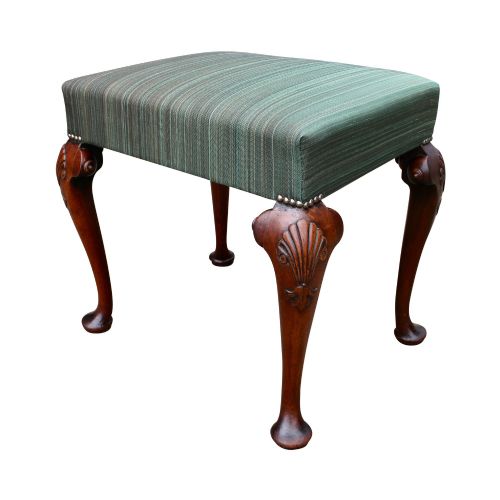
Vintage Footrest
These vintage footrest pieces combine period timber frames with traditional needlework, leather, and tapestry, offering practical comfort alongside classic domestic character.
Vintage Footrest
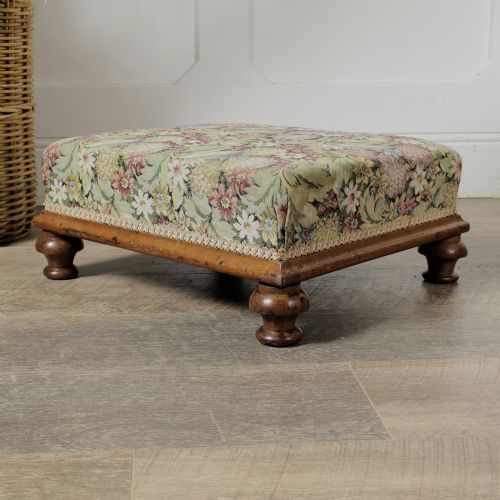
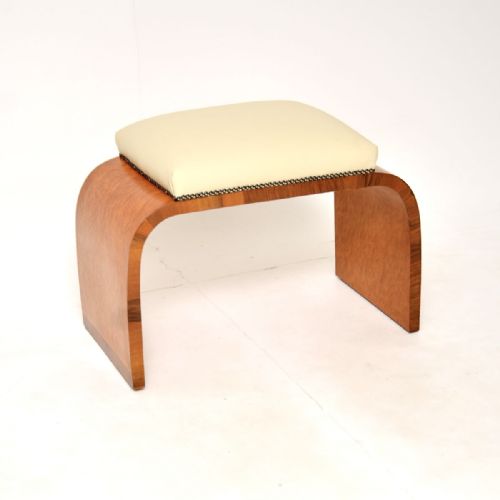
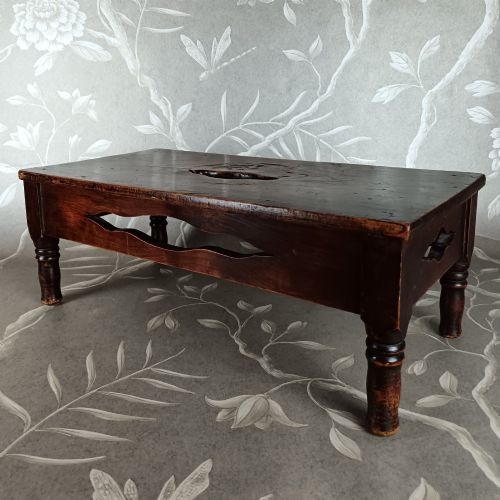
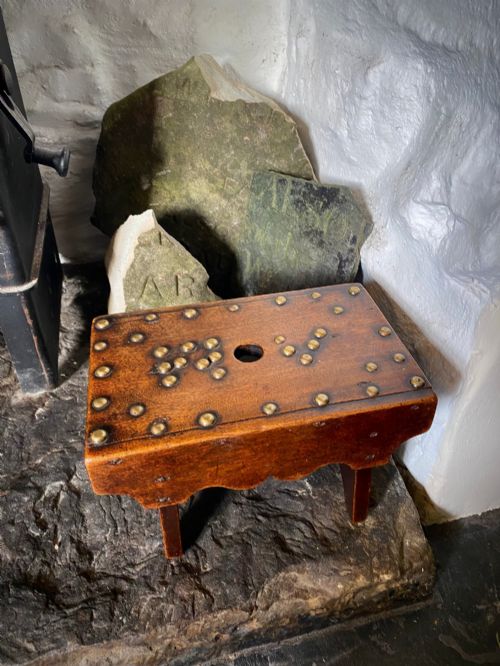
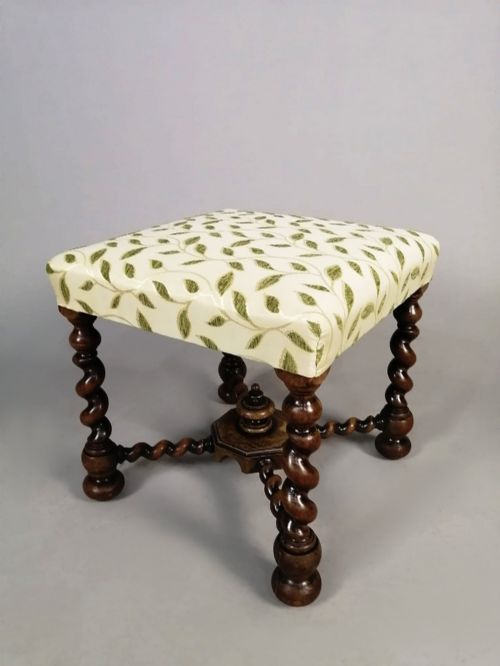
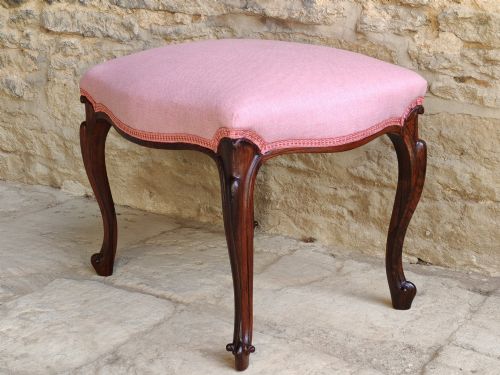
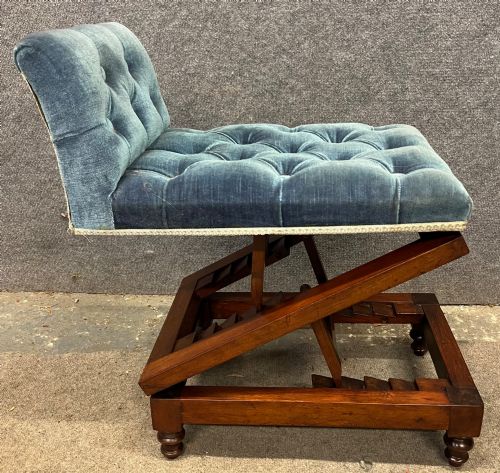
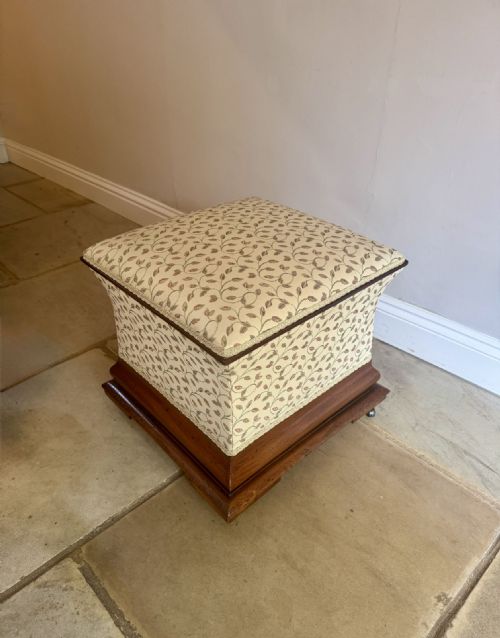
A vintage footrest encompasses a variety of low seating forms, including compact footstools, gout stools, ottomans, and dressing stools. You will frequently encounter nineteenth-century mahogany and Victorian walnut pieces alongside Edwardian and Art Deco examples.
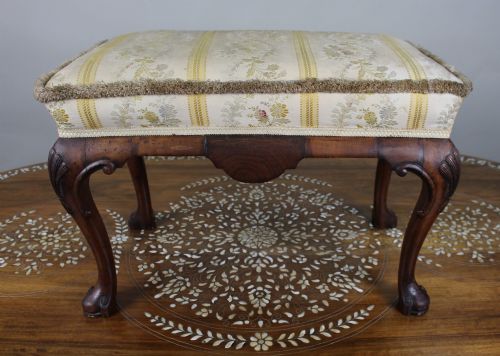
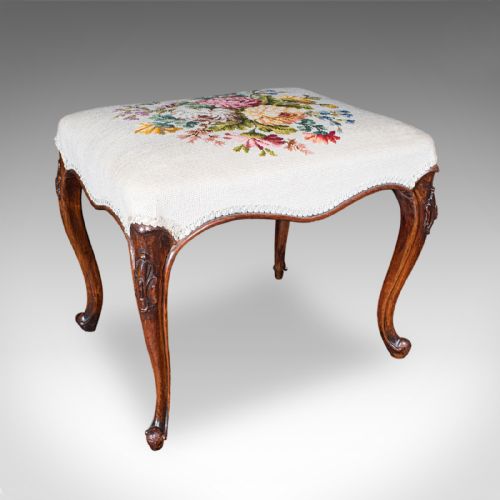
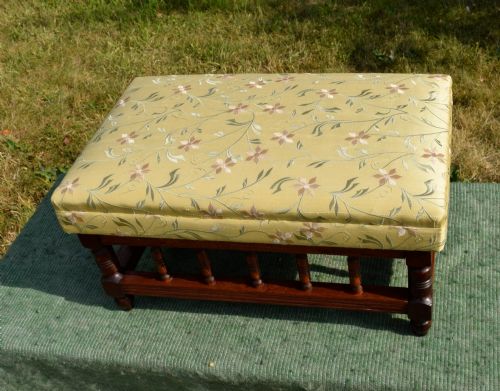
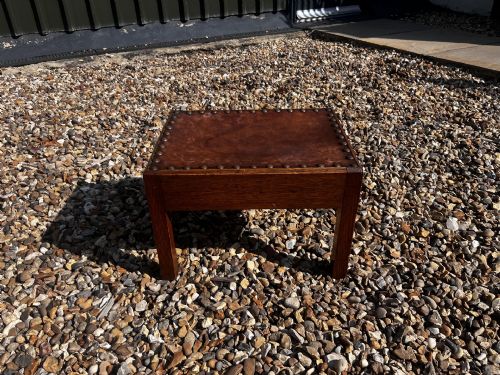
The selection ranges from simple turned wood frames with rush seats to elaborate carved walnut stools featuring needlepoint and hand-dyed buttoned leather upholstery. Certain pieces reflect specific revivals, such as Queen Anne or Chippendale styles, while others take playful animal shapes.
Makers and workshops including Arthur Simpson of Kendal, Omersa, Miles and Edwards, and Harry and Lou Epstein appear across the inventory. These domestic furnishings served varied roles, from fireside comfort to bedroom dressing seats.
Materials and construction methods
Makers utilised solid timbers such as mahogany, walnut, oak, beech, and rosewood for the structural frames, often employing hand-carved cabriole legs, turned supports, or X-frame curule bases. Joinery relied on traditional techniques suited to load-bearing low seating.
Upholstery materials include hand-dyed leather, wool tapestry, needlepoint, Kilim, cane, and textile coverings, occasionally finished with buttoning. Brass hardware and lacquered details appear on select pieces from the Edwardian and Art Deco periods.
Vintage Footrest Retail Price Guide 2026
Typical asking prices for vintage footrest among the pieces listed under this phrase on Sellingantiques today, from the lower quarter to the upper quarter. They describe what is for sale here now, not the wider market.
Listings feature diverse materials including mahogany, walnut, brass, leather, wool, fabric, hardwood, and textile.
Distinctions in quality
Quality rests in the crispness of the timber carving, the choice of dense hardwoods like walnut and mahogany, and the integrity of the underlying frame construction. Superior examples exhibit balanced proportions and refined detailing, such as finely turned legs or well-executed stylistic revivals.
The standard of the upholstery materials, whether hand-dyed leather, period needlework, or tapestry, significantly influences the overall character. Maker attribution to known workshops like Omersa or Miles and Edwards adds notable distinction to a piece.
Arthur Simpson Of Kendal·Omersa Workshop·Harry and Lou Epstein·Miles and Edwards
The Vintage Footrest Glossary
- Gout stool
- A specialised footrest featuring an adjustable incline designed to elevate and support the foot of someone suffering from gout.
- Curule footstool
- An X-framed stool design originating from ancient Roman magistrate seats, revived in nineteenth-century seating.
- Needlepoint
- Hand-stitched canvas work utilised extensively for period footstool and fireside ottoman upholstery.
- Cabriole leg
- A furniture leg featuring a double curve, typically curving out from the knee and inward towards the ankle, common in walnut and mahogany pieces.
- Bergere
- A closed armchair or stool featuring woven cane panels within a wooden frame.
Vintage Footrest: Frequently Asked Questions
What is a vintage footrest used for?
These pieces served multiple domestic purposes, primarily supporting feet by the fireside or acting as dressing table seats in bedrooms.
Certain variations, such as gout stools, provided adjustable leg elevation, while larger ottomans doubled as casual coffee tables or extra seating.
How do I identify a Victorian footrest?
Victorian examples frequently utilise solid mahogany or walnut, often featuring carved cabriole legs, turned wooden supports, and heavy frame construction.
Upholstery on these pieces commonly incorporates needlework, tapestry, or buttoned leather with traditional stuffing methods.
Are Art Deco footstools different?
Art Deco pieces diverge from traditional nineteenth-century styles through the use of materials like birds-eye maple alongside smooth leather and geometric lines.
These 1930s designs lean toward streamlined aesthetics while maintaining the low profile characteristic of footstools.
How do I care for leather upholstery?
Leather surfaces benefit from gentle cleaning and occasional conditioning to maintain suppleness and preserve hand-dyed finishes.
Keep these vintage pieces away from direct heat sources and strong sunlight to prevent drying and fading.