




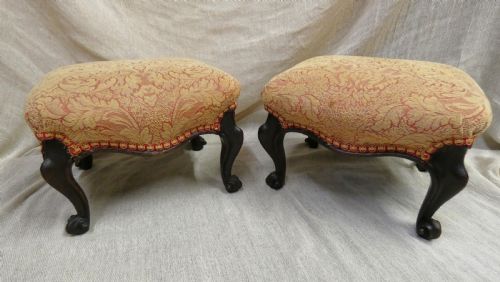
Vintage Footrest Stool
These vintage footrest stool examples combine practical comfort with period character, offering solid woods and traditional upholstery for daily use.
Vintage Footrest Stool
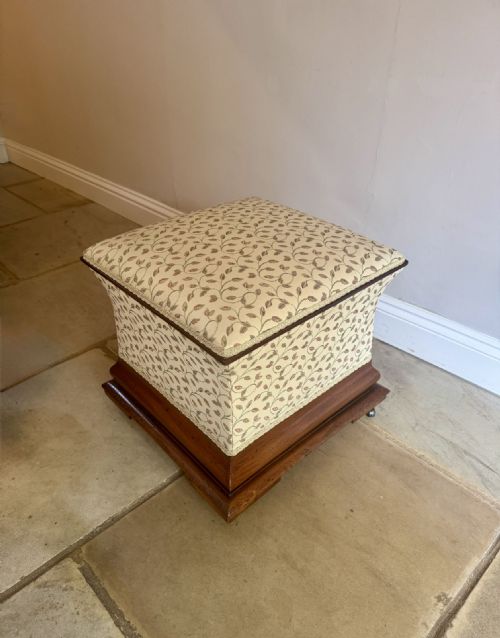
A vintage footrest stool serves as a low seat or rest for tired feet, appearing in various forms from simple fireside pieces to grander ottomans. When exploring this selection, buyers encounter diverse iterations spanning the nineteenth and early twentieth centuries, including the Victorian and Edwardian eras. These objects provide functional utility while anchoring a room with historical presence.
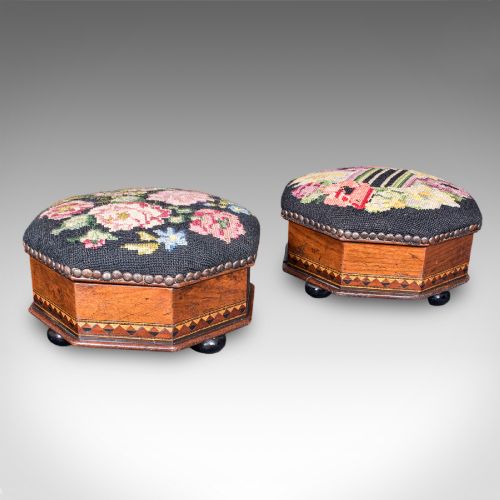
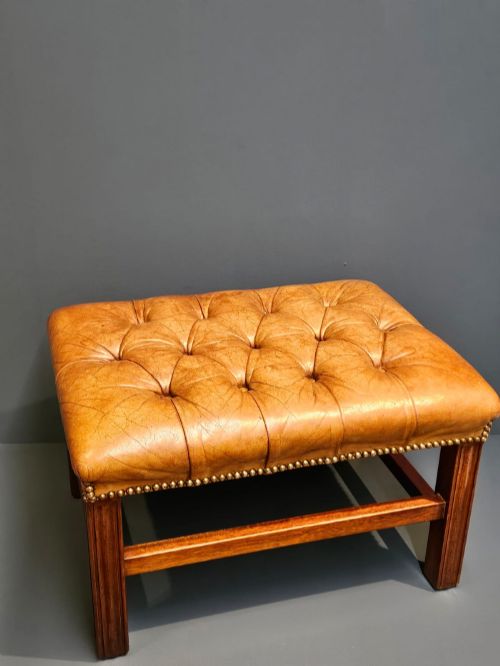
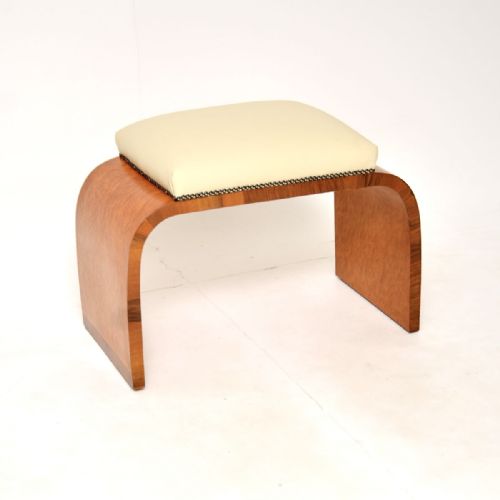
Most items on this page manifest in wood frames such as mahogany, walnut, oak, and beech, paired with traditional coverings like needlepoint, leather, fabric, and wool. Common formats include oblong shapes, square ottomans, and specialised pieces like gout stools or figurative leather animals. Buyers frequently meet revived historical aesthetics, particularly Queen Anne, Chippendale, and Art Deco styles.
The origins of these stools stretch across English country workshops, French ateliers, and specific maker commissions. Whether searching for a simple turned beech cane seat or a carved walnut Victorian fireside companion, collectors find substantial variation in regional craftsmanship and decorative detailing. Each piece reflects the domestic habits and interior tastes of its specific decade.
Materials and construction methods
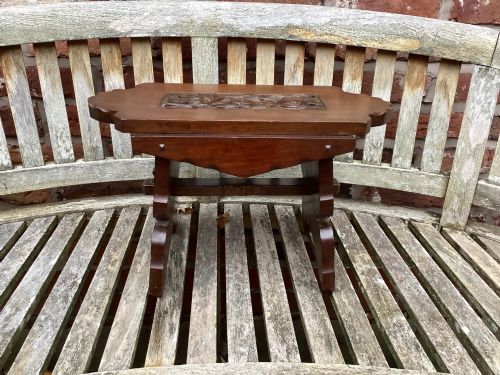
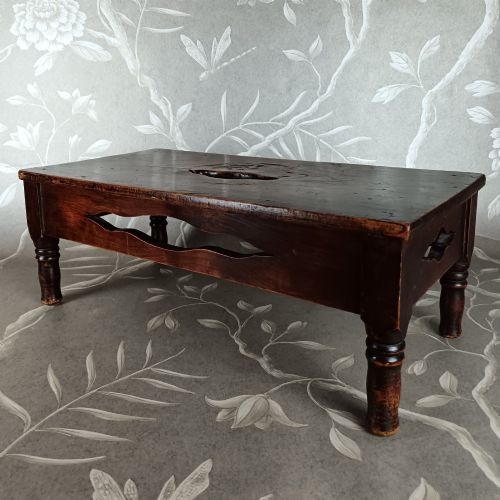
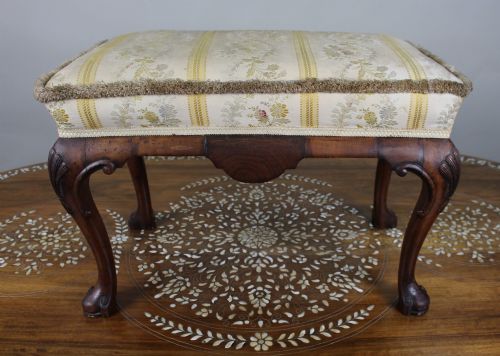
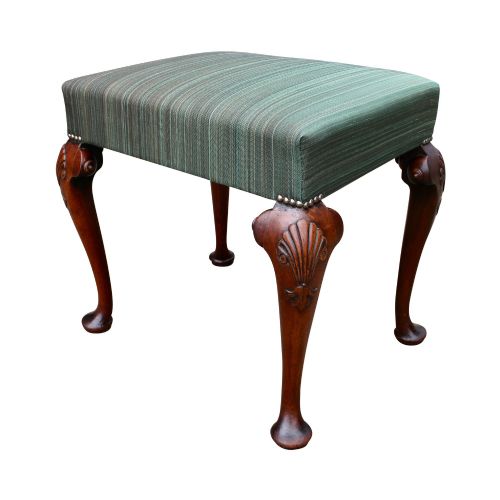
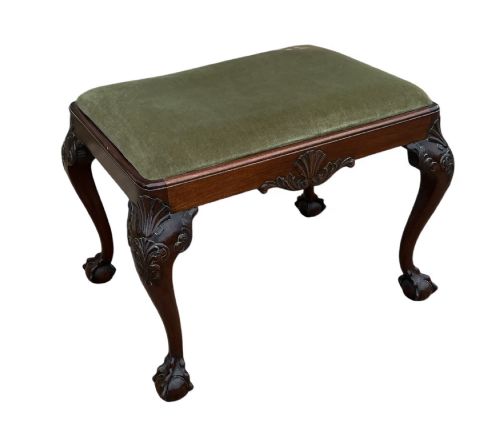
Makers constructed these frames predominantly from hardwoods like mahogany, walnut, and oak, often employing techniques such as solid turning, dovetailing, and elaborate carving. Beech and teak also appear, providing sturdy internal structures or decorative exposed legs in cabriole, curved, or straight profiles.
Upholstered surfaces rely on traditional stuffing and tension methods, covered in durable materials ranging from wool needlework and kilim textiles to hand-finished leather and woven rattan. Brass tacks and detailed cord trim frequently secure the edges of textile and leather coverings to the wooden bases.
Vintage Footrest Stool Retail Price Guide 2026
Typical asking prices for vintage footrest stool among the pieces listed under this phrase on Sellingantiques today, from the lower quarter to the upper quarter. They describe what is for sale here now, not the wider market.
Leather animal footstools by Omersa bring playful pigs and dogs into the parlour, doubling as sturdy seats.
Assessing construction and design standards
Quality in these stools rests upon the integrity of the wooden frame and the precision of its joinery. Finer pieces demonstrate crisp, deep hand-carving in walnut or mahogany, whereas simpler examples rely on basic turned legs and unadorned rails.
The standard of upholstery and the choice of covering material dictate the visual impact of the piece. Superior examples utilise heavy-gauge leather, intricate needlepoint tapestry, or fine kilim wool, paired with robust internal webbing and stuffing that maintains firmness over decades.
Arthur Simpson Of Kendal·Omersa Workshop·Harry and Lou Epstein·Miles & Edwards
The Vintage Footrest Stool Glossary
- Cabriole leg
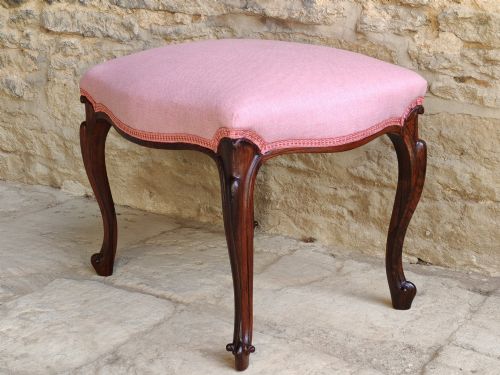
- A furniture leg that curves outward and then tapers inward, mimicking an animal's leg. This design frequently appears on Victorian and Queen Anne style walnut stools.
- Needlepoint
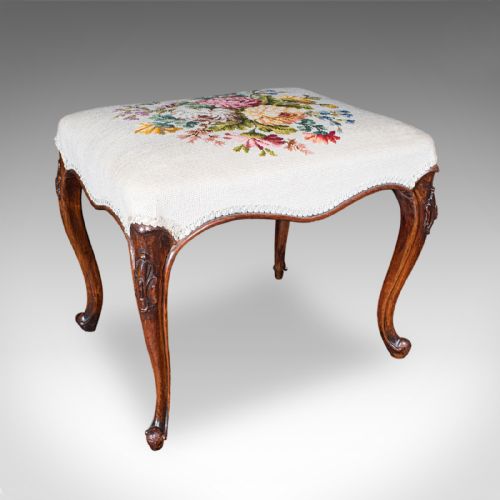
- A type of canvas work embroidery utilising wool yarn to create dense pictorial or geometric patterns. It covers the top of many nineteenth-century fireside stools.
- Gout stool
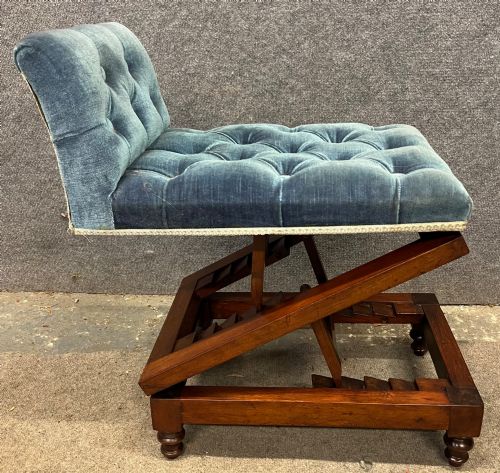
- A specialised adjustable footrest designed to elevate and support a foot afflicted with gout. Edwardian examples often feature a mechanical tilting mechanism.
- Curule
- A stool or chair design featuring two curved legs that cross in an X-shape. This classical form inspired nineteenth-century frame shapes.
- Kilim
- A flatwoven textile originating from the Middle East or Eastern Europe. It provides a durable, patterned covering for nineteenth-century mahogany frames.
Vintage Footrest Stool: Frequently Asked Questions
How do I date an antique footstool?
Dating relies on examining the timber species, joinery methods, and the style of the legs or upholstery. Victorian and Edwardian examples often display distinct revival motifs or machine-assisted joinery.
Secondary clues include the type of underneath webbing, tack types, and wear patterns on the wood finish. Comparing the overall silhouette to documented period furniture helps narrow down the decade of production.
What is a gout stool?
A gout stool is an adjustable footrest designed to elevate the leg at a comfortable angle for someone suffering from joint pain or swelling. They often include a ratcheted mechanism to alter the angle of the cushioned surface.
Edwardian versions in mahogany demonstrate particular ingenuity in their mechanical adjustments. They served as specialised medical furniture that doubled as comfortable daily footrests.
Are leather and fabric stools original?
Upholstery on vintage stools is frequently replaced over time due to natural wear and tear from feet and daily use. Original needlework or leather is sometimes preserved, but newer fabric or leather is standard for functional pieces.
When buying, inspect whether the frame underneath retains its period webbing and stuffing style. Re-upholstery allows these stools to continue serving practical roles in modern interiors.
How do I style a footstool at home?
A vintage footrest stool works effectively placed beside an armchair or sofa to provide functional leg elevation. Smaller needlework or carved wood models also function as standalone decorative accents in hallways or dressing rooms.
Matching the wood tone, such as walnut or mahogany, to existing furniture helps integrate the piece. Alternatively, mixing an Art Deco or Queen Anne style stool into a contemporary room adds textural contrast.