



Vintage Foot Rest
These vintage foot rest options are sturdy domestic supports built to lift the feet, spanning periods from Regency to the 1930s.
Vintage Foot Rest
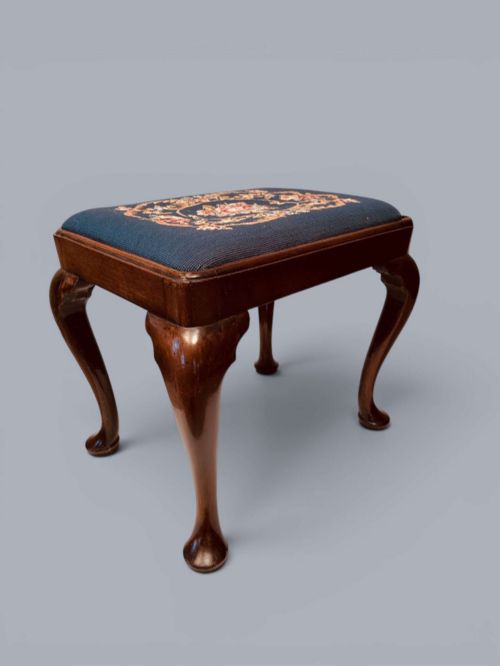
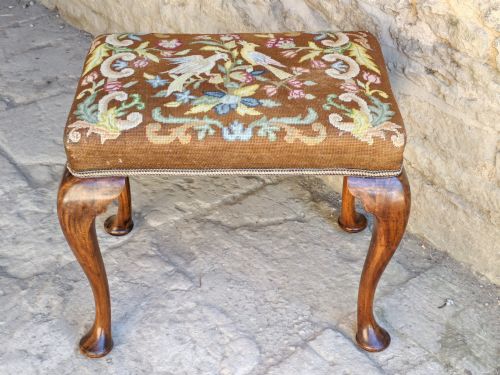
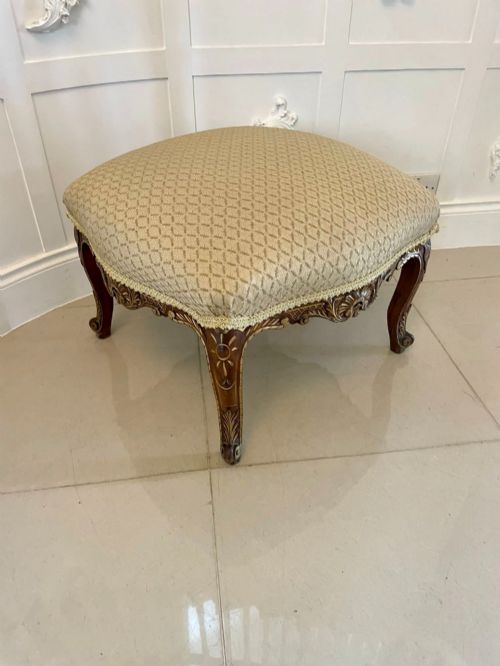
A vintage foot rest typically takes the form of a stool or footstool, designed for domestic comfort in front of a chair or settee. The selection spans the Regency era, the Victorian period, and the 1930s.
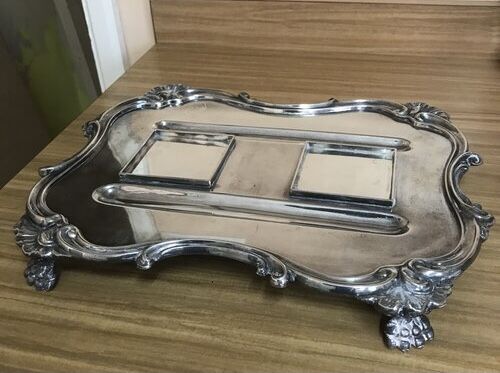
Most items seen here are Victorian walnut or mahogany stools, often retaining their original needlepoint or upholstery. Alongside conventional footstools, the listings occasionally include related small furnishings like reading stands and desk tidies.
Materials and construction methods
Cabinetmakers built these frames using dense timbers like mahogany, walnut, oak, and other hardwoods, sometimes adding giltwood or ebonised details. Joinery techniques varied from Regency sabre leg designs to carved Victorian styles and later 1930s traditional frames.
Upholstered surfaces relied on traditional textiles including wool tapestry, needlepoint, fabric, leather, and cream damask, frequently supported by brass fixtures.
Vintage Foot Rest Retail Price Guide 2026
Typical asking prices for vintage foot rest among the pieces listed under this phrase on Sellingantiques today, from the lower quarter to the upper quarter. They describe what is for sale here now, not the wider market.
The documented periods stretch from the Regency era through Victorian designs to the 1930s.
Distinctions in quality
Quality rests upon the crispness of the timber carving, such as the detail found on Victorian walnut frames or Chippendale style mahogany pieces. Frames constructed from solid hardwoods demonstrate greater durability than simpler structures.
The choice and preservation of the covering material also divide the range, with original handworked needlepoint or fine leather upholstery representing a higher standard of craftsmanship than later replacements.
Harrods
The Vintage Foot Rest Glossary
- Mahogany
- A durable tropical hardwood prized for its deep reddish-brown tone and strength in furniture framing. It appears frequently across 19th-century stools.
- Walnut
- A rich brown timber favoured by cabinetmakers during the Victorian era for its attractive grain and suitability for carving. It is common among the stools listed here.
- Needlepoint
- A form of counted thread embroidery stitched onto canvas, often utilised for the decorative tops of period footstools. It provides a textured, durable surface.
- Regency
- An architectural and decorative style spanning the early 19th century, known for classical lines and elements such as sabre legs. Pieces from this period show distinct classical influences.
- Giltwood
- Timber treated with gold leaf or gilt finish to create a decorative metallic sheen. It appears on select Victorian decorative frames.
Vintage Foot Rest: Frequently Asked Questions
What materials make up a vintage foot rest?
These pieces use solid timbers such as mahogany, walnut, and oak for their frames. They are often finished with wool tapestry, leather, or fabric upholstery.
Brass hardware and giltwood highlights also appear on specific examples from the Victorian era and earlier.
How do I date a foot rest?
Dating relies on the combination of timber, joinery style, and upholstery type. Regency pieces often feature sabre legs, while Victorian items typically show carved walnut or mahogany frames.
Later 1930s examples reflect simpler traditional designs from the interwar period.
Are these foot rests strong enough to use daily?
Most of these items were built from dense hardwoods like mahogany and walnut to endure regular domestic use. Their sturdy frames remain practical for supporting the feet.
Care should be taken to protect original fabric or needlepoint surfaces from excessive wear.
What is the difference between a footstool and an ottoman?
Footstools are generally smaller, compact supports designed specifically to elevate the feet while sitting. Ottomans often provide a larger surface area and can double as low seating.
Both forms utilise traditional upholstery techniques seen across the period listings.