






Vintage Foldover Table
A vintage foldover table offers clever engineering and timeless timber grace, making it a practical centrepiece for any compact entertaining space.
Vintage Foldover Table
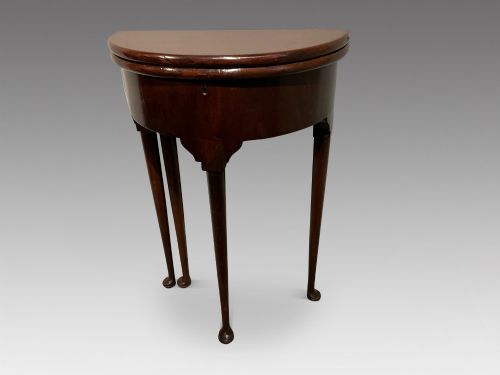
A vintage foldover table transforms from a modest side console into a fully functional playing surface or dining board with a simple leaf movement. These versatile items appear across various periods, including Georgian, Edwardian, and the nineteenth century, reflecting enduring domestic utility.
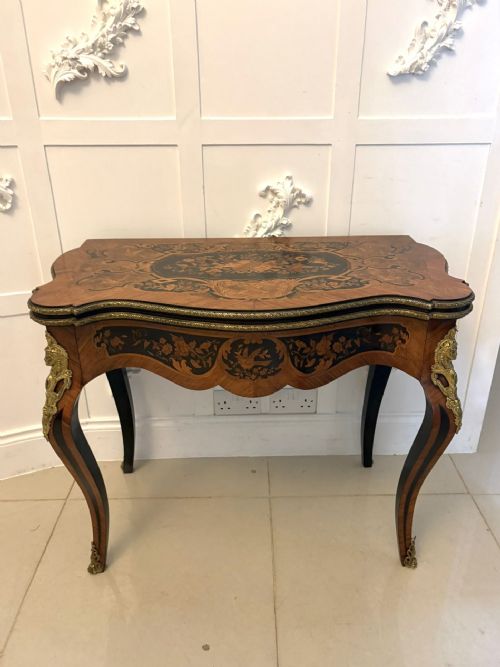
The most common formats on this page include card tables, games tables, and demi-lune consoles designed to sit flush against a wall when closed. Such forms range from simple timber tea tables to elaborate French marquetry pieces mounted in ormolu.
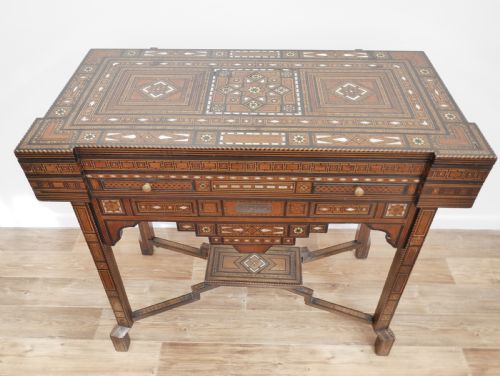
Origins stretch from British workshops to continental Europe and the Ottoman or Syrian traditions, bringing diverse aesthetic traditions to the folding mechanism. Buyers encounter distinct regional interpretations, whether in the restrained lines of mahogany or the intricate inlay of Damascus work.
Materials and construction
Cabinet makers relied heavily on rich timbers such as mahogany, walnut, and satinwood, often applying delicate veneer and kingwood marquetry to enhance visual depth. Brass hinges and swing-legs provide the necessary structural support to secure the cantilevered top when opened.
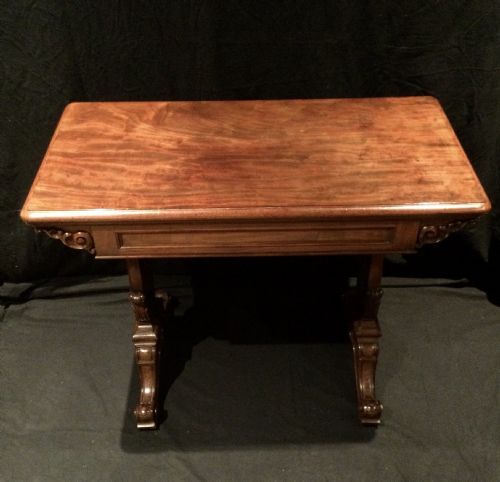
Ornate models incorporate cast ormolu mounts and intricate wood inlays that define continental Louis XV style creations. Simpler Edwardian and nineteenth-century examples focus on solid timber construction, utilising oak and mahogany with straightforward hinged leaves.
Vintage Foldover Table Retail Price Guide 2026
Typical asking prices for vintage foldover table among the pieces listed under this phrase on Sellingantiques today, from the lower quarter to the upper quarter. They describe what is for sale here now, not the wider market.
Some tables hide secret compartments for counters and cards, ready for an impromptu Victorian wager.
Judging quality and craftsmanship
Quality rests primarily on the precision of the joinery and how seamlessly the folding top aligns with the base when closed. Superior examples feature stable hinges and balanced swing-legs that bear weight without straining the frieze.
The fineness of the surface materials sets the upper tier apart, visible in crisp marquetry, well-figured veneer grains, and securely fitted ormolu mounts. Finer pieces maintain structural integrity through centuries of opening and closing, whereas lesser items show looseness in the pivot mechanism.
The Vintage Foldover Table Glossary
- Demi-lune
- A half-moon shape used for console and card tables designed to sit flat against a wall. This profile became particularly popular during the Georgian period.
- Ormolu
- Gilded bronze mounts applied for decorative effect on furniture frames. The technique is frequently found on nineteenth-century French pieces.
- Marquetry
- Decorative patterns formed by fitting small pieces of veneer into a wooden background. This method creates complex pictorial or geometric designs.
- Trifold
- A tabletop design featuring multiple folding sections that expand significantly beyond the footprint of the closed console. This format accommodates larger playing or dining configurations.
Vintage Foldover Table: Frequently Asked Questions
What is a foldover table used for?
These tables function primarily as space-saving console surfaces that expand into full-sized gaming or dining boards when guests arrive. Historically, households used them for card games, tea service, and general entertaining.
Today, they serve well in hallways or living rooms where floor space is at a premium but surface area is occasionally required.
How do I date a foldover table?
Dating relies on identifying the prevailing style, secondary woods, and hardware construction methods visible in the frame and hinges. Georgian and eighteenth-century examples display different leg turnings and timber choices compared to Edwardian or later nineteenth-century pieces.
Examining the underside and joint construction often reveals the manufacturing era.
Are these tables sturdy when opened?
Most surviving examples utilise a swing-leg or gateleg mechanism to support the extended leaf, providing reliable stability for cards and tea wares. The weight of the timber and the quality of the original hinge fixings determine how firmly the leaf rests.
Properly maintained swing mechanisms prevent the top from dipping under moderate pressure.
How do I care for timber veneers?
Timber surfaces require protection from direct sunlight and excessive humidity to prevent veneer lifting or wood splitting. Regular dusting with a soft, dry cloth preserves the polish without chemical buildup.
Applying a traditional wax occasionally helps nourish older mahogany and walnut finishes.