


Vintage Floral Light Fixture
A vintage floral light fixture brings garden blooms indoors through delicate glass, ceramic and gilt metal shapes.
Vintage Floral Light Fixture
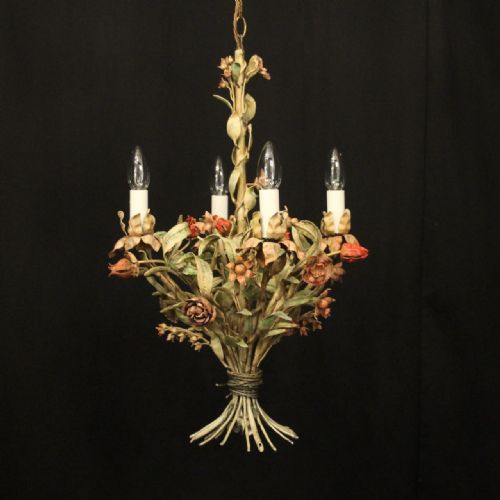
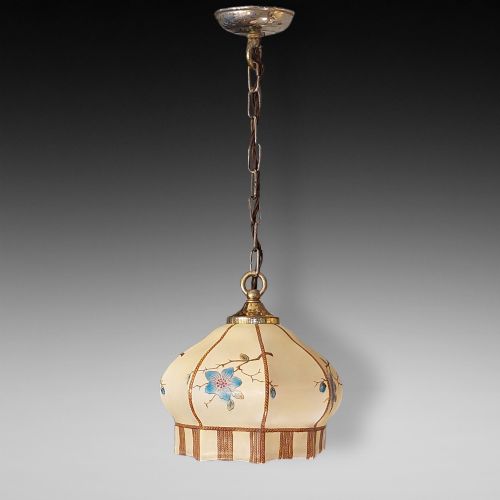
A vintage floral light fixture brings botanical form into interior lighting through chandeliers, wall lights, and pendants. These pieces transform metal and glass into petalled shades, painted blossoms, and trailing branch structures.
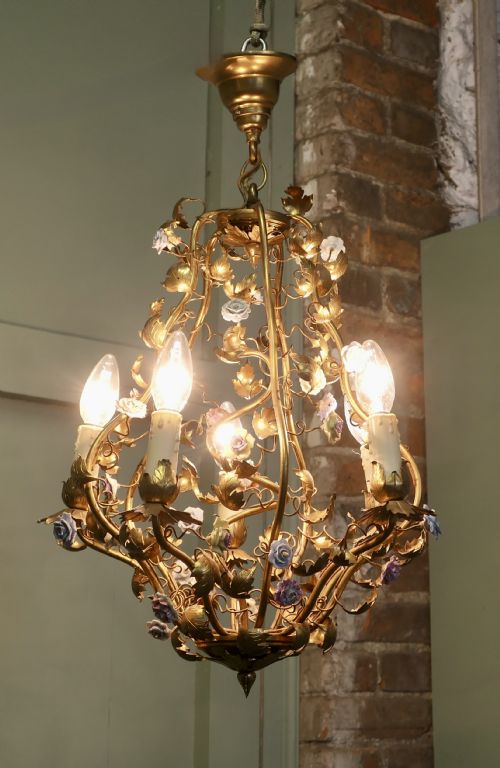
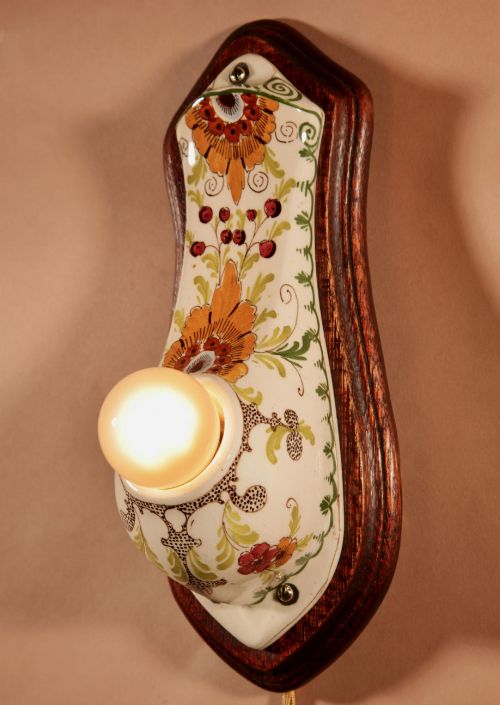
Most examples appearing here stem from the early twentieth century and the Victorian era, heavily influenced by French design sensibilities. Buyers encounter gilt toleware, polychrome ceramics, and hand-painted glass configured into multi-branch chandeliers or single-bulb sconces.
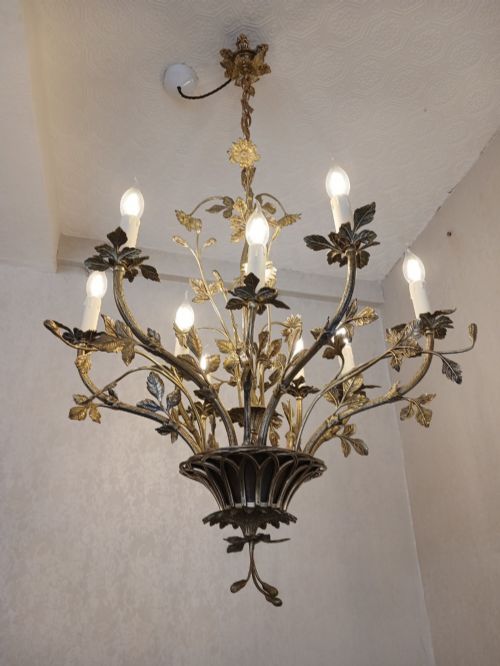
Makers drew directly on nature, creating chandeliers with porcelain flowers and wall lights featuring leaf-wrapped brass arms. Choosing a vintage floral light fixture means selecting between grand French chateau statements and intimate Victorian oil lamps converted for modern interiors.
Materials and construction methods
Makers built these fixtures using structured foundations of brass, bronze, gilt metal, and iron to support complex arrangements. Metal branches were twisted, cast, or soldered into place to mimic natural stems and vines.
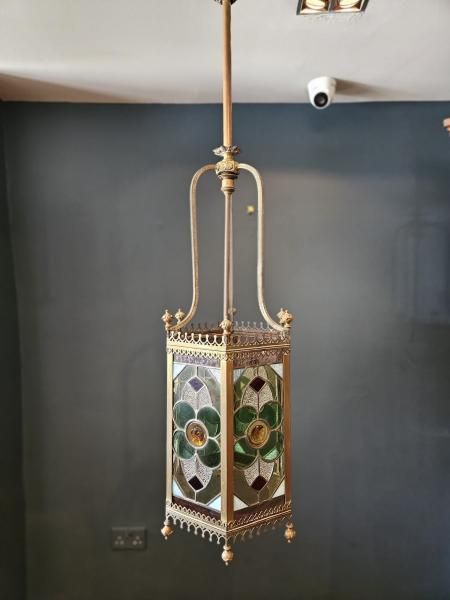
Decorative elements relied heavily on ceramics, porcelain, and toleware shaped into individual petals and leaves, often finished with polychrome hand painting. Glass components included leaded panels, hand-painted shades, and crystal drops that caught and diffused the illumination.
Artisans combined these rigid metals with fragile fired clays and blown glass, securing delicate porcelain blossoms onto metal armatures. This mixed-media approach required careful balancing of heavy brass frames against lighter floral adornments.
Listings span the nineteenth century through the 1930s, uniting French toleware, Victorian oil lamps, and Art Deco glass.
Assessing quality in floral lighting
Quality rests in the sculptural depth of the metalwork and the hand-painted detail on ceramic and glass flowers. Superior examples show individually formed petals and naturalistic leaf veining rather than mass-pressed uniformity.
The integrity of the structural assembly distinguishes finer pieces, particularly where delicate ceramic or toleware elements join metal branches. Heavier gauge brass, substantial bronze castings, and secure wiring channels separate workshop pieces from lighter commercial outputs.
Schneider·Tiffany
The Vintage Floral Light Fixture Glossary
- Toleware
- Painted or lacquered sheet metal items popular in French decorative arts. This technique allowed artisans to shape tin and iron into flexible floral motifs before applying rich polychrome colours.
- Capodimonte
- Italian ceramic ware known for intricate sculptural details and figures. Pieces utilising this style often feature elaborate, highly textured porcelain flowers applied directly to the lighting body.
- Delft
- Tin-glazed earthenware originating from the Netherlands, characterised by distinctive blue and white glazes or colourful polychrome finishes. Night lights and small shades occasionally incorporate these ceramic elements.
- Tent and waterfall
- A chandelier configuration where glass beads or crystal drops form an upper conical tent cascading down to a lower ring. This arrangement maximises light refraction across the surrounding room.
- Art Nouveau
- A design style inspired by natural organic forms, swaying plant stalks, and curved asymmetrical lines. This aesthetic directly influenced the floral and botanical shapes seen in early lighting.
Vintage Floral Light Fixture: Frequently Asked Questions
How do I hang a heavy chandelier?
Heavy fixtures require direct anchoring into ceiling joists using a rated steel mounting hook rather than standard plaster fixings.
Consult a qualified electrician to ensure the junction box safely supports the combined weight of metal branches and ceramic flowers.
Are these lights wired for modern standards?
Many vintage pieces retain older wiring components that require complete rewiring to meet current safety codes and voltage requirements.
An experienced lighting restorer can replace internal cords while preserving the exterior historical fittings.
How do I date a floral chandelier?
Examine the metal casting techniques, screw types, and mounting hardware alongside stylistic indicators like Art Nouveau curves or Victorian proportions.
Materials such as hand-painted toleware and leaded glass often point directly to early twentieth-century French or British workshops.