

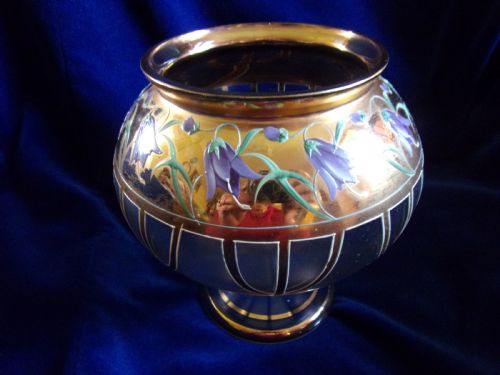


Vintage Floral Glass Vase
These vintage floral glass vase examples bring botanical colour and form to a room through centuries of glassmaking skill.
Vintage Floral Glass Vase
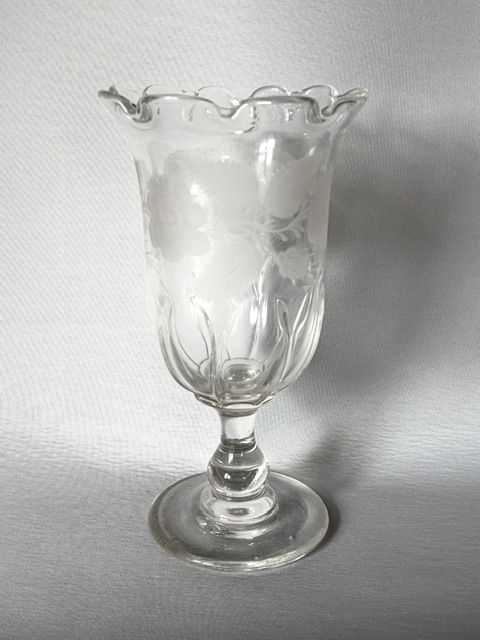
When searching for a vintage floral glass vase, collectors encounter diverse forms spanning the Victorian era through the mid-twentieth century. The selection ranges from delicate opalescent vessels and heavy cameo glass to painted opaque glassware featuring botanical motifs.
Most examples originate from European workshops and studios, encompassing Art Nouveau designs, Art Deco styling, and Victorian Rococo Revival pieces. Buyers meet everything from tall trumpet shapes to intricate epergnes and moulded display vessels.
How they were made
Makers utilised frosted glass, cobalt glass, and opalescent glass as foundations, often applying oil paint, enamel, or gold leaf to build the floral surface decoration. Cameo glass techniques involved acid-etching layered colours to reveal delicate botanical details like cornflowers and honeysuckle.
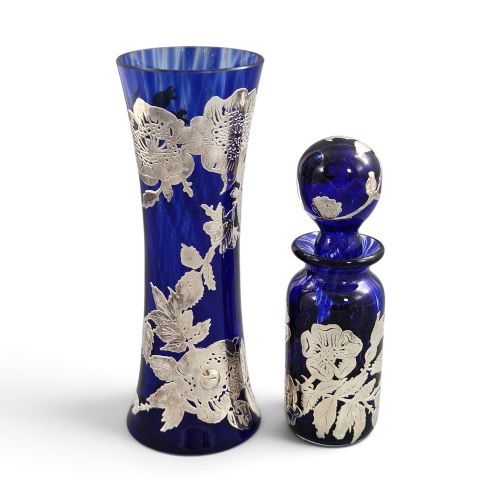
Overlay methods incorporated pewter and sterling silver directly onto the glass body. Hand-painted opaque pieces relied on precise brushwork to depict naturalistic flower studies directly onto the vessel walls.
Several pieces double as lucky charms dedicated to friendship, featuring delicate lily of the valley painted to bring good fortune.
What varies in quality
The distinction between standard production and superior work lies in the depth of the cameo carving and the crispness of the enamel or gilded details. Finer vessels display precise control over multi-layered acid etching and harmonious colour transitions within the glass itself.
Artistry in the hand-painted or overlaid elements dictates the overall desirability of a piece. Stronger examples exhibit balanced botanical compositions integrated seamlessly with the underlying glass form.
René Lalique·Thomas Webb and Sons·Daum Freres·Karl Palda·Laugharne Glass
The Vintage Floral Glass Vase Glossary
- Cameo glass
- Glass vessels created by fusing two or more layers of different coloured glass and carving away the outer layer to form a raised design. This demanding technique produced high-contrast botanical motifs.
- Opalescent glass
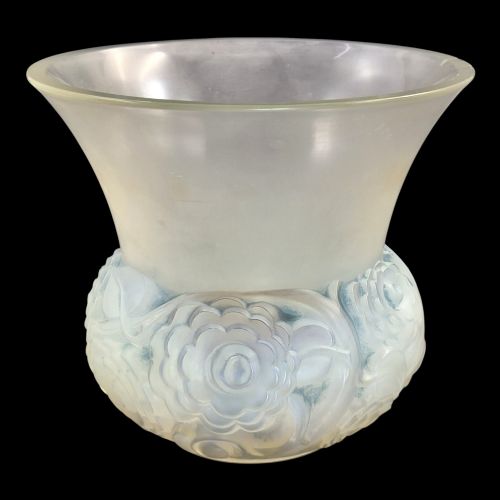
- Glass that diffuses light with a milky, translucent appearance, often showing iridescent colour shifts across its surface. It became a hallmark of mid-century decorative vessels.
- Epergne
- A central table centrepiece featuring multiple branching trumpet vases or baskets for holding flowers or fruit. Victorian examples frequently utilised pearlescent or coloured glass.
- Sterling silver overlay
- Decorative openwork metal applied directly to the exterior of a glass bottle or vase. This technique combined silversmithing with glass manufacture.
- Uranium glass
- Glass containing trace amounts of uranium oxide, which causes the material to glow brightly under ultraviolet light. It appears frequently in Art Deco production.
Vintage Floral Glass Vase: Frequently Asked Questions
How do I date a vintage floral glass vase?
Dating relies on identifying the characteristic manufacturing style, such as Art Nouveau acid-etched cameo work or Art Deco opalescent moulding. Maker signatures, acid stamps, and stylistic cues like silver overlay help narrow the decade of production.
Examining the base wear and manufacturing technique further confirms whether a piece belongs to the Victorian period or mid-century studio output.
What is cameo glass?
Cameo glass is a luxury technique where multiple layers of different coloured glass are fused together before an artisan carves away the upper layer. This leaves a stark, raised botanical pattern against a contrasting background.
Makers achieved this through meticulous hand-carving or precise acid-etching to render flowers and foliage with striking depth.
How were these vases used originally?
These vessels served as ornamental display objects and functional holders for fresh cut flowers in grand homes and parlours. Many were designed as centrepieces or vanity items to catch natural light on tables and mantelpieces.
Over time, their decorative qualities made them standalone works of art rather than mere utilitarian containers.
How do I care for coloured glass?
Maintain coloured and enamelled glass by dusting gently with a soft, dry cloth rather than using harsh chemical cleaners. Avoid submerging pieces with delicate gold leaf or painted details in water.
Keep glass vessels away from direct, prolonged sunlight to preserve the original vibrancy of the pigments and prevent surface fading.