




Vintage Floral Embroidery
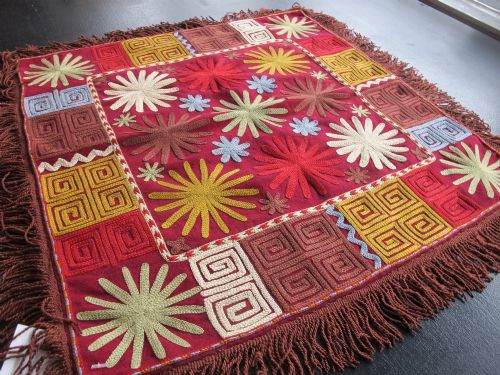
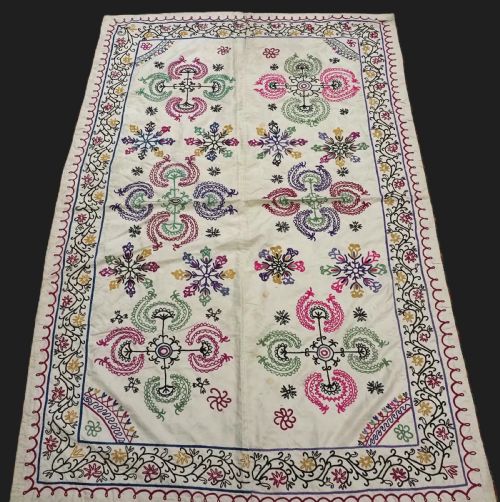
Vintage floral embroidery encompasses needlework panels, wall hangings, and textiles carrying botanical motifs across centuries.
Vintage Floral Embroidery
Vintage floral embroidery spans decorative textiles from Central Asian suzanis to English crewelwork and samplers. When searching for vintage floral embroidery, buyers encounter various regional traditions and domestic needle arts.
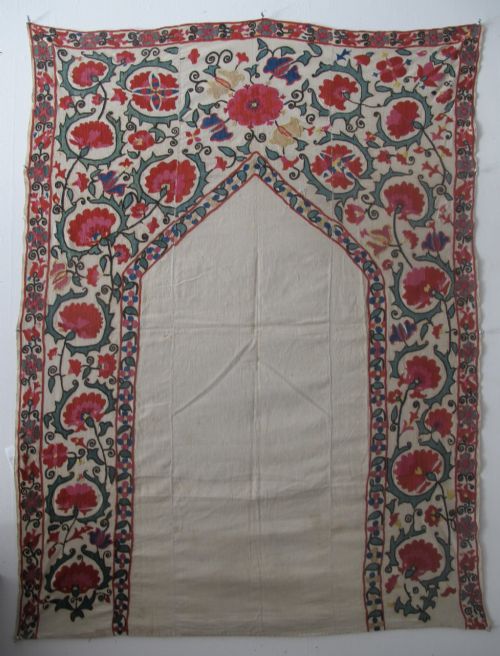
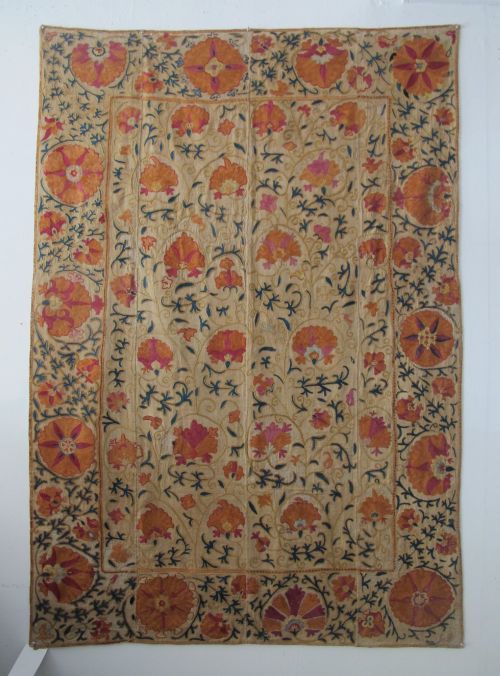
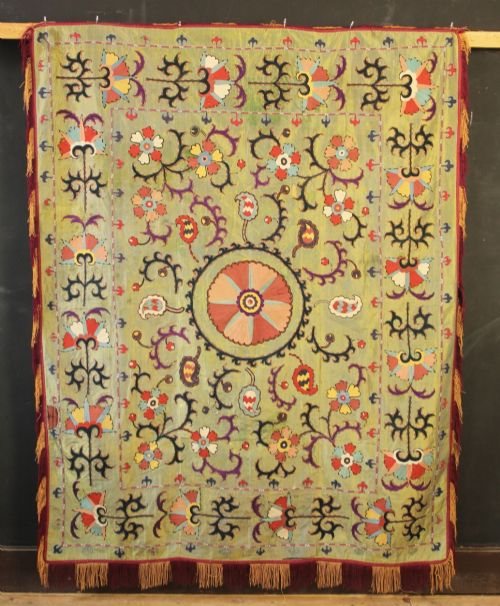
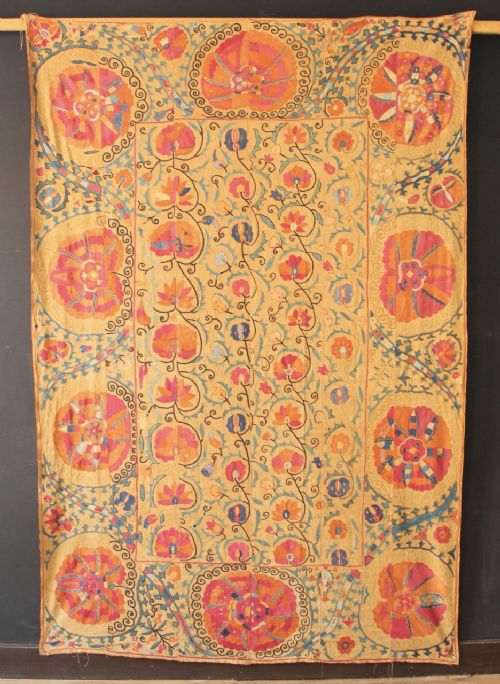
Central Asian suzanis dominate the selection, originating from workshops in Uzbekistan and cities like Bokhara and Samarkand. These large pieces feature vibrant botanical motifs worked in silk on cotton or linen foundations.
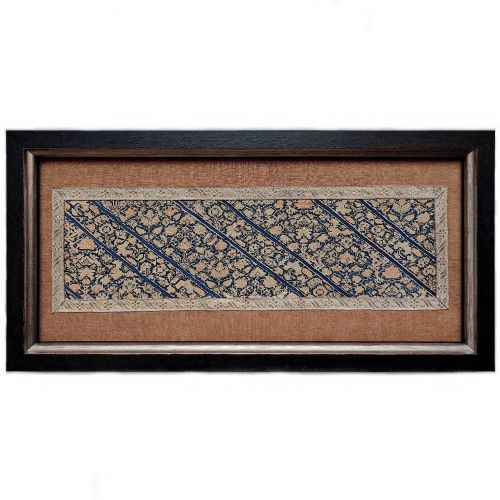
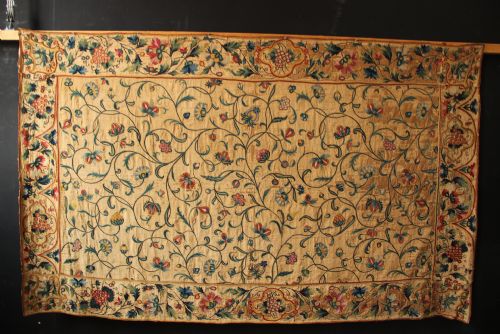
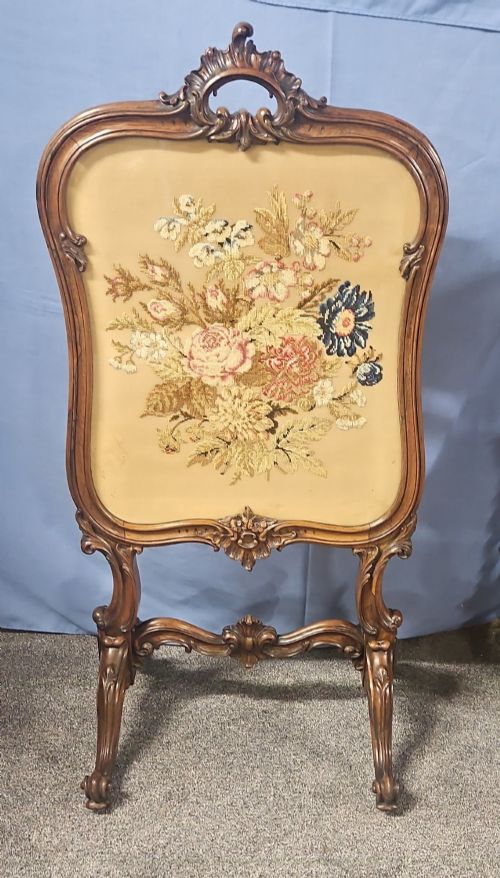
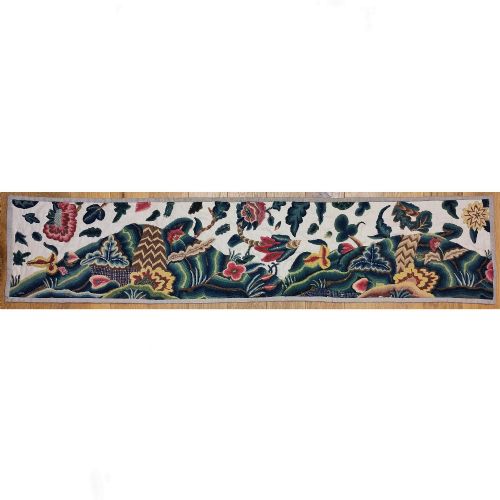
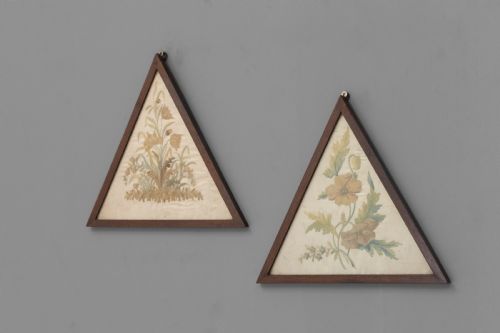
English and European examples include framed pictures, crewelwork wall hangings, and upholstered furniture elements like footstools and fire screens. These domestic works date from the seventeenth century through the Victorian era and into the early twentieth century.
Materials and Techniques
Central Asian suzanis rely predominantly on fine silk threads worked across cotton or linen ground fabrics using specialised hook-chain stitches or tambour work. Regional makers often stitched separate panels before joining them into large wall hangings or covers.
English crewelwork utilises wool threads on heavy linen or cotton twill foundations, employing varied stitches to create dense botanical designs. Persian and Indian examples frequently combine silk embroidery with felt or velvet applique techniques.
Vintage Floral Embroidery Retail Price Guide 2026
Typical asking prices for vintage floral embroidery among the pieces listed under this phrase on Sellingantiques today, from the lower quarter to the upper quarter. They describe what is for sale here now, not the wider market.
Assessing Quality
Quality rests primarily on the precision of the needlework and the complexity of the botanical composition. Finely rendered details and sophisticated colour palettes distinguish superior pieces from simpler domestic output.
The integrity of the ground fabric and the vibrancy of surviving natural or early synthetic dyes determine the overall condition and visual impact of textile panels and wall art.
The Vintage Floral Embroidery Glossary
- Suzani
- An embroidered tribal wall hanging or cover from Central Asia, typically worked in silk on a cotton or linen ground.
- Crewelwork
- Embroidery executed with wool yarn on a sturdy fabric foundation, traditionally featuring scrolling floral vines and foliage.
- Sampler
- A piece of needlework produced to demonstrate proficiency in various stitches and alphabets, often bearing a maker's name and date.
- Applique
- A technique where pieces of fabric are sewn onto a larger contrasting ground material to build up a decorative pattern.
- Tambour work
- A method of chain-stitch embroidery created using a fine hooked needle working from the underside of stretched fabric.
Vintage Floral Embroidery: Frequently Asked Questions
How do I hang a suzani?
Large Central Asian textiles require even weight distribution across the upper edge. Conservation methods involve stitching a cotton sleeve to the reverse to slide a padded wooden batten through.
Display these heavy wall hangings away from direct sunlight to protect delicate silk threads and natural dyes from fading over time.
How are antique textiles cleaned?
Professional textile conservators should handle historic pieces rather than attempting domestic washing. Vacuuming through a protective mesh screen removes surface dust safely.
Water immersion risks causing fugitive dyes to bleed across the ground fabric, particularly in older Persian and Central Asian works.
What is the difference between crewelwork and needlepoint?
Crewelwork involves freeform embroidery using wool threads directly onto a woven ground fabric like linen or twill. The artisan follows a drawn outline rather than counting threads.
Needlepoint, conversely, uses a stiff grid canvas where every square is filled with stitches to form a completely opaque patterned surface.
Can I use an antique textile as a rug?
Certain robust Kashmir chain stitch carpets and heavy embroidered covers withstand light floor placement in low-traffic areas. Placing a breathable non-slip underlay beneath prevents sliding and excessive wear.
Fragile silk suzanis and fine needlework pictures remain unsuited for foot traffic and belong on walls or furniture.