



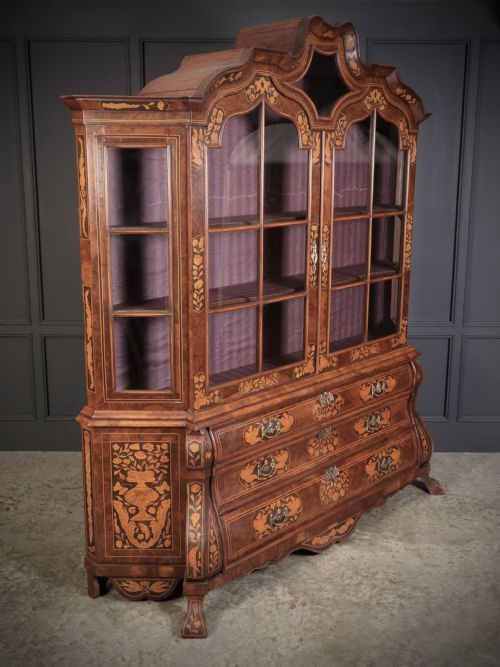


Vintage Floral Bureau
These vintage floral bureau pieces combine intricate marquetry and practical writing surfaces, offering practical workspace enriched with botanical decoration.
Vintage Floral Bureau
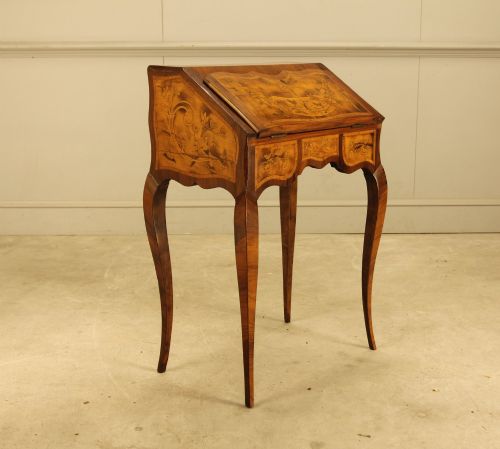
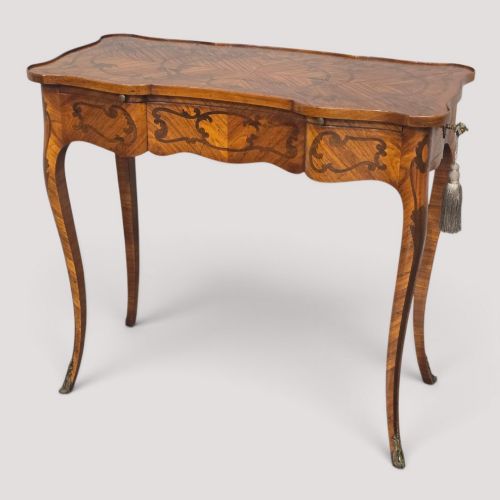
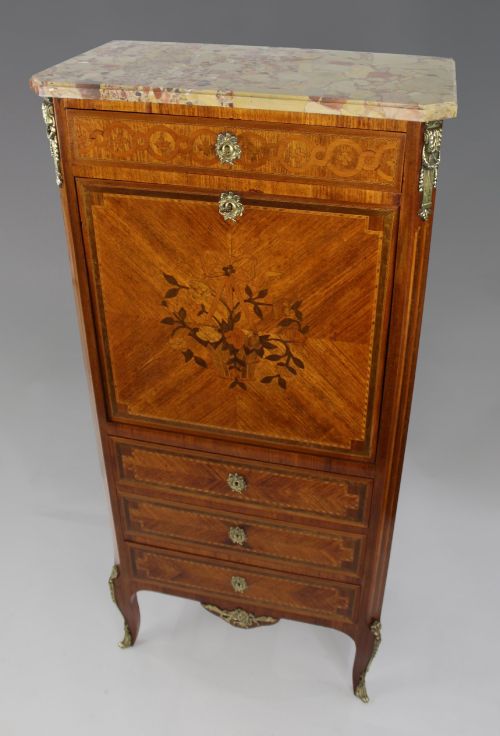
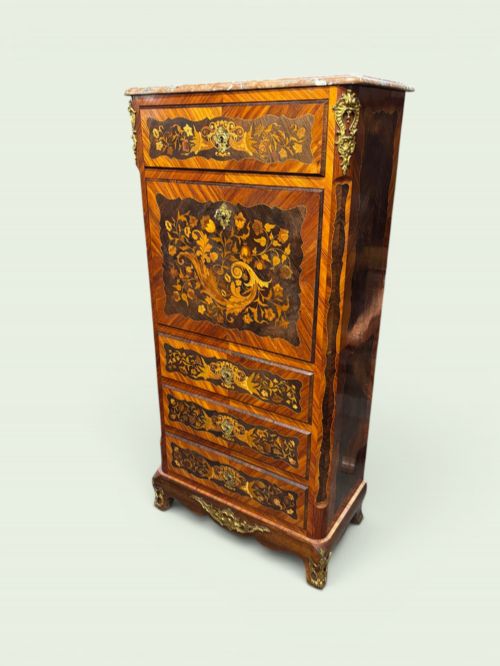
A vintage floral bureau provides a dedicated writing space featuring decorative botanical marquetry. Buyers searching for a vintage floral bureau encounter various forms including bureau desks, secretaire cabinets, and writing tables.
The selections span multiple periods, notably the eighteenth and nineteenth centuries, alongside revival movements. Pieces originate from workshops across Britain and continental Europe, showcasing distinct regional cabinetry traditions.
Formations range from slant-front desks to upright secretaire a abattant styles and freestanding writing tables. Many incorporate fitted interiors with drawers and pigeonholes concealed behind folding or dropping writing flaps.
Materials and construction methods
Cabinet makers utilised dense hardwoods such as walnut, rosewood, and kingwood as foundations for detailed marquetry decoration. Fruitwood veneers provided contrasting natural tones necessary for rendering petals, stems, and leaves.
Surface ornamentation relies on precision cutting of wood veneers assembled into complex floral pictorial arrangements. Metal mounts in brass or ormolu frequently accent corners, handles, and framing edges.
Vintage Floral Bureau Retail Price Guide 2026
Typical asking prices for vintage floral bureau among the pieces listed under this phrase on Sellingantiques today, from the lower quarter to the upper quarter. They describe what is for sale here now, not the wider market.
Many floral bureaux hide secret compartments behind miniature drawers, designed for stashing love letters or spare house keys away from prying eyes.
Assessing quality and execution
Superior examples demonstrate meticulous precision in the alignment and tight fitting of intricate floral veneer work. The complexity and naturalistic depth of the marquetry design separate master execution from simpler geometric or repetitive patterns.
Structural integrity of the writing flap hinges and internal compartment construction dictates the functional standard. Integration of original hardware such as brass handles and marble tops preserves the integrity of the piece.
The Vintage Floral Bureau Glossary
- Marquetry
- Decorative veneer work applied to furniture structures to form pictorial patterns. Artisans cut various tinted woods and assemble them meticulously like puzzles.
- Secretaire a abattant
- An upright cabinet featuring a drop-down writing panel that conceals internal compartments. This form maximises vertical storage while providing a stable writing surface.
- Ormolu
- Gilded bronze mounts applied to furniture for decorative enrichment. Found frequently on revival pieces to highlight structural contours.
- Bombe
- A swelling, outward-curved contour found on drawer fronts and cabinet sides. This curved shaping requires advanced woodworking skill to achieve balanced proportions.
Vintage Floral Bureau: Frequently Asked Questions
How do I maintain the wood surface?
Apply traditional beeswax sparingly and buff gently with a soft cloth to preserve the natural sheen of the hardwood veneers. Avoid placing the desk near direct heat sources or strong sunlight to prevent timber drying and veneer lifting.
Keep humidity levels stable in the room where the furniture stands. Regular dusting with a dry lint-free cloth prevents particle accumulation in the fine crevices of the marquetry.
Are these desks suitable for daily writing use?
Most antique writing desks function well for correspondence and laptop work when treated with reasonable care. The drop flaps and pull-out surfaces support normal writing pressures but benefit from a protective blotter.
Inspect the internal hinges and support brackets periodically to ensure they bear the weight securely. Distribute heavy items evenly across the interior compartments rather than concentrating weight on the edges.
How do I identify the period of a floral bureau?
Examine the secondary timbers used inside the drawers and carcass construction methods. Eighteenth-century pieces often display hand-cut dovetails and native woods differing from later industrial production standards.
Stylistic cues such as revival details, ormolu casting styles, and floral motif arrangements offer further clues to the decade of creation. Comparing the construction against documented historical examples confirms the manufacturing era.