



Vintage Five Light Fitting
A vintage five light fitting brings layered illumination and striking period character to a high ceiling, drawing the eye upwards with brass, bronze, and crystal.
Vintage Five Light Fitting
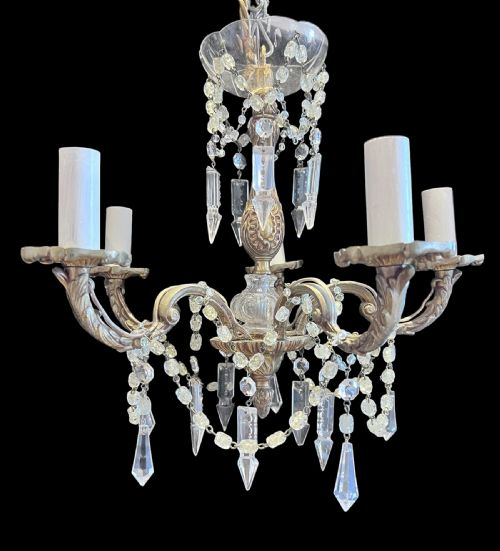
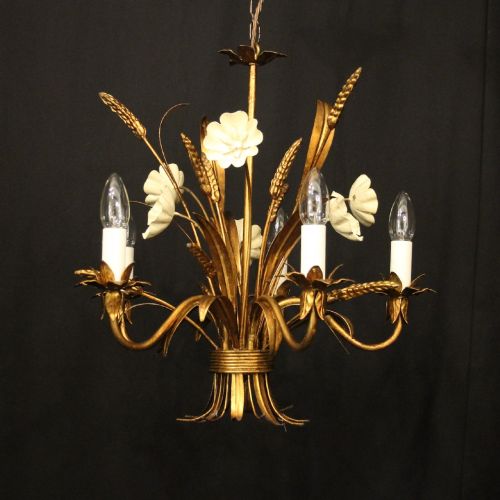
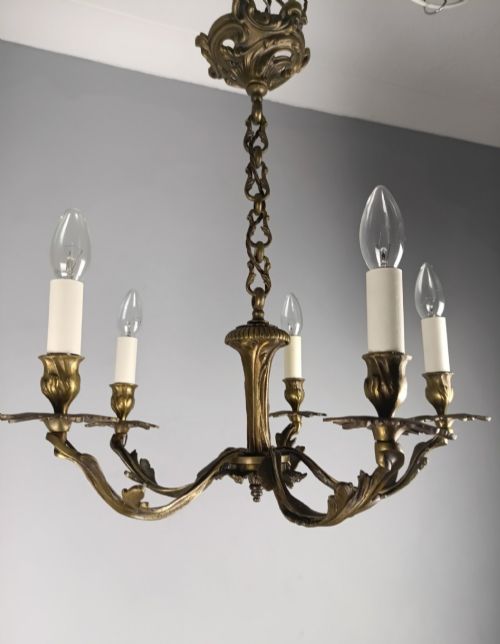
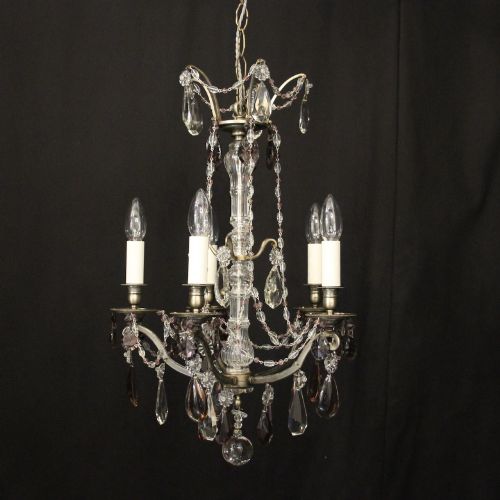
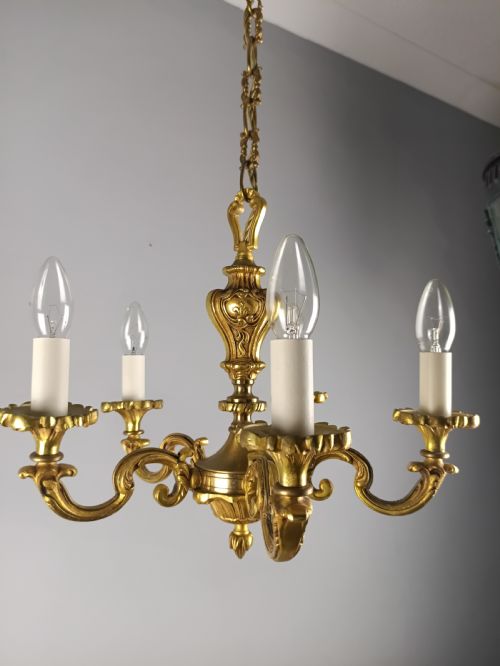
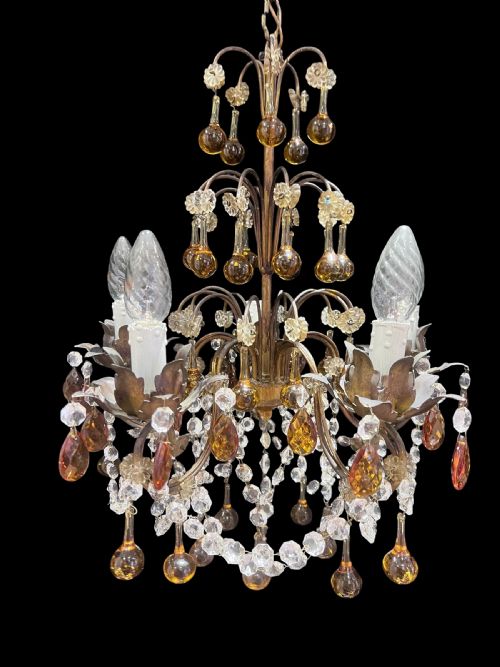
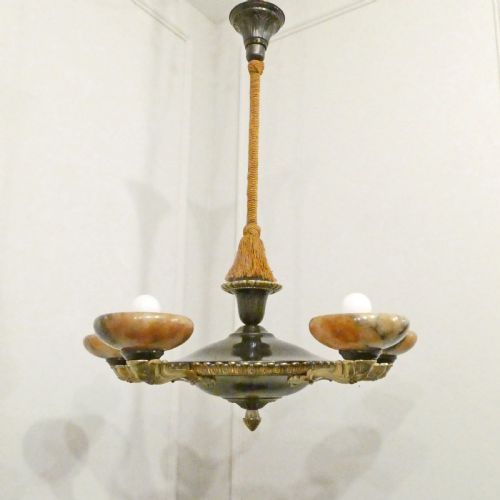
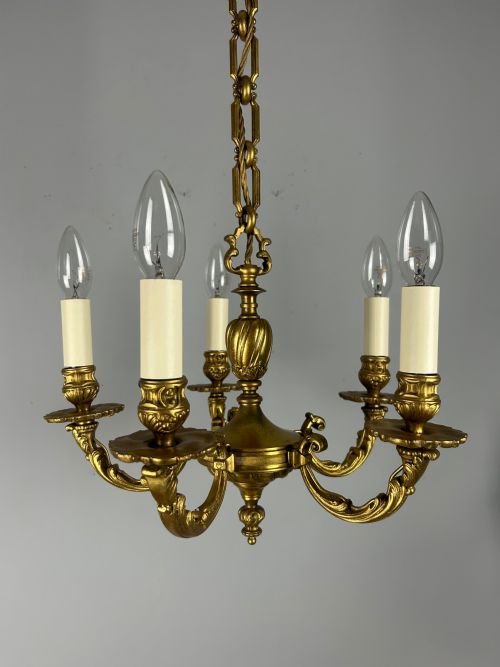
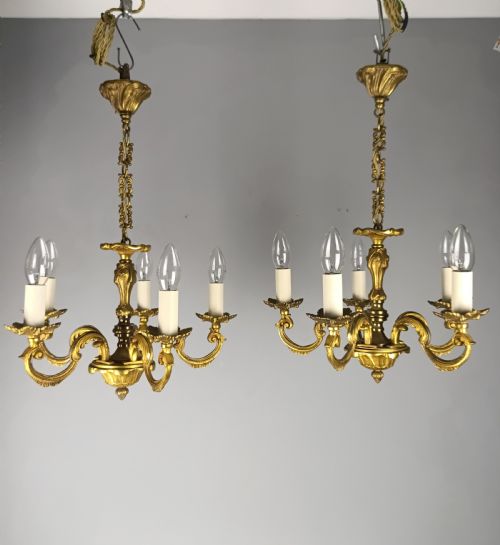
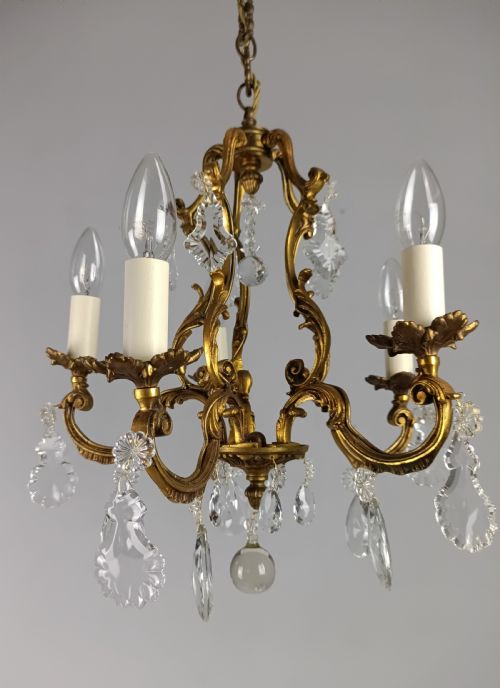
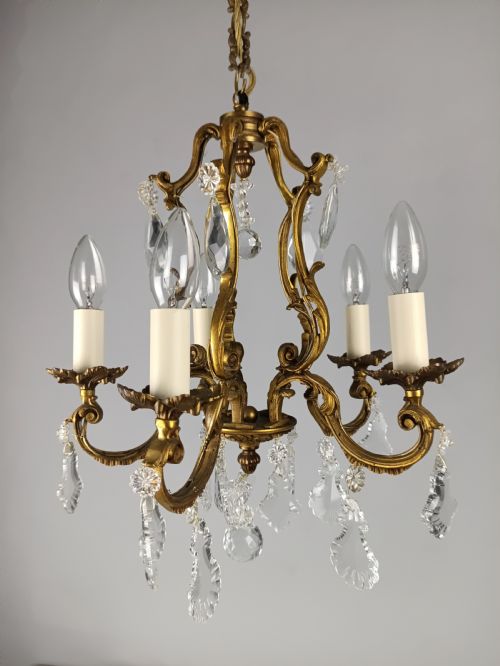
A vintage five light fitting encompasses multi-armed ceiling lights and chandeliers spanning from the nineteenth century through the Edwardian era and into the nineteen-twenties and nineteen-thirties. These pieces emerge predominantly in French, Italian, and English designs, utilising five branches or bulbs to distribute light across a room. Buyers searching for a vintage five light fitting encounter grand Florentine giltwood creations, restrained brass arms, and opulent crystal-trimmed chandeliers.
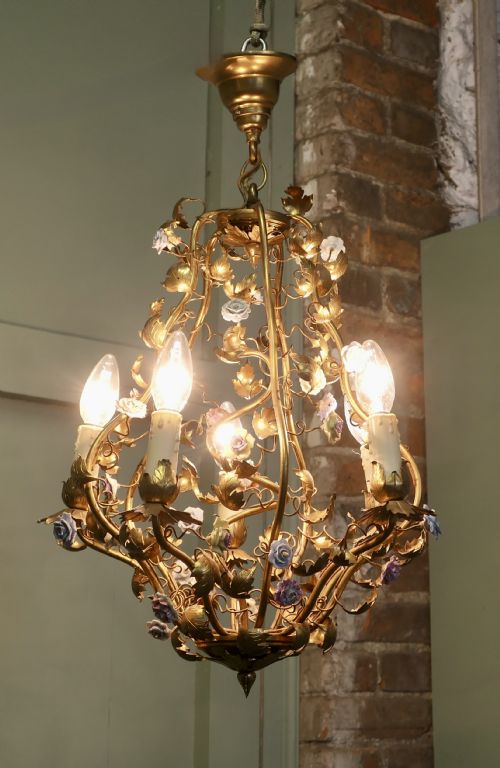
The selections on this page lean heavily towards French chandeliers and ceiling lights executed in gilt bronze, brass, and toleware, alongside English Edwardian brass and silver-plated examples. Forms range from strict Art Deco symmetry and Empire styling to ornate French Rococo revival and Italian antique frameworks. Alabaster, polychrome ceramic flowers, and coloured crystals frequently accompany the metallic structures, offering distinct regional personalities from the early twentieth century.
Materials and Construction
Makers utilised cast and chased bronze, solid brass, and gilt metal to build sturdy structural frames that could support five spreading arms or branches. Surface treatments varied from silver gilding and dark patination to polychrome paintwork on toleware components, fixing the visual weight of each piece.
Glass elements including cut crystals, tiered glass drops, and alabaster bowls were integrated into the metal armatures using pins, wires, or bezels. Ceramic floral motifs and carved giltwood further diversified the assemblage, combining rigid metalwork with delicate decorative details.
Listings span periods from the nineteenth century through the Edwardian era up to nineteen-thirty, predominantly featuring brass, bronze, and glass.
Judging Quality and Execution
Superior examples display crisp chasing in cast bronze and robust gauge brass that resists bending under the weight of five heavy arms. Lower tiers of quality rely on thinner stamped metals and simpler joins that lack the sculptural depth found in better workshops.
The refinement of the secondary materials dictates the upper end of the range, seen in hand-cut crystal drops with sharp facets rather than moulded glass with soft edges. Integrated decorative elements like ceramic flowers or carved giltwood retain meticulous detail and secure mounting in finer productions.
The Vintage Five Light Fitting Glossary
- Chandelier
- A branched ceiling-mounted lighting fixture designed to hold multiple bulbs or candles. These fixtures form the primary category for five light arrangements.
- Toleware
- Painted or lacquered sheet metal, often featuring floral motifs and polychrome decoration. This material appears frequently in French chandeliers from the nineteen-thirties.
- Gilt Bronze
- Bronze metal coated with a thin layer of gold or gold-coloured alloy. Also known as ormolu, it provides a durable, lustrous finish on antique fittings.
- Florentine
- A decorative style originating from Florence, characterised by carved and giltwood frames, scrollwork, and rich surface ornamentation.
Vintage Five Light Fitting: Frequently Asked Questions
How do I hang a heavy chandelier safely?
Suspension requires fixing directly into the ceiling joist or using a structural hook rated to bear the full weight of bronze or brass metalwork. Professional electrical installation ensures the internal wiring safely handles five active bulbs.
Older frames often possess substantial mass, particularly those incorporating crystal drops and solid bronze branches. Consulting a qualified electrician guarantees the ceiling junction box supports the load securely without straining the plaster.
What rooms suit a five light fitting?
A five-branch spread provides balanced illumination suited to medium-sized dining rooms, living spaces, or bedrooms with adequate ceiling clearance. The downward or outward reach of the arms distributes light evenly across the surrounding area.
Placement depends on the drop length of the specific fixture and the height of the room. Shorter Edwardian and Art Deco designs accommodate standard ceiling heights, while elaborate French frames require more vertical space to hang properly.
How do I clean crystal and brass safely?
Dust glass and crystal components regularly with a soft cloth while they remain attached to the frame. For deeper cleaning, remove delicate drops and wash them in lukewarm water with mild soap before drying thoroughly.
Avoid harsh chemical polishes on patinated bronze or original gilt surfaces, as abrasive cleaning strips historical finishes. Gentle wiping preserves the natural oxidation and age earned by nineteenth and early twentieth-century metals.
Can I convert an antique light for modern bulbs?
Most antique fittings accept standard modern lampholders fitted inside the original sockets or drip pans by a professional restorer. Rewiring replaces perished historical silk or rubber cables with modern insulated flex that meets current safety standards.
Retaining the original aesthetic while upgrading internal electrics allows safe daily use. A restorer can adapt the wiring without altering the external appearance of the brass or bronze arms.
How do I date an antique light fitting?
Dating relies on identifying stylistic markers, manufacturing techniques, and material combinations typical of specific decades. Edwardian pieces display distinct neoclassical or brass revival traits, whereas nineteen-twenties fixtures often show early modernist or Art Deco geometry.
Examining construction details such as screw types, casting seams, and wiring channels helps narrow the period of origin. Comparing the piece against documented examples from the same era confirms whether it belongs to the nineteenth century or the interwar years.