





Vintage Fish Fork Set
A vintage fish fork set brings proper nineteenth and twentieth-century dining form to the table, prized for decorated silver blades and natural handles.
Vintage Fish Fork Set
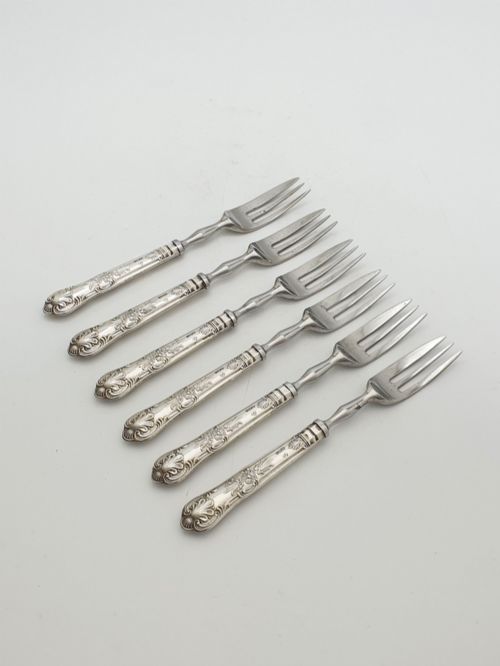
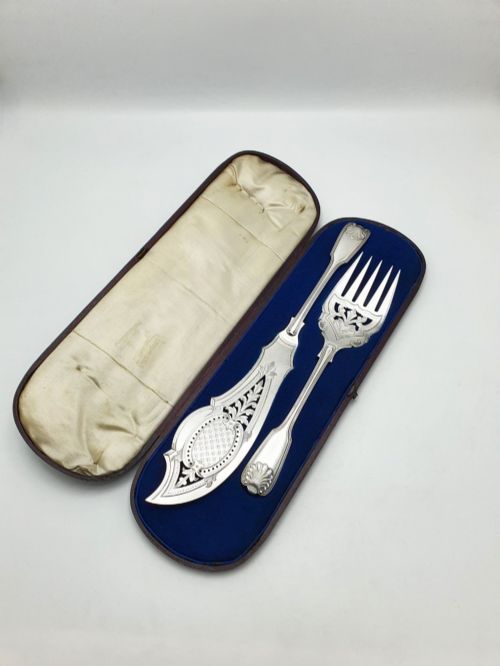
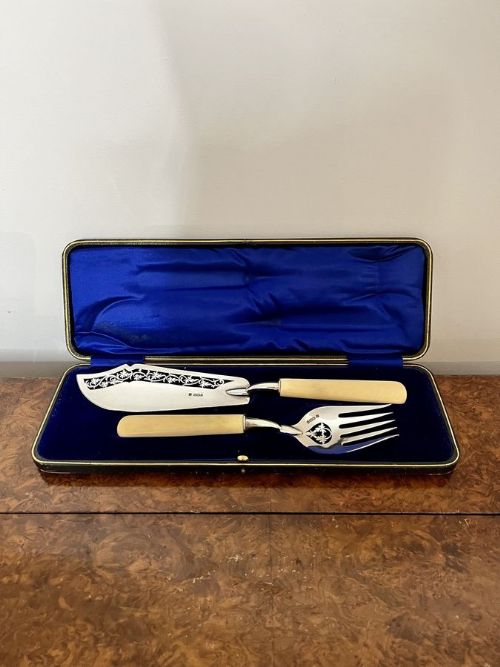
A vintage fish fork set comprises matched forks and servers designed specifically for course dining across the Victorian, Edwardian, and Art Deco periods. These assemblages typically pair with matching servers or knives, housed within fitted presentation boxes lined in velvet or silk.
The pieces on this page originate predominantly from the nineteenth and early twentieth centuries, spanning the 1870s through to the 1930s. Forms range from cased canteens and seafood picks to dedicated fish servers and flatware sets.
Makers and retailers from these eras, including firms like Suckling Ltd and Waring & Gillows, produced these sets in English workshops. Buyers encounter both solid sterling silver and silver-plated varieties, frequently featuring natural materials for the grips.
Materials and construction
Metalwork relies on solid sterling silver or silver plating applied to base metals, paired with sturdy steel for functional serving edges. Craftsmen engraved blade surfaces with intricate hunting scenes, foliage, and geometric motifs typical of Victorian and Edwardian design.
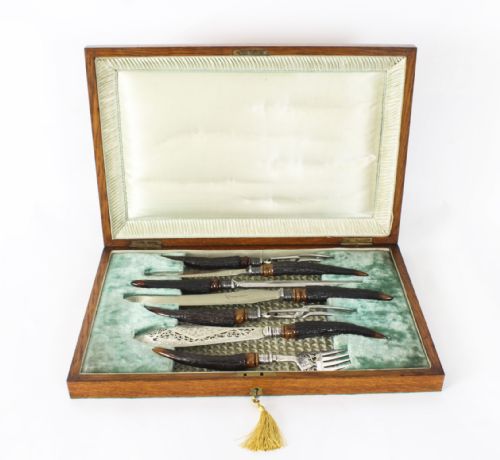
Handles utilise natural materials including stag antler, horn, and mother-of-pearl, shaped to fit the hand securely. These organic elements are pinned or collared to the metal tines and blades, often housed in fitted oak or velvet-lined boxes.
Vintage Fish Fork Set Retail Price Guide 2026
Typical asking prices for vintage fish fork set among the pieces listed under this phrase on Sellingantiques today, from the lower quarter to the upper quarter. They describe what is for sale here now, not the wider market.
Some Victorian fish servers feature finely engraved hunting dogs bounding across the silver blade, adding canine charm to the dinner table.
Evaluating quality and craftsmanship
The distinction between standard utility sets and finer examples lies in the depth and clarity of the blade engraving. Hand-chased floral patterns or pictorial dog and hunting scenes indicate higher workshop input than stamped alternatives.
Material selection also dictates overall grade, with solid sterling silver and unblemished mother-of-pearl or antler handles commanding greater attention than worn silver plating. Complete sets retaining their original fitted oak canteens and intact silk or velvet linings demonstrate superior preservation.
Suckling Ltd·Waring & Gillows
The Vintage Fish Fork Set Glossary
- Silver Plate
- A thin layer of pure silver fused to a base metal core such as copper or nickel silver. This technique allowed Victorian manufacturers to produce impressive tableware at a lower cost than solid silver.
- Mother-of-Pearl
- The iridescent inner layer of mollusc shells, utilised widely for decorative knife and fork handles throughout the nineteenth century. It provides a smooth, pale grip with a distinct natural shimmer.
- Stag Antler
- The shed horn of a stag, shaped and textured for use as a robust cutlery handle. It offers a tactile, heavy grip prized in Victorian and Edwardian carving and fish sets.
- Canteen
- A fitted wooden box, chest, or case designed specifically to store a complete set of cutlery securely. Oak and mahogany examples often feature multiple slotted tiers lined with velvet or cloth.
- Seafood Picks
- Slender, specialised implements designed for extracting meat from shellfish such as lobster. Solid silver examples often appear in fitted presentation cases from the early twentieth century.
Vintage Fish Fork Set: Frequently Asked Questions
What is a vintage fish fork set?
A vintage fish fork set is a collection of eating utensils specifically shaped for consuming fish courses during formal meals. They typically feature wide tines and engraved blades to separate delicate flesh.
These sets originate from the Victorian and Edwardian eras, often presented in velvet or silk-lined wooden boxes complete with matching servers.
How were fish forks used?
Fish forks were designed for a specific course in traditional multi-course dining where standard table forks proved unsuitable. The broader left tine often served to help separate bones from the fish.
Victorian diners utilised these alongside dedicated fish knives, which lacked sharp cutting edges because fish was traditionally lifted and separated rather than sliced.
Are the handles made of real bone?
Many handles on these sets utilise natural organic materials rather than manufactured plastics or resins. Stag antler, cow horn, and mother-of-pearl were standard choices for nineteenth-century cutlers.
These materials provide distinct textures and natural variations in tone, ensuring that no two handles within a cased set are entirely identical.
How do I care for silver plated cutlery?
Silver plated and solid silver items require gentle cleaning with specialised silver polish to remove tarnish without abrading the underlying metal. Hand washing in warm soapy water prevents damage to organic handle materials.
Storing pieces within their original fitted wooden canteens or lined boxes helps protect both the metal surfaces and the delicate handle fixings from atmospheric moisture.