





Vintage Fish Cutlery
These vintage fish cutlery sets bring elegance to the dining table, pairing specialised blades with intricate engraving for sea courses.
Vintage Fish Cutlery
Vintage fish cutlery encompasses serving sets, individual knives and forks, seafood picks, and sardine forks designed specifically for seafood dining. Buyers exploring vintage fish cutlery will encounter items ranging from mid Victorian serving knives to Edwardian canteens and cased solid sterling silver lobster picks.
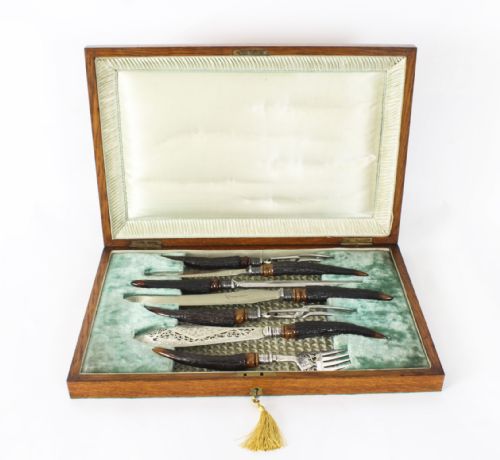
The assortment spans diverse eras including the Georgian period, Victorian epoch, Edwardian years, and the 1930s Art Deco movement. Forms vary from simple flatware to elaborate oak-cased canteens and fitted boxes lined with velvet and silk.
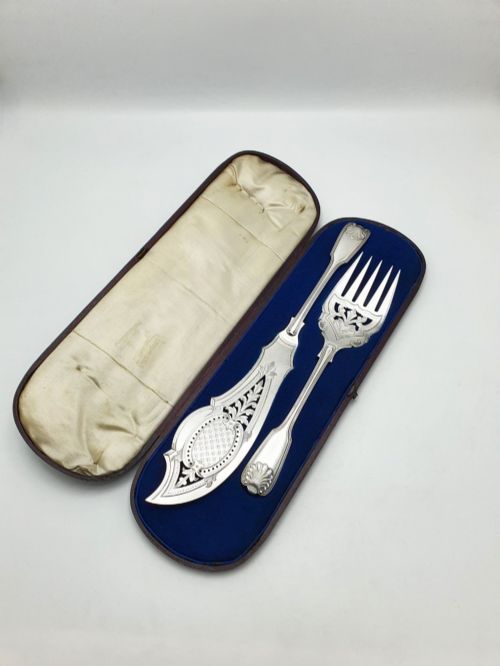
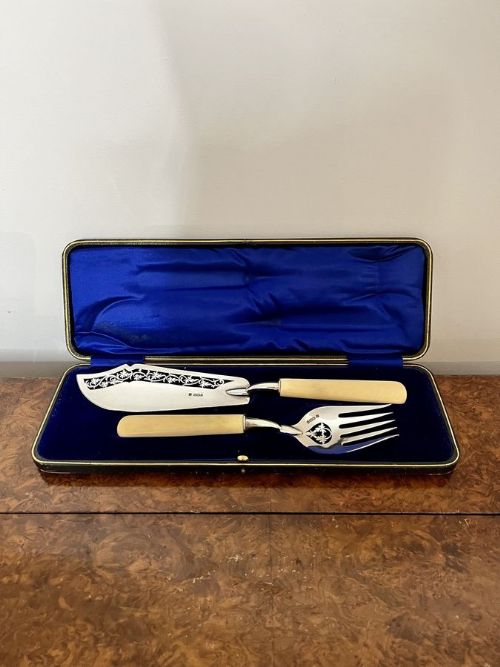
Originating predominantly from English workshops, these utensils reflect changing dining customs across the nineteenth and early twentieth centuries. Pieces often arrive as paired servers with engraved blades or as comprehensive sets intended for formal dinner parties.
Materials and construction
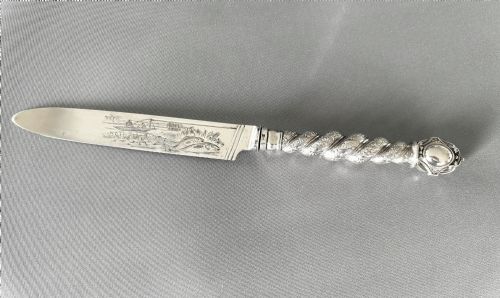
Metal components utilise sterling silver and silver plate for blades and tines, frequently paired with steel for strength in serving knives. Engraving decorates the metal surfaces, often depicting hunting or dog motifs alongside floral patterns.
Handles incorporate natural materials such as stag antler, horn, and wood, secured to the metal shafts with pins or ferrules. Presentation cases employ wood lined with silk and velvet to protect the polished surfaces.
Vintage Fish Cutlery Retail Price Guide 2026
Typical asking prices for vintage fish cutlery among the pieces listed under this phrase on Sellingantiques today, from the lower quarter to the upper quarter. They describe what is for sale here now, not the wider market.
Listings feature materials including sterling silver, silver plate, stag antler, horn, wood, velvet, and silk across multiple historical periods.
Factors of quality
Quality rests upon the choice of materials, distinguishing solid sterling silver from silver-plated items and natural antler handles from simpler wooden grips. The depth and clarity of the engraving on the blade distinguish standard production from finer craftsmanship.
The presence of original fitted wooden cases lined with silk or velvet indicates higher original status and better preservation. Maker attribution, such as work by Suckling Ltd or Alvin, adds documented provenance to the set.
Suckling Ltd·Waring & Gillows·Alvin
The Vintage Fish Cutlery Glossary
- Seafood pick
- A narrow, pointed utensil used for extracting meat from shellfish such as lobsters and crabs. They are frequently found in matched boxed sets.
- Silver plate
- A layer of silver applied to a base metal core, common in nineteenth-century cutlery manufacturing. It offers the appearance of solid silver at a different cost point.
- Stag antler
- The shed horn of a deer used as a natural handle material for knives and forks. It provides a textured, durable grip with distinct organic patterning.
- Canteen
- A fitted box or chest designed to store a complete set of cutlery securely. These often feature multiple internal tiers lined with fabrics like velvet or silk.
Vintage Fish Cutlery: Frequently Asked Questions
What is vintage fish cutlery used for?
These specialised utensils were created for consuming fish and seafood courses during formal Victorian and Edwardian meals. The wide blades and distinct tines helped separate delicate fish flesh without damaging the bones.
Today, they are utilised for serving seafood dishes at dinner parties or collected as examples of period metalwork and design.
How do I identify Victorian fish servers?
Victorian pieces often feature ornate hand-engraved scrollwork or animal motifs on the silver or silver-plated blades. The handles commonly utilise natural materials like stag antler or carved bone.
Examining the manufacturing style and any stamped hallmarks helps place the piece within the nineteenth century.
Are these sets made of solid silver?
Materials vary significantly across different pieces, ranging from heavy solid sterling silver to silver-plated base metals. Hallmarks stamped onto the metal indicate whether the piece is solid silver or plated.
Handles also differ, utilising wood, horn, or stag antler rather than metal alone.
How should I store cased cutlery sets?
Original wooden cases lined with velvet or silk protect the metal surfaces from tarnishing and physical damage. Keeping the cutlery stored dry inside its fitted box preserves both the wooden handles and the fabric lining.
Regular gentle cleaning prevents tarnish accumulation on the silver and plated surfaces.