



Vintage Fireside Tools
These vintage fireside tools bring hearthside character and practical utility, spanning Victorian craftsmanship to 1930s design.
Vintage Fireside Tools
Vintage fireside tools encompass companion sets, hearth stands, fire tool rests, chestnut roasters, toasting forks, and coal shovels designed for domestic hearths. A buyer searching for vintage fireside tools will encounter various configurations ranging from simple three-piece sets to elaborate French iron setups and novelty designs.
The objects originate primarily from the Victorian and Edwardian eras, extending into the 1920s and 1930s. Pieces frequently reflect stylistic movements such as the Aesthetic Movement, Gothic Revival, Art Nouveau, and Rococo Revival, alongside vernacular forms like golfer figures and child and lamb motifs.
Most items serve a dual purpose as functional hearth accessories and decorative interior objects. Sets typically coordinate pokers, shovels, and rests, while specialised items like extendable toasting forks and chestnut roasters cater to specific fireside domestic tasks.
Materials and construction
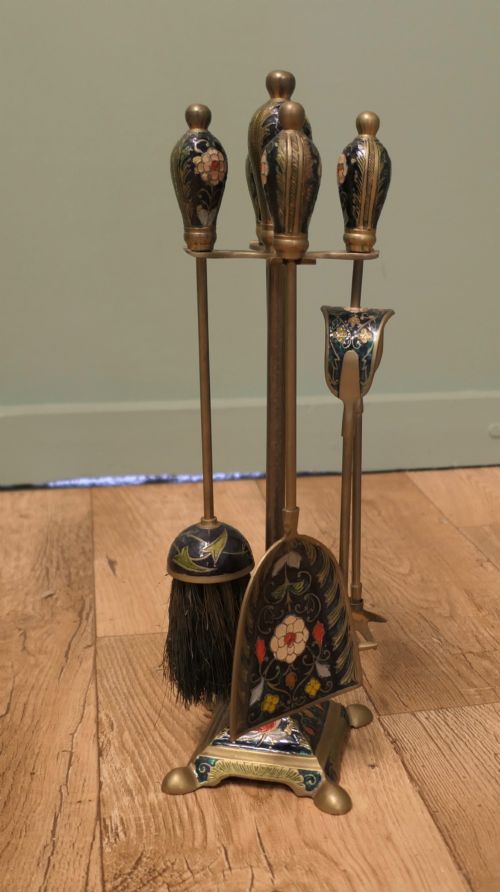
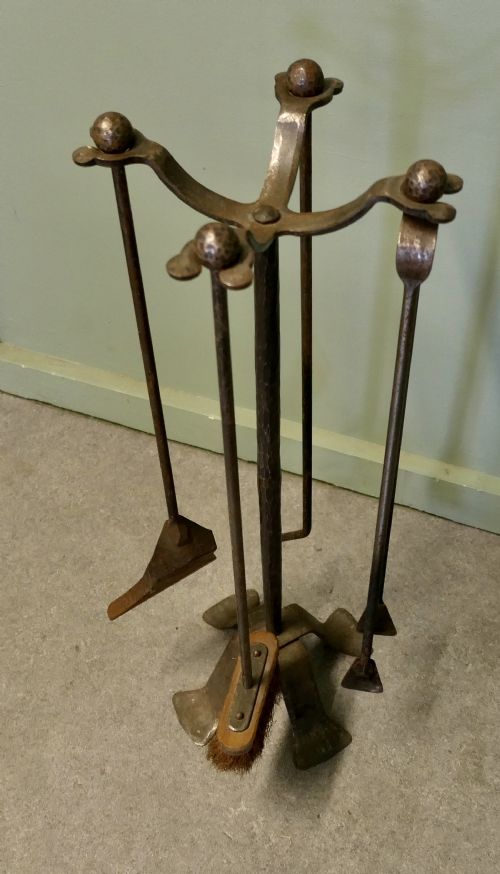
Makers utilised metals such as brass, cast iron, steel, wrought iron, copper, and bronze, frequently pairing them with wood elements. Cast iron provided sturdy weight for stands and companion sets, while brass and bronze offered polished decorative surfaces.
Techniques combined casting, forging, and metal fabrication to produce both robust utilitarian tools and ornate display pieces. Copper inlay work and painted metal finishes added surface detail to specific companion sets and revolving toasters.
Vintage Fireside Tools Retail Price Guide 2026
Typical asking prices for vintage fireside tools among the pieces listed under this phrase on Sellingantiques today, from the lower quarter to the upper quarter. They describe what is for sale here now, not the wider market.
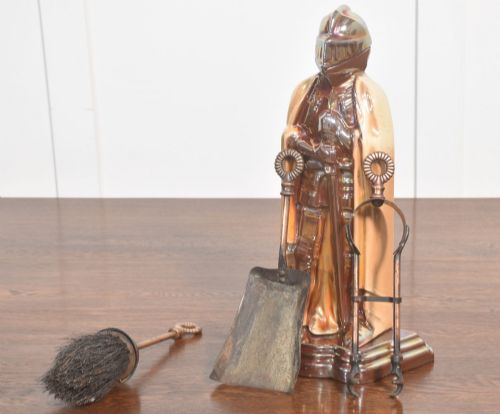
Unusual golfer figures and playful child and lamb motifs prove that Victorian and Edwardian hearths thoroughly enjoyed a sense of humour.
Assessing craftsmanship and design
Quality rests in the integrity of the metalwork, the weight of the cast iron or brass, and the definition in sculptural details such as claw and ball feet or figural companion sets. Heavier gauge steel and substantial brass construction distinguish durable utility from lighter decorative items.
Design ambition separates standard hearth equipment from exceptional examples, seen in thoughtful stylistic adherence to periods like Art Nouveau or the Aesthetic Movement. Intricate detailing, such as copper inlaid hearts or specialised rotating mechanisms, elevates the piece beyond basic utility.
THE BIRMINGHAM GUILD
The Vintage Fireside Tools Glossary
- Companion set
- A matched group of fireplace tools, usually including a poker, shovel, and brush, housed on a stand or rest. These sets keep the hearth tidy while providing necessary maintenance implements.
- Fireside tool rest
- A metal support designed to hold fireplace tools horizontally beside the hearth. They protect the floor and keep hot implements safely contained.
- Chestnut roaster
- A long-handled utensil featuring a perforated pan with a lid, used for roasting chestnuts over an open fire. Victorian examples often incorporated decorative brass work.
- Toasting fork
- An extendable or long-handled fork specifically designed for toasting bread or food items over glowing coals. Many feature brass construction and decorative handles.
- Aesthetic Movement
- A late 19th-century design style emphasising visual and decorative beauty over narrative or moral content. Pieces from this movement often display refined geometric or naturalistic ornamentation.
Vintage Fireside Tools: Frequently Asked Questions
What tools come in a companion set?
Standard sets typically include a poker for moving logs, a shovel for clearing ash, and sometimes tongs or brushes alongside a dedicated stand or rest.
Additional specialised implements like toasting forks or chestnut roasters were often acquired separately or as part of larger suites.
How do I date a brass fireside set?
Dating relies on stylistic clues, manufacturing techniques, and material composition characteristic of periods like Victorian, Edwardian, or the 1930s Art Deco era.
Heavy cast brass and ornate Rococo or Aesthetic Movement motifs usually point to 19th-century origins, while cleaner lines often suggest the early 20th century.
Are these tools suitable for daily use?
Many solid brass, cast iron, and steel pieces remain entirely robust for regular fireplace maintenance.
Delicate decorative sets or copper-inlaid items are often better suited for display or light occasional hearth use to preserve their finish.
What is the difference between wrought iron and cast iron?
Cast iron is poured into moulds while molten, creating rigid, heavy pieces with crisp details often seen in companion set bases.
Wrought iron is hammered and bent into shape while hot, yielding fibrous, resilient structures typical of sturdy French fire tools.