



Vintage Firedogs Pair
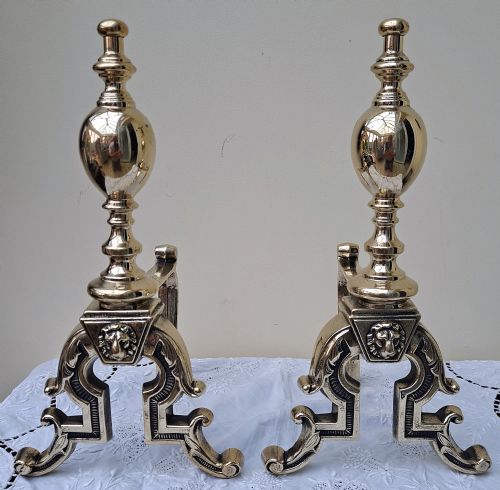
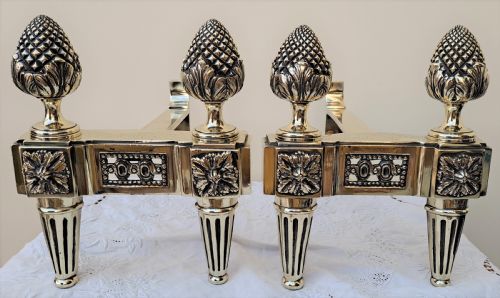
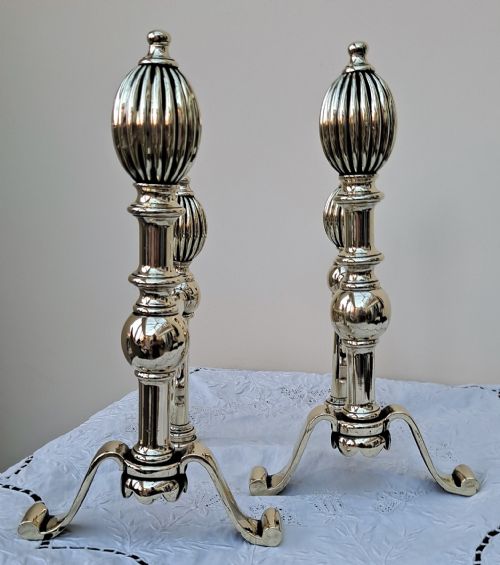
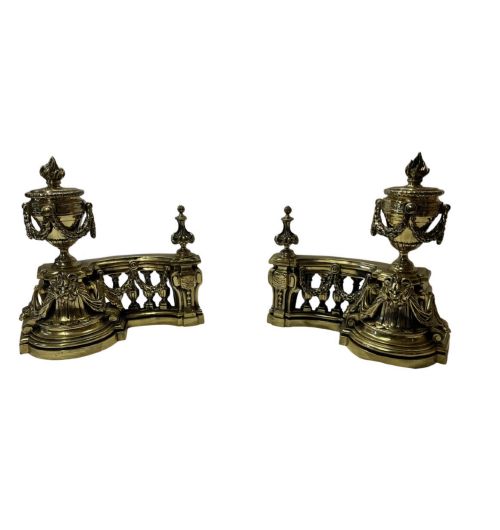
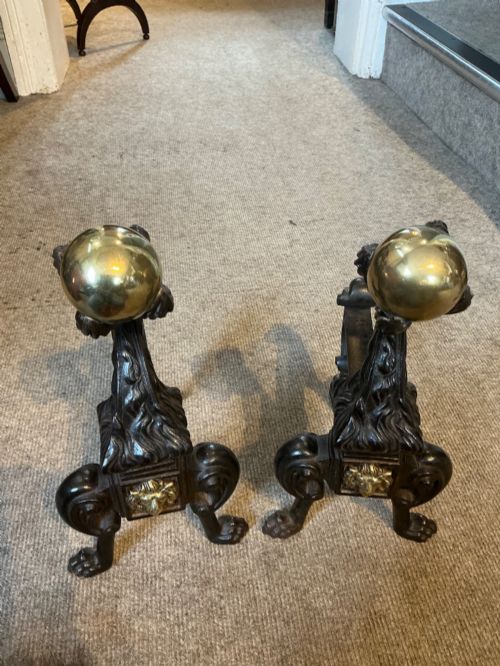
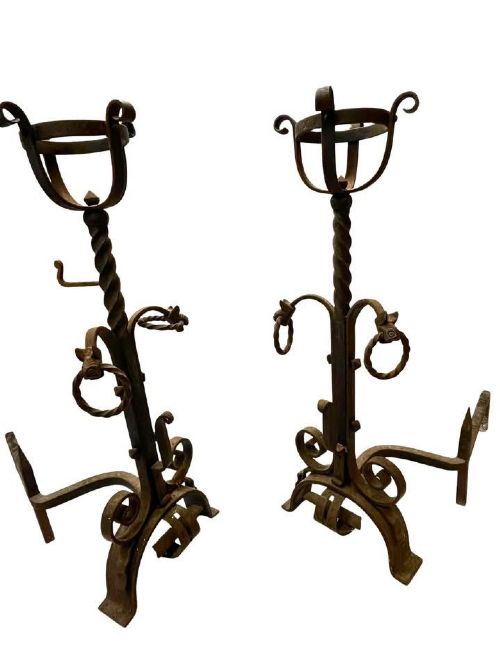
These vintage firedogs pair hearth items to support wood fuel, bringing period character and functional structure to an open fireplace.
Vintage Firedogs Pair
A vintage firedogs pair consists of matching supports placed on either side of the hearth to hold logs above the base of the fireplace. These heavy iron and brass objects serve both to elevate burning wood for better airflow and to anchor the decorative scheme of the chimney breast.
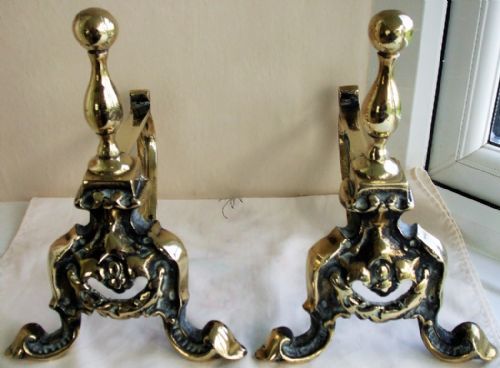
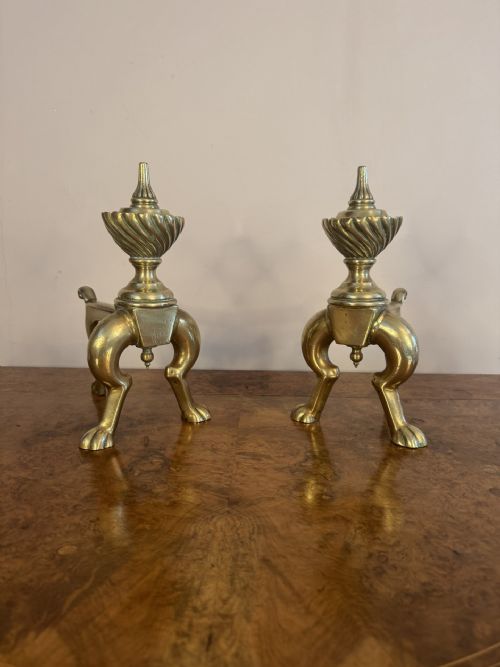
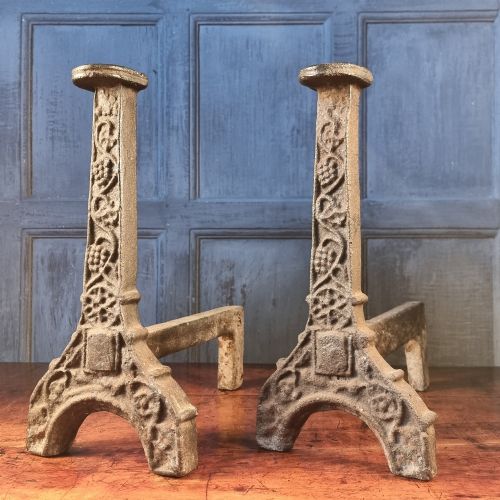
Buyers seeking a vintage firedogs pair will find examples stretching from the sixteenth century through the Victorian era and into the early twentieth century. The selection leans heavily towards nineteenth-century brass and wrought iron designs alongside revival styles inspired by Gothic, Renaissance and French Rococo aesthetics.
The common form on this page pairs upright front standards with horizontal shafts that extend back into the grate. Many sets include matching fireside tool rests or chenets designed to sit symmetrically within the hearth opening.
Materials and construction methods
Metalworking techniques dictate the build of these fireplace accessories, relying primarily on casting, hand-forging and mounting. Brass elements are frequently cast to achieve ornate moulded details, while iron components are forged or wrought into robust structural shapes.
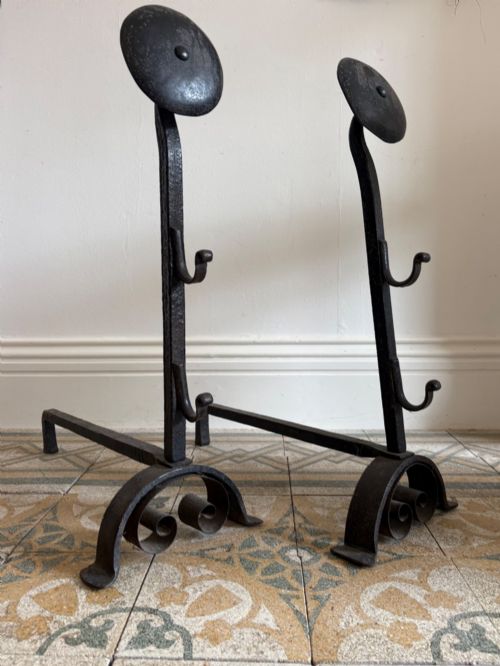
Makers utilised cast iron, wrought iron, bronze and copper alongside brass, often combining metals within a single pair. Ormolu mounts and bronzed finishes appear on decorative French chenets, contrasting with the starker utility of forged iron in Arts and Crafts designs.
Vintage Firedogs Pair Retail Price Guide 2026
Typical asking prices for vintage firedogs pair among the pieces listed under this phrase on Sellingantiques today, from the lower quarter to the upper quarter. They describe what is for sale here now, not the wider market.
Listings feature items spanning the sixteenth century to the 1920s, with a strong concentration of nineteenth-century Victorian brass and wrought iron designs.
Evaluating quality and manufacture
Substance and weight separate robust hearth furniture from lighter decorative reproductions. Quality pairs show substantial gauge metals, whether finely cast brass with crisp relief or heavily forged iron with clean hammer marks.
Design coherence and finishing define the better examples on the market. Superior pairs exhibit balanced proportions across both standards, secure jointing where uprights meet horizontal billets, and careful chasing on brass surfaces.
James Cartland & Son
The Vintage Firedogs Pair Glossary
- Firedog
- A metal support used in a fireplace to hold logs off the hearth floor. These heavy accessories allow air to circulate beneath the fire.
- Andiron
- An alternative term for a firedog, typically featuring an upright front pillar and a horizontal bar extending backward. They were standard hearth equipment before the widespread adoption of grates.
- Chenet
- The French term for a firedog, often denoting highly decorative brass, bronze or ormolu items made for formal reception rooms. They frequently pair with matching fire irons.
- Wrought iron
- Iron that has been heated and shaped with hand tools by a blacksmith. This material yields durable, fibrous pieces with visible hammer marks.
- Aesthetic movement
- A late nineteenth-century design style emphasising visual beauty over narrative or moral function. Pieces from this movement often feature refined geometric or stylized natural motifs.
Vintage Firedogs Pair: Frequently Asked Questions
How do I choose the right size?
Measure the width and depth of your fireplace opening before selecting metal supports. The horizontal bars must fit entirely within the hearth space without crowding the basket or grate.
Consider the scale of the mantelpiece and surround when picking uprights. Tall or ornate standards suit large chimney breasts, while compact pairs work better in smaller rooms.
Are these suitable for burning wood?
Most heavy cast iron and forged iron examples are built to withstand active hearth use. They hold logs securely and facilitate proper airflow beneath the fuel.
Decorative brass pairs with hollow or ornate construction are better suited for display. Check the metal thickness and back bar stability before lighting an open fire.
How do I clean brass firedogs?
Remove surface dust with a dry cloth before applying any cleaning agents. Gentle washing with warm soapy water clears away soot without stripping the underlying metal.
Avoid harsh abrasive compounds that wear away historic patination. A light application of appropriate metal polish preserves the finish without creating an overly bright sheen.