

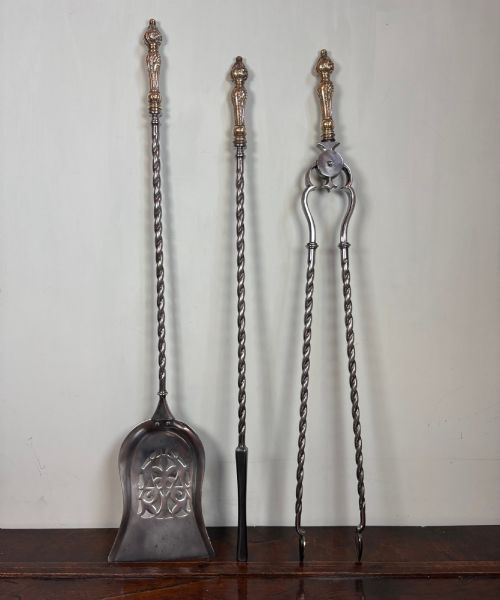


Vintage Fire Tongs
These vintage fire tongs and associated companion sets bring both functional utility and period character to an active hearth.
Vintage Fire Tongs
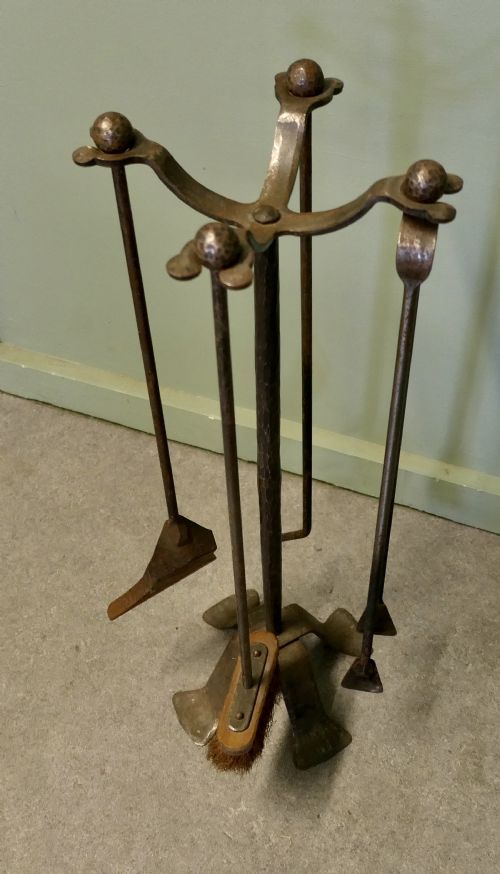
When you search for vintage fire tongs, you encounter heavy functional ironmongery and hearth furniture dating from the Georgian, Victorian, and Edwardian eras. The listings here predominantly comprise complete companion sets and individual tools rather than single pincer-action tongs alone.
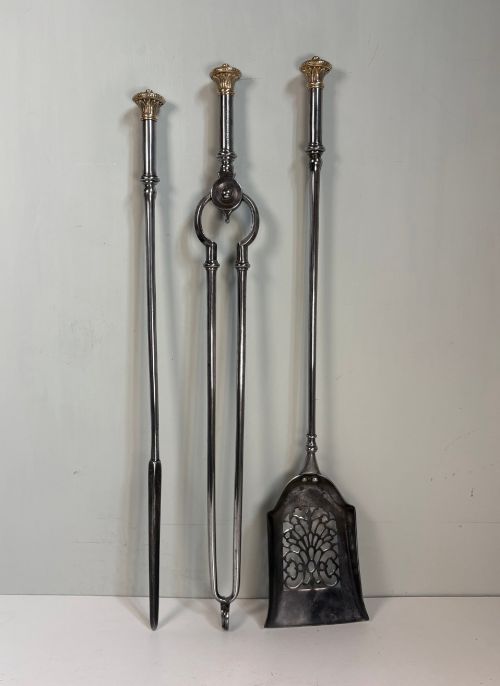
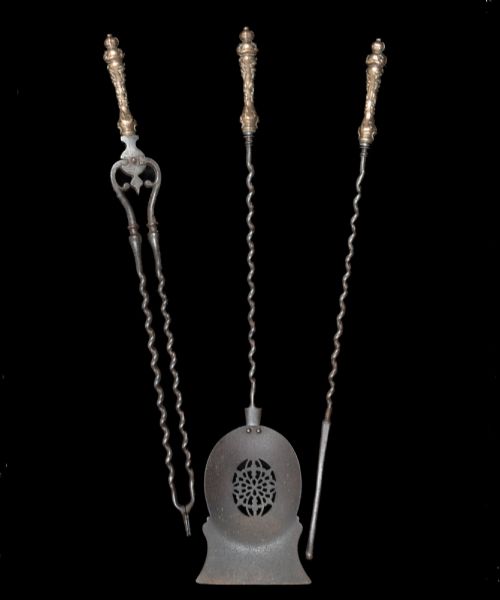
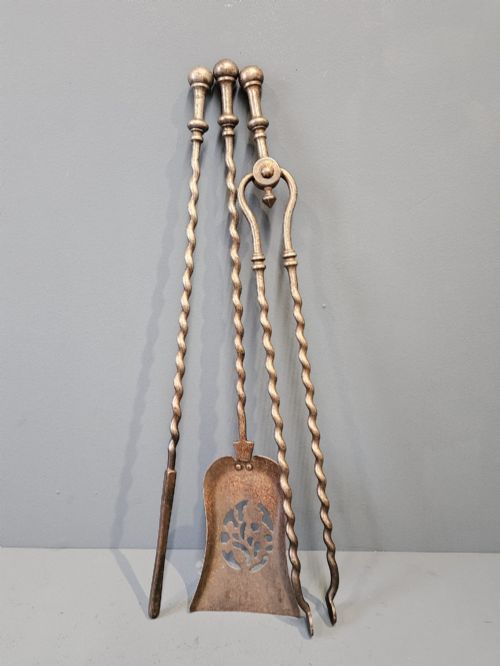
The pieces span robust rustic country examples in wrought iron to decorative polished brass sets intended for formal drawing-room fireplaces. Many survive as assembled groups of three or more matching fireplace irons including pokers and shovels.
Origins stretch from English workshops to French manor houses, reflecting varied domestic heating requirements across the nineteenth and early twentieth centuries.
Materials and construction
Makers utilised forged steel and wrought iron for strength in heavy-duty pokers and tongs, often combining them with bright brass components for decorative contrast. Polished steel and burnished surfaces required careful hand-finishing to achieve a reflective sheen.
Handles frequently featured turned details, starburst motifs, or rope twist designs cast in brass and secured to functional steel shafts. Gunmetal and gilt metal also appear in select nineteenth-century sets, showing varied metallurgical preferences.
Construction methods relied on traditional blacksmithing and foundry techniques, producing durable joints and balanced implements designed for daily hearth management.
Vintage Fire Tongs Retail Price Guide 2026
Typical asking prices for vintage fire tongs among the pieces listed under this phrase on Sellingantiques today, from the lower quarter to the upper quarter. They describe what is for sale here now, not the wider market.
Listings span the eighteenth century through the Edwardian era, featuring brass, steel, wrought iron, and gunmetal.
Distinctions in quality
Quality rests upon the weight of the metal and the crispness of decorative casting in handles and mounts. Heavier gauge steel and substantial brass components indicate a higher standard of manufacture intended to withstand regular stoking.
Refinement of detail separates utilitarian examples from finer parlour sets, seen in decorative elements like starburst patterns and rope twist handles. Complete matching sets preserved in original condition command greater interest than assembled groups of mixed origin.
The Vintage Fire Tongs Glossary
- Companion set
- A coordinated group of fireplace tools, usually including tongs, a poker, and a shovel, designed to hang together on a stand or frame.
- Fire irons
- The collective term for the metal implements used to tend a coal or wood fire, including pokers, shovels, and tongs.
- Wrought iron
- Iron that has been heated and shaped by hand with tools, prized for its fibrous texture and strength.
- Burnished steel
- Metal polished to a high, reflective finish that enhances the visual appeal of nineteenth-century hearth tools.
- Fire dogs
- Horizontal iron supports used in a fireplace to hold logs or support companion equipment.
Vintage Fire Tongs: Frequently Asked Questions
What tools come in a set?
Most surviving groupings comprise a combination of pokers, coal shovels, and tongs, occasionally accompanied by a matching stand or fire dogs. These items were designed to handle solid fuel efficiently.
Complete sets ensure a uniform appearance beside the hearth, matching the brass or steel finishes typical of the Victorian and Edwardian periods.
How do I clean polished steel?
Polished steel requires gentle maintenance to remove surface moisture and prevent oxidation without stripping the historic finish. Regular dusting and light application of protective oil preserve the metal.
Avoid abrasive cleaners that can scratch burnished surfaces or damage the underlying iron.
Are these tools for daily use?
Many nineteenth-century iron and brass pieces remain robust enough for regular fire tending in open hearths. Their solid construction in wrought iron or heavy brass was originally intended for constant domestic service.
Using them on active fires adds practical function to historic character, provided the metal is maintained properly.
How do I date an iron set?
Dating relies on stylistic clues such as handle decoration, manufacturing methods, and metal composition. Victorian pieces often feature elaborate cast brass handles, whereas Georgian examples tend toward simpler steel and brass lines.
Arts and Crafts pieces from the later nineteenth century display hand-finished textures and simplified forms reflecting the movement's ideals.