





Vintage Feline Portrait
A vintage feline portrait captures the distinct personality and quiet domestic presence of cats through the eyes of artists past.
Vintage Feline Portrait
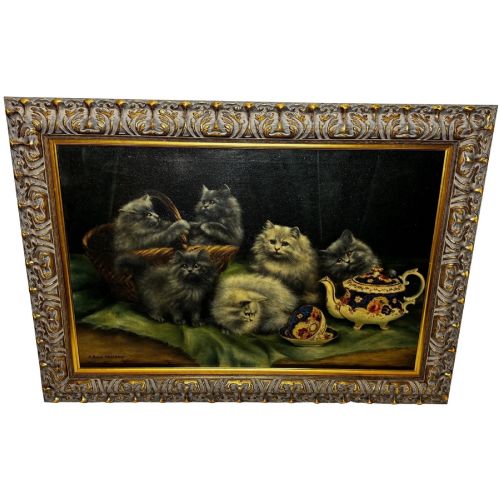
When you search for a vintage feline portrait, you encounter a charming selection of historical artworks depicting cats and kittens across various centuries. The pieces on this page span from the nineteenth century through the mid-twentieth century, offering a delightful look at how artists rendered these animals over time.
You are most likely to meet oil paintings and drawings created in traditional realism, naive school, and folk art styles. These works range from formal nineteenth-century compositions to mid-century naive interpretations executed in oil, pastel, pencil, and gesso.
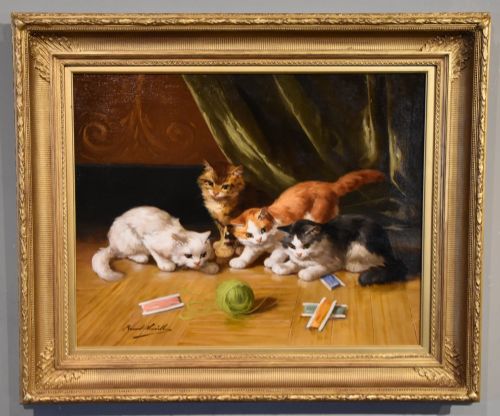
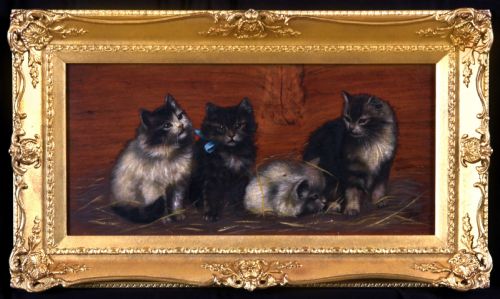
The subjects extend from solitary cats with intense gazes to playful litters of kittens captured in domestic settings. Each piece reflects the aesthetic of its specific period, whether it is the polished detail of the Victorian era or the expressive simplicity of folk art.
Materials and technique
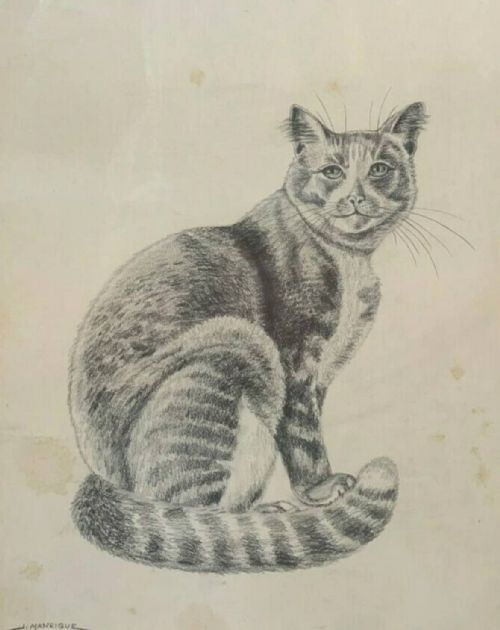
These artworks rely on traditional media such as oil paint on canvas, panel, and board, alongside delicate oil pastels and pencil on paper. Artists utilised wood frames, often with gesso and gilt finishes, to house and display these paintings.
The technical approach varies from the meticulous brushwork of traditional realism to the unrefined, direct marks of the naive school and folk art. Canvas preparation, pigment mixing, and pastel layering determine how well each portrait has survived the decades.
Vintage Feline Portrait Retail Price Guide 2026
Typical asking prices for vintage feline portrait among the pieces listed under this phrase on Sellingantiques today, from the lower quarter to the upper quarter. They describe what is for sale here now, not the wider market.
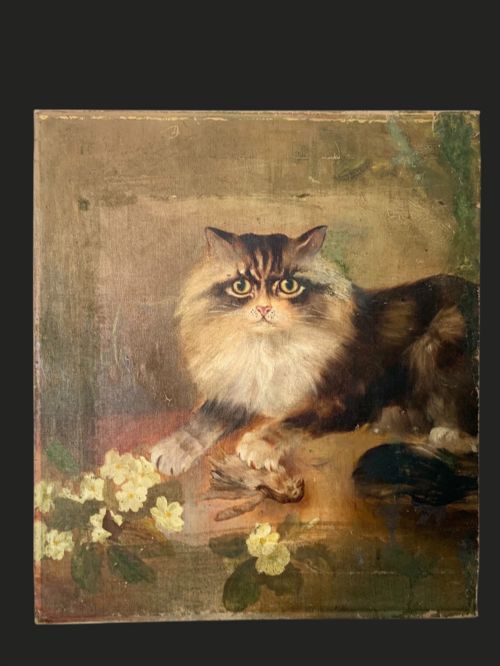
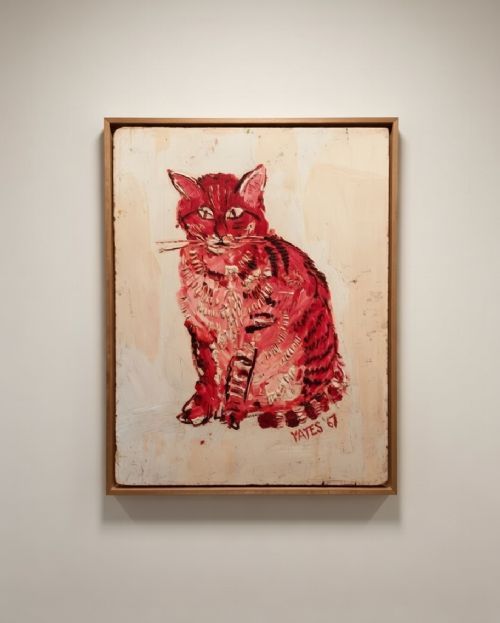
One delightfully unhinged canvas proudly presents a delightfully demented cat for your viewing pleasure.
Distinctions in quality
Quality in a vintage feline portrait rests upon the artist's ability to convey the character and anatomy of the animal convincingly. Superior pieces demonstrate confident brushwork, accurate proportions, and a compelling capture of the subject's expression.
The handling of light, texture in the fur, and the overall composition separate ordinary decorative pictures from accomplished works by named artists and skilled anonymous hands. The preservation of the original surface, whether oil on canvas or pastel on paper, also influences the standing of the piece.
Agnes Augusta Talboys·Alfred Arthur Brunel de Neuville·J Manrique·Fred Yates·Bessie Bamber
The Vintage Feline Portrait Glossary
- Naive school
- An art style characterised by a childlike simplicity in perspective and proportion, often produced by self-taught artists. These works charm viewers through their directness and lack of academic convention.
- Oil on canvas
- A traditional painting medium where pigments suspended in oil are applied to a stretched cloth support. This combination allows for rich colour depth and subtle blending.
- Oil pastel
- A painting and drawing medium formed into a stick by combining pigment with a binder of non-drying oil and wax. It provides buttery application and intense colour saturation on paper.
- Gesso
- A plaster-like mixture applied to wood panels or frames as a smooth base for painting or gilding. It creates a durable foundation that holds intricate moulded details.
- Folk art
- Artworks created by indigenous or untrained craftspeople using traditional cultural motifs and techniques. These pieces emphasise functional beauty and personal expression over academic rules.
Vintage Feline Portrait: Frequently Asked Questions
What is a vintage feline portrait?
A vintage feline portrait is a historical painting or drawing depicting cats, created during periods ranging from the nineteenth century to the mid-twentieth century. These artworks capture the physical traits and domestic lives of felines through various artistic styles.
They serve as decorative pieces and historical records of how humans have appreciated cats as household companions across different eras.
How do I date a cat painting?
Dating a cat painting involves examining the materials, such as the type of canvas, board, or paper used, alongside the framing methods and any signatures. Stylistic clues, including the clothing of any human figures or the overall artistic movement like Victorian realism or mid-century naive art, also provide chronological context.
Comparing the technique with known works from specific periods helps narrow down the decade of creation.
Where should I hang these portraits?
These portraits suit living rooms, studies, and hallways where their character can be appreciated up close. Pairing them with traditional wooden furniture or placing them among gallery walls enhances their historical appeal.
Protecting the artworks from direct sunlight and excessive moisture preserves the paint, pastel, and paper over time.
What styles of cat art exist here?
The styles represented include traditional realism, nineteenth-century naive school, folk art, and mid-century modern interpretations. Each style offers a different lens, from highly detailed academic studies to expressive, simplified forms.
This variety allows collectors to choose between formal Victorian depictions and more eccentric, characterful folk pieces.