




Vintage Feline Painting
A vintage feline painting brings character to a room through varied depictions of cats, kittens and big cats.
Vintage Feline Painting
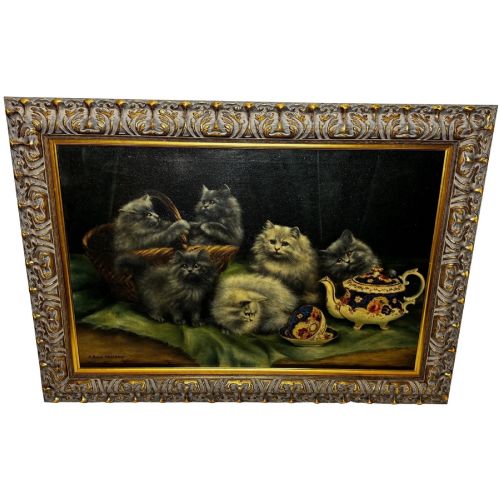
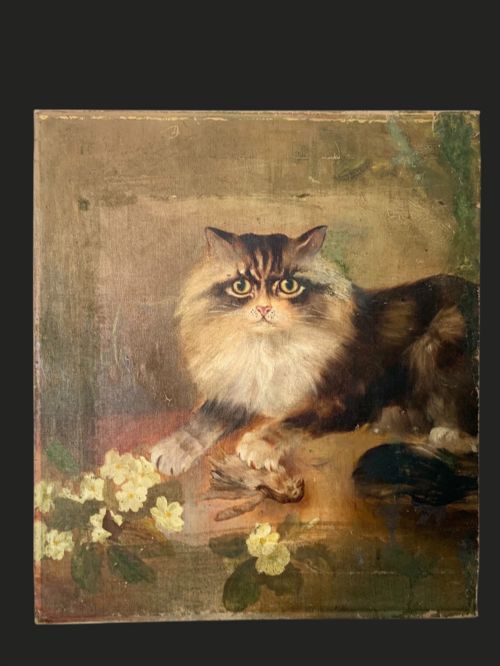
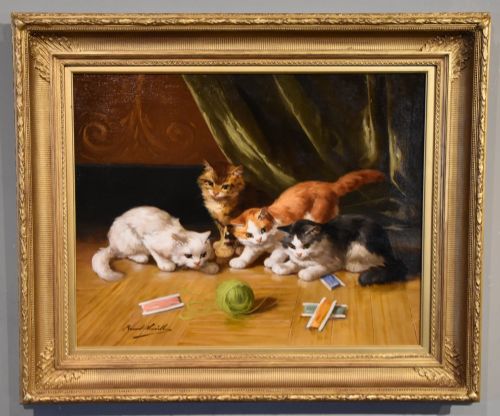
A vintage feline painting represents a broad spectrum of artistic approaches to cats, ranging from domestic pets to wild animals. When exploring a vintage feline painting, buyers encounter works that stretch across the nineteenth century through to the mid-twentieth century.
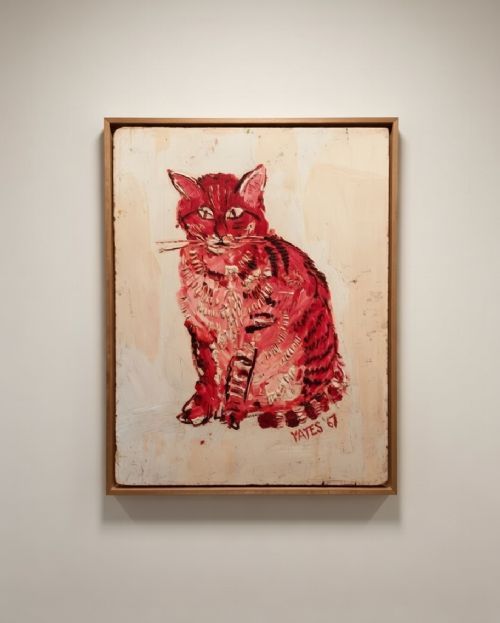
The selections on this page span traditional realism, folk art, naive school, and animalier styles. Works appear in formats including oil on canvas, oil on panel, oil pastels, and oil on board, framed in wood or gilt wood and gesso.
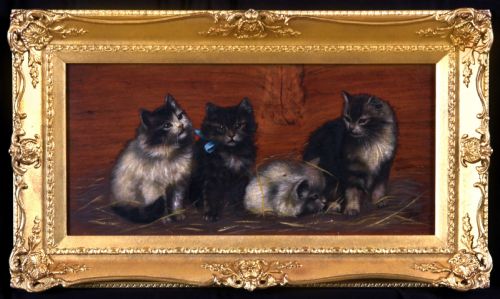
Domestic subjects frequently feature single cats or mother cats with kittens at play. Alongside these domestic scenes, wildlife representations such as leopards appear within the broader scope of these feline works.
Materials and methods
Artists executed these works primarily using oil paint applied to canvas, wood panels, or board and paper supports. Oil paint allowed painters to build texture in fur and capture light within domestic interiors or jungle settings.
Frames form an integral part of many pieces, utilising wood, gilt wood, and moulded gesso to complement the painted surface. Pastels also appear on paper supports, offering a distinct matte finish compared to traditional oil mediums.
Vintage Feline Painting Retail Price Guide 2026
Typical asking prices for vintage feline painting among the pieces listed under this phrase on Sellingantiques today, from the lower quarter to the upper quarter. They describe what is for sale here now, not the wider market.
Materials across these listings include oil paint, canvas, wood panels, board, paper, gilt wood, and gesso.
Distinctions in quality
Quality in these works rests upon the artist's ability to render the anatomy, posture, and distinct personality of the animal. Finer examples demonstrate careful handling of light across fur and expressive realism in the subject's eyes.
Folk art and naive school pieces achieve quality through charm and directness of execution rather than strict academic proportions. The construction and finish of the surrounding wood and gilt gesso frames further distinguish individual pieces.
Agnes Augusta Talboys·Alfred Arthur Brunel de Neuville·Fred Yates·Bessie Bamber·Cuthbert Edmund Swan
The Vintage Feline Painting Glossary
- Naive school
- Art produced by painters without formal academic training, often characterised by a flat perspective and straightforward charm. This style emphasises expression over strict anatomical accuracy.
- Animalier
- A nineteenth-century artistic genre focusing on the realistic portrayal of animals. Artists working in this tradition studied animal behaviour closely.
- Gesso
- A plaster-like mixture applied to wood surfaces as a base for gilding or painting. It creates a smooth ground for decorative frame mouldings.
- Oil on panel
- A painting executed on a flat wooden support rather than stretched canvas. Wooden panels provide a rigid and durable surface for oil pigments.
Vintage Feline Painting: Frequently Asked Questions
What periods do these paintings cover?
The listings span from the nineteenth century through the mid-twentieth century, including works from the Victorian and Edwardian eras.
Production dates extend across the 1800s and into the 1950s and 1960s, reflecting diverse artistic movements of those decades.
What materials are used in these works?
Painters utilised oil on canvas, wood panels, board, and paper supports. Oil pastels also appear in selected portraits.
Many pieces retain their original or period frames constructed from wood, gilt wood, and gesso.
How do naive pieces differ from traditional ones?
Naive and folk art pieces rely on simplified forms and direct expression rather than academic realism. Traditional works focus on anatomical precision and detailed textures.
Both approaches offer distinct aesthetic qualities depending on the artist's training and intent.
Are all the subjects domestic cats?
While domestic cats and kittens dominate the selections, wild cats also appear within the animalier tradition. Prowling leopards are represented alongside domestic pets.
Subjects range from solitary cats to playful groups of kittens and mother cats.