




Vintage Famille Rose
Vintage famille rose brings together vibrant enamelled porcelain forms, offering a colourful focal point rooted in Chinese export tradition.
Vintage Famille Rose
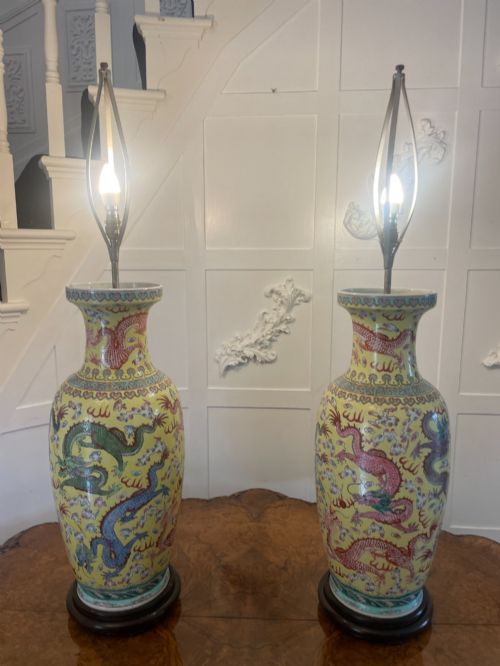
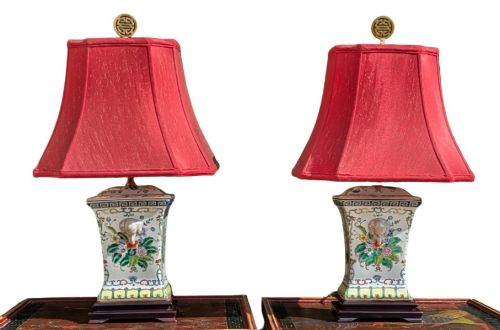
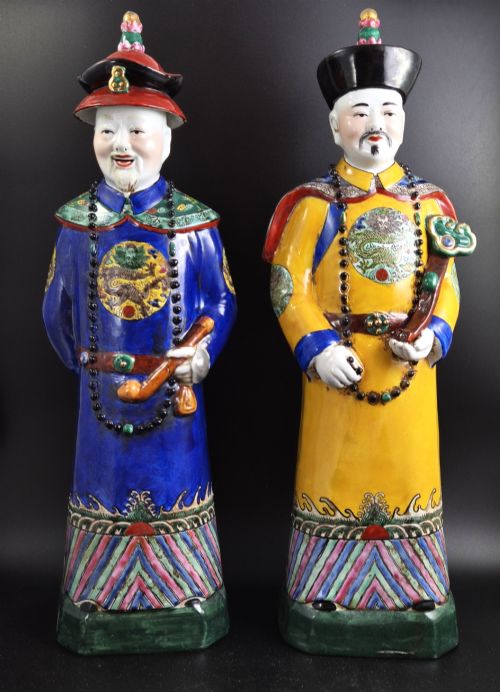
When you search for vintage famille rose, you encounter a range of hand-painted porcelain objects originating from Chinese traditions spanning the nineteenth and twentieth centuries. These items encompass decorative vessels, table lamps, teapots, and figural sculptures.
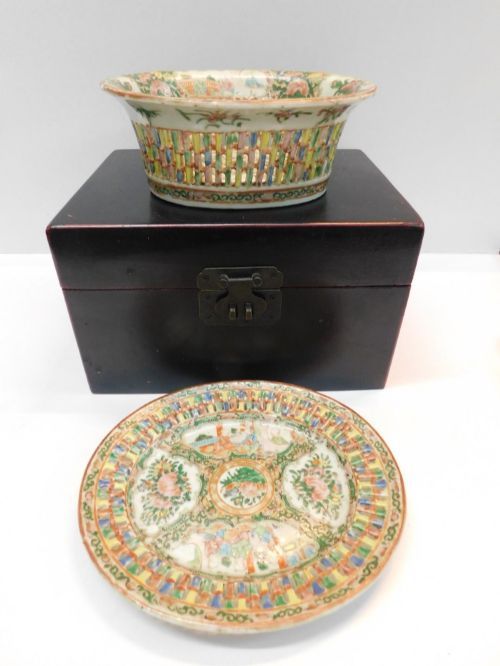
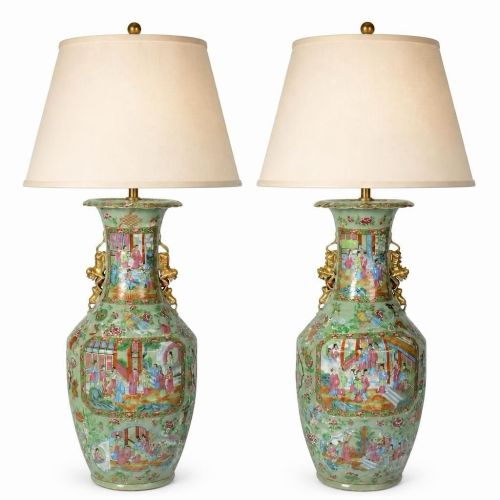
The most common forms on this page include nineteenth-century Canton vases, Rose Medallion plates, and porcelain bodies later converted into table lamps. Pieces frequently display elaborate enamel work depicting figures, birds, and floral motifs.
Origins stretch across the Qing Dynasty, the Chinese Republic Period, and later export eras. Buyers select these ceramics to introduce historical depth and rich palette tones into domestic interiors.
How they were made
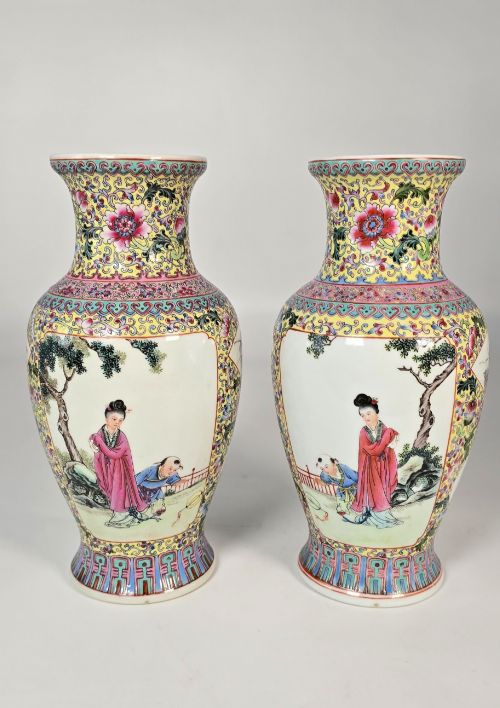
Makers shaped these items from dense white porcelain, applying mineral-based enamel colours by hand over a fired glaze. Artisans utilised opaque pink enamel alongside gold leaf accents to achieve the signature palette characteristic of the style.
Mounts and structural elements incorporate brass, wood, and fabric components, particularly on pieces adapted into lamps during subsequent decades. Wicker cases and silk shades further complement certain functional ceramic forms.
Vintage Famille Rose Retail Price Guide 2026
Typical asking prices for vintage famille rose among the pieces listed under this phrase on Sellingantiques today, from the lower quarter to the upper quarter. They describe what is for sale here now, not the wider market.
Listings feature items spanning the eighteenth to the twentieth centuries, utilising porcelain, enamel, brass, fabric, wood, and gold leaf.
What varies in quality
The precision and density of the hand-painted enamel brushwork dictate the distinction between ordinary production and superior craftsmanship. Finer examples display meticulous detail in facial expressions, flora, and repetitive border patterns.
Proportion and the preservation of original gilding and glaze integrity heavily influence overall standing. Alterations, such as drilled bases for electrical fittings, impact the original state of antique vessels.
The Vintage Famille Rose Glossary
- Famille Rose
- A palette of Chinese porcelain enamels dominated by an opaque pink shade derived from colloidal gold. This grouping emerged during the Qing dynasty and distinguishes wares from earlier green-dominant families.
- Rose Medallion
- A specific style of Canton porcelain featuring distinct panels filled with alternating scenes of figures and birds, separated by floral and butterfly motifs. These designs often repeat in symmetrical geometric layouts.
- Canton
- A major port city in southern China where much of the porcelain decorated for Western export was handled and dispatched. Wares attributed to this centre typically exhibit exuberant colouring and dense composition.
- Qing Dynasty
- The final imperial dynasty of China, ruling from sixteen forty-four until nineteen twelve. Pieces from this era form the chronological foundation of many traditional export ceramics.
- Republic Period
- The era in Chinese history lasting from nineteen twelve to nineteen forty-nine. Porcelain produced during this time frequently revives earlier imperial motifs while adopting modern decorative sensibilities.
Vintage Famille Rose: Frequently Asked Questions
What is vintage famille rose?
Vintage famille rose refers to Chinese porcelain decorated with a predominant pink enamel palette alongside other bright mineral colours. The tradition spans imperial production and later export wares created for international markets.
Items range from delicate teapots and bowls to large palace vases and figural sculptures. Many surviving examples from the nineteenth and twentieth centuries were subsequently adapted as table lamps.
How do I identify Canton porcelain?
Canton porcelain is recognised by its crowded, colourful decoration, typically featuring segmented panels of figures, birds, and flowers set against a background of green foliage and butterflies. The palette relies heavily on rose pink and green enamels.
These pieces were produced in southern China primarily for export to Western buyers. They frequently appear on plates, vases, and large garden seats.
Were these pieces made as lamps?
Most porcelain vases and figures were originally created as decorative vessels or display objects rather than lighting fixtures. Many were drilled or fitted with brass mounts during the nineteenth or twentieth centuries to serve as lamps.
When evaluating a lamp, examine the porcelain body to understand how the original vessel has been integrated with electrical wiring and stands. The conversion method often sheds light on the period of adaptation.
How should I care for antique porcelain?
Antique porcelain and delicate enamel surfaces require gentle handling and cleaning with dry or slightly damp soft cloths. Avoid abrasive cleaners or soaking pieces in water, particularly where gilt highlights or old repairs are present.
Position items away from heavy traffic areas to prevent accidental impacts. Secure lamp bases firmly to ensure stability on wooden furniture.