



Vintage Exterior Sconce
These vintage exterior sconce fixtures light porches and carriage ways with lasting metal and glass forms.
Vintage Exterior Sconce
A vintage exterior sconce brings period character to outdoor walls through robust metal framing and glass panels. Buyers searching for a vintage exterior sconce encounter sturdy wall lanterns, carriage lamps, and porch lights spanning the nineteenth century through the nineteen-thirties.
The most common examples on this page are matched pairs from the Victorian, Edwardian, and nineteen-thirties periods. These pieces draw heavily on French Empire, Neo-Classical, and industrial designs tailored for coach-houses and domestic entrances.
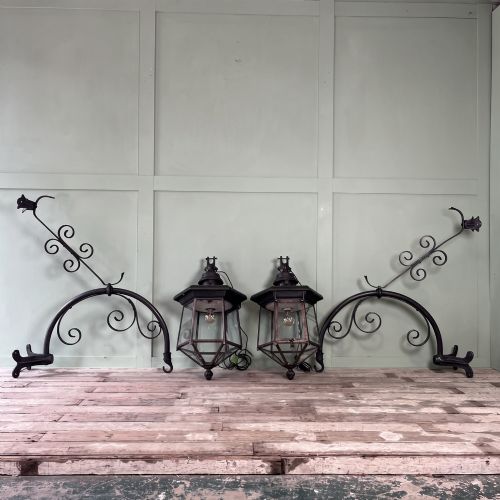
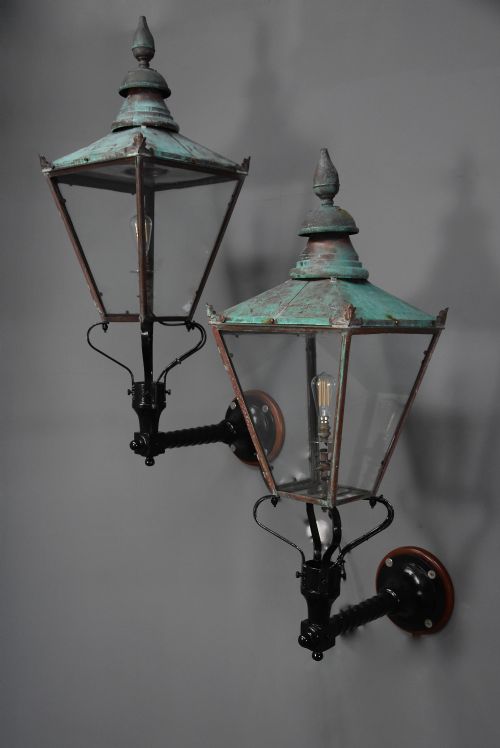
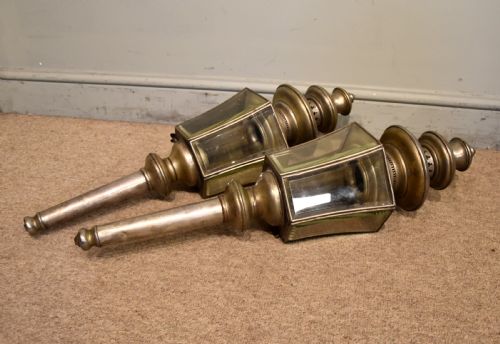
Forms range from large octagonal wall lanterns and half lanterns to sophisticated carriage lamps with spiral twist brackets. Their origins encompass British workshops and French traditions, utilising weather-resistant metals designed to project light beside a doorway.
Materials and construction
Makers constructed these outdoor lights from durable metals including copper, brass, cast iron, and wrought iron, often finished with a verdigris patina. These materials stood up to the elements while offering a heavy, structural presence on exterior walls.
Panels of glass and frosted glass protected the internal flame or bulb from wind and rain while diffusing the light. Frames were riveted, soldered, or cast, combining functional weatherproofing with decorative elements like neo-classical brass mounts.
Originally designed to guide horse-drawn carriages through dark Victorian lanes, these sturdy lanterns now illuminate front doors.
Assessing quality
Quality rests in the heaviness of the casting, the crispness of architectural details like spiral twists, and the integrity of the original metalwork. Superior pieces display thoughtful proportions and substantial copper or brass gauges rather than thin sheet metal.
The distinction between ordinary and exceptional items lies in integrated mounting brackets and preserved patination. Matched pairs showing genuine period construction command greater attention than mismatched or later assembled units.
REVO Leicester
The Vintage Exterior Sconce Glossary
- Carriage lamp
- A heavy-duty lantern originally mounted to horse-drawn carriages and later adapted for domestic exterior walls. These pieces typically feature glass panes and robust metal hoods to shield flames from wind.
- Half lantern
- A wall light designed to sit flush against an exterior surface by utilising a flat backplate. This form projects outward while occupying minimal depth beside a doorway.
- Verdigris
- A green patina that forms naturally on copper and brass through weathering and oxidation. Collectors prize this surface coloration for the authentic age it imparts to exterior metalwork.
- Spiral twist bracket
- An ornamental mounting arm shaped into a twisted metal helix. Such brackets add structural support and decorative flair to wall lanterns.
Vintage Exterior Sconce: Frequently Asked Questions
How do I install vintage exterior lights?
These fixtures require secure wall anchoring and professional wiring to meet modern electrical safety standards for outdoor use.
Consult a qualified electrician to ensure proper waterproofing and bracket stability on brick or masonry walls.
Are these lights weatherproof?
Original exterior sconces were built to withstand rain and wind using heavy metals and glass panels.
Modern placement should still consider sheltered porch locations to preserve fragile antique soldering and original patinated surfaces.
Can I use modern light bulbs?
Most fixtures accommodate standard modern LED or incandescent bulbs after appropriate interior rewiring by a professional.
Check the internal lamp holder dimensions to ensure proper clearance for your chosen bulb size.
How do I date an exterior sconce?
Dating relies on identifying material combinations, mounting hardware styles, and manufacturing techniques characteristic of periods like the Victorian era or the nineteen-thirties.
Design motifs such as neo-classical brass mounts or French Empire styling offer further clues to a piece's origin.