

Vintage Extended Dining Table
A vintage extended dining table brings scale and flexibility to a room, offering room for gatherings through clever mechanics like leaves or draw mechanisms.
Vintage Extended Dining Table
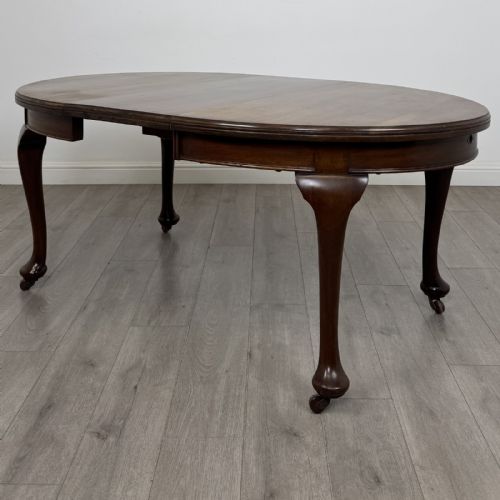
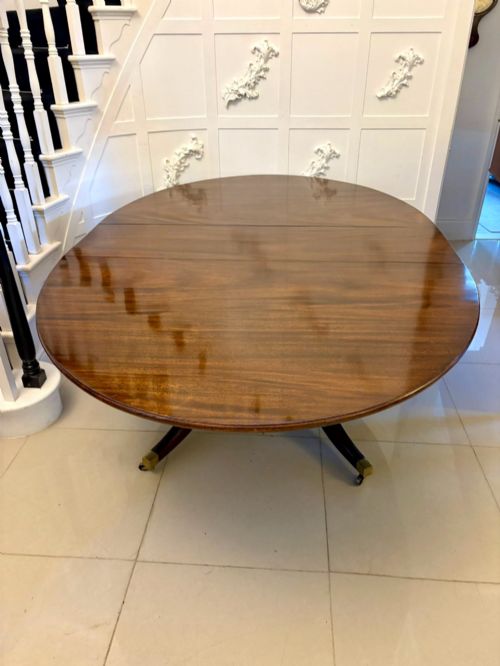
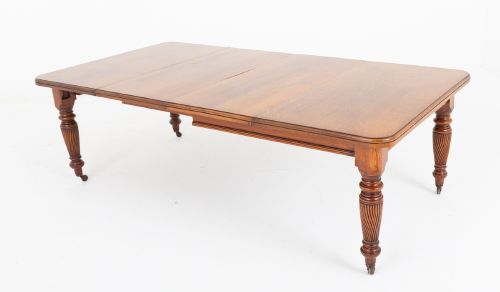
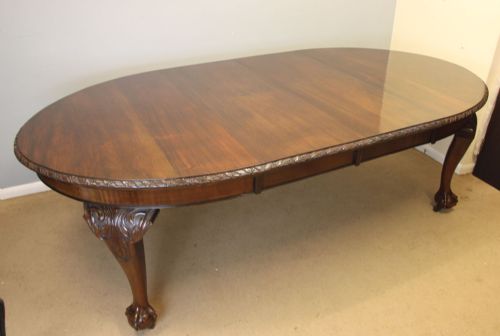
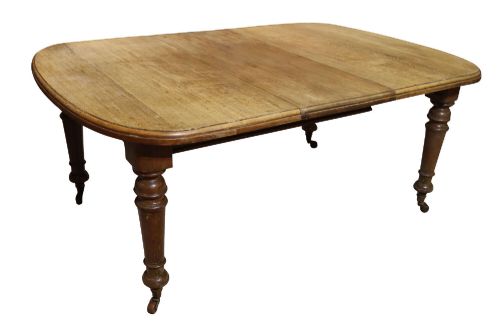
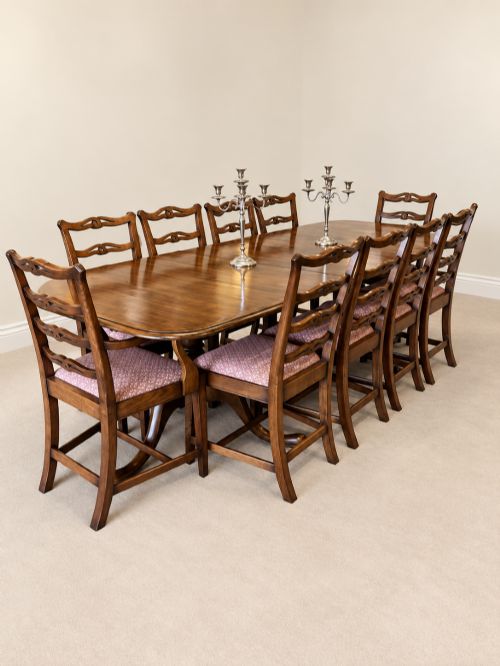
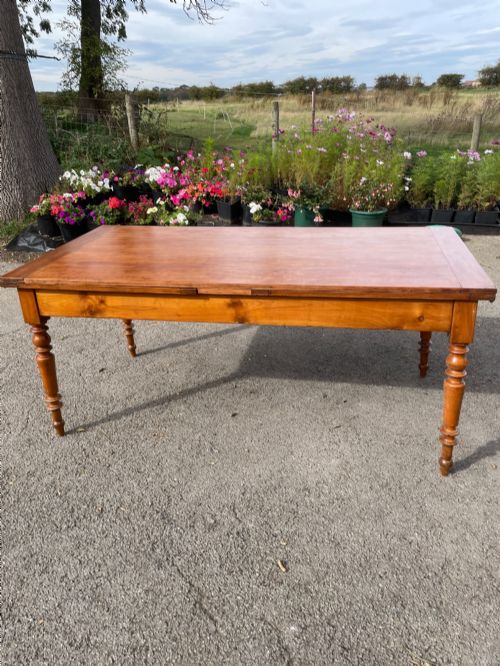
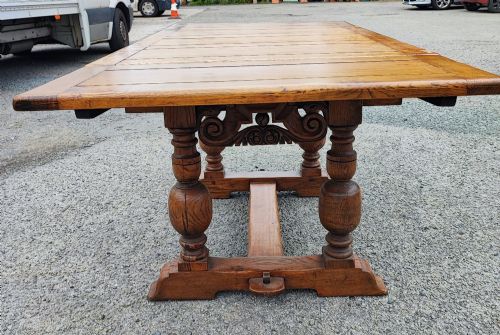
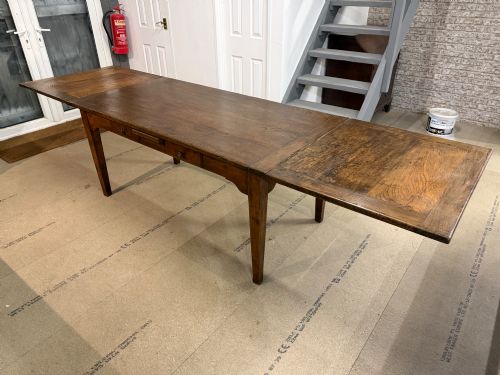
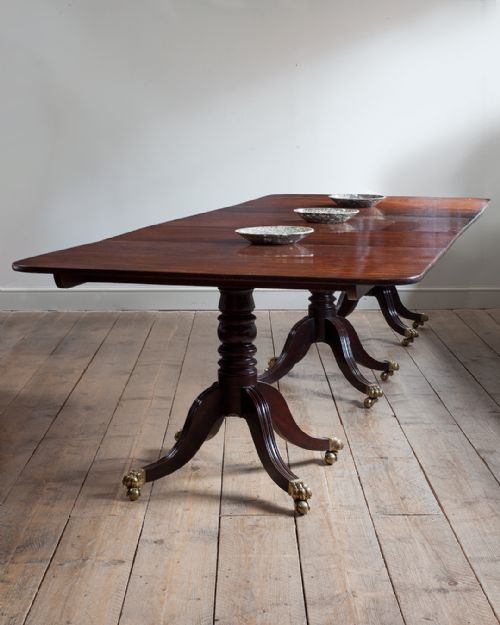
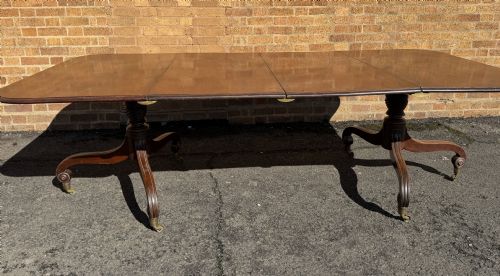
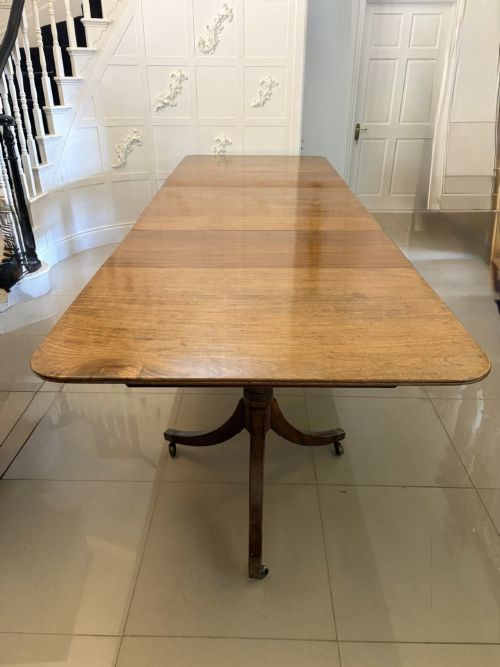
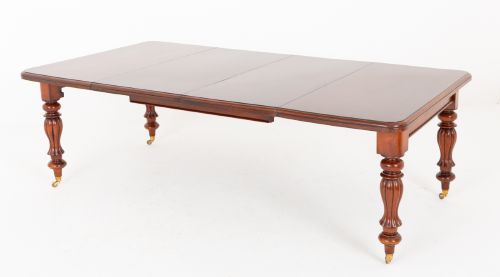
A vintage extended dining table is a practical piece designed to alter its length to suit the occasion, spanning forms from pedestal designs to refectory boards. Buyers searching for a vintage extended dining table will encounter various periods and proportions, ranging from compact Edwardian examples to grand multi-pedestal dining tables.
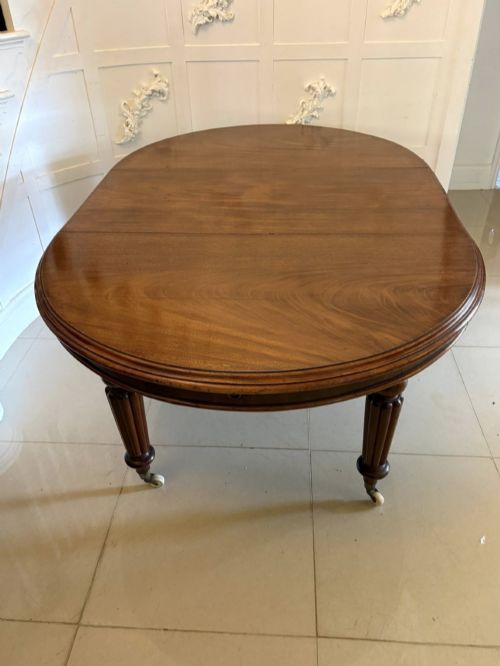
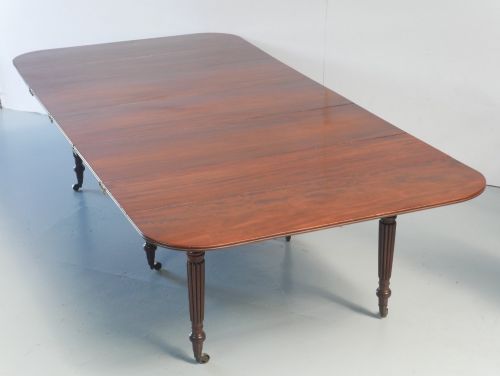
The materials reflect traditional cabinet making, with mahogany and oak appearing frequently across the selection. Oak surfaces often utilise draw-leaf mechanisms, while mahogany versions commonly employ extra leaves or winding systems supported by pedestals or castors.
What varies in quality
The calibre of a piece depends heavily on the selection of timber figure, such as figured mahogany or burr walnut, and the precision of the extension mechanism. Smooth operation of draw leaves or winding systems distinguishes superior manufacturing from heavier, simpler constructions.
Proportion and stylistic harmony also dictate standing, with finely carved pedestal bases, reeded legs, or inlaid details commanding greater attention than plain or strictly utilitarian interpretations.
Styles include Regency, Victorian, Edwardian, Jacobean Revival, and French Provincial forms.
Maple & Co
The Vintage Extended Dining Table Glossary
- Draw leaf
- A table design featuring hidden leaves stored beneath the main top that pull out to extend the surface length.
- Wind out
- A mechanical system operated by a handle that parts the table top to insert additional leaves.
- Pedestal
- A central column support, often numbering two or three on larger tables, carrying the weight of expansive tops.
- Refectory
- A long, narrow table style traditionally used for communal dining, constructed with sturdy wooden frames.
- D-end
- A table form featuring semi-circular ends that detach or separate to accommodate middle leaves.
Vintage Extended Dining Table: Frequently Asked Questions
How do extending dining tables work?
Extending dining tables typically operate through pull-out draw leaves at each end or by separating the centre to drop in extra timber boards. Many Victorian and Edwardian examples utilise a winding handle mechanism that moves the pedestals apart.
Once separated, the loose leaves lock into place using brass pins or clips to create a uniform surface. This design allows the table to remain compact for daily use while expanding to seat large groups.
What periods do these tables cover?
The pieces span from the late eighteenth century through the Victorian, Edwardian, and Art Deco eras up to the nineteen-thirties. Earlier pieces often display Georgian proportions and Regency styling.
Later examples embrace revival styles like Jacobean, Queen Anne, and Chippendale, alongside French Provincial and farmhouse aesthetics.
Are these tables suitable for everyday use?
Hardwoods such as oak and mahogany provide robust surfaces capable of handling daily domestic life. Regular care with appropriate waxes preserves the timber finish against daily wear.
Using mats and avoiding excessive moisture helps protect the polish and veneer work found on finer dining tables.
How do I identify the wood type?
Mahogany typically displays a deep reddish-brown grain, which craftsmen frequently polished to a high lustre. Oak presents a pronounced, open grain with characteristic medullary rays visible on quarter-sawn boards.
Walnut and burr walnut offer richer, darker tones with swirling patterns that decorators valued for formal dining spaces.