


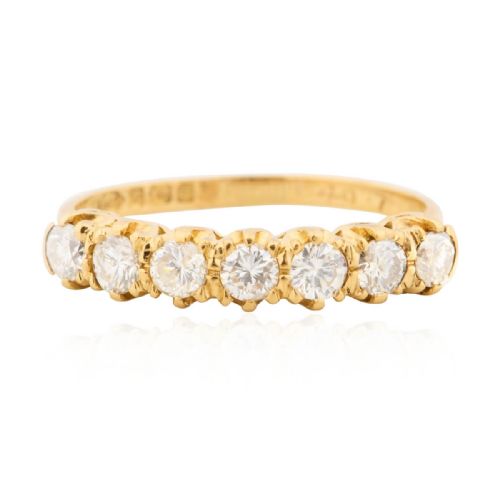


Vintage Eternity Wedding Band
A vintage eternity wedding band carries continuous rows of gems set in precious metal, offering an unbroken symbol of lifelong devotion.
Vintage Eternity Wedding Band
A vintage eternity wedding band comprises continuous lines of stones encircling the finger, embodying centuries of symbolism regarding endless love. When you search this phrase, you encounter rings originating from the 1920s through to the late 20th century.
The most common formats on this page include half eternity and full eternity variations, housing diamonds or coloured gems within precious metal channels and claws. These pieces span distinct design movements including Art Deco and Mid-Century aesthetics.
Makers utilise durable mountings designed for everyday wear, pairing robust metals with secure stone settings. Rings range from subtle narrow bands to substantial gem-set statements.
Materials and Techniques
Goldsmiths fabricate these rings primarily in platinum, 18ct white gold, 18ct yellow gold, and 9ct gold. These sturdy metals provide the structural integrity required to hold continuous or multi-stone settings securely in place.
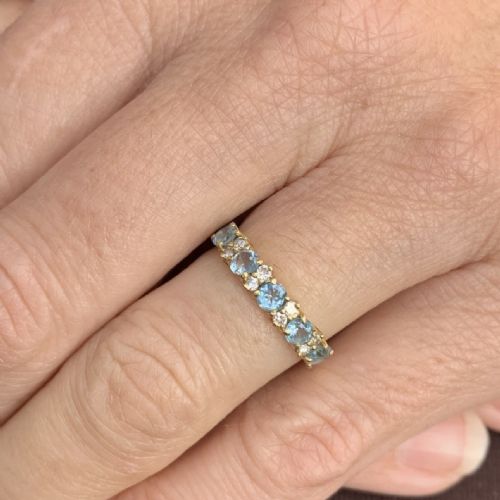
Diamonds dominate the inventory, frequently accompanied by rubies and blue spinels set in geometric Art Deco layouts or clean Mid-Century configurations. Gemstones are meticulously cut and calibrated to fit snugly side by side.
Techniques range from precise channel settings that protect stone girdles to delicate shared-claw arrangements that maximise light entry into each diamond.
Current listings incorporate platinum, 18ct white gold, 18ct yellow gold, and 9ct gold alongside diamonds, rubies, and spinels.
Factors of Quality
Quality rests upon the uniformity of the gemstones, the precision of the metalwork, and the structural integrity of the setting. Master jewellers ensure that every stone matches precisely in colour, cut, and clarity.
The weight and purity of the precious metal foundation dictate the overall heft and longevity of the band. Superior examples maintain secure prongs or intact channels that protect the girdle of each individual gem against daily wear.
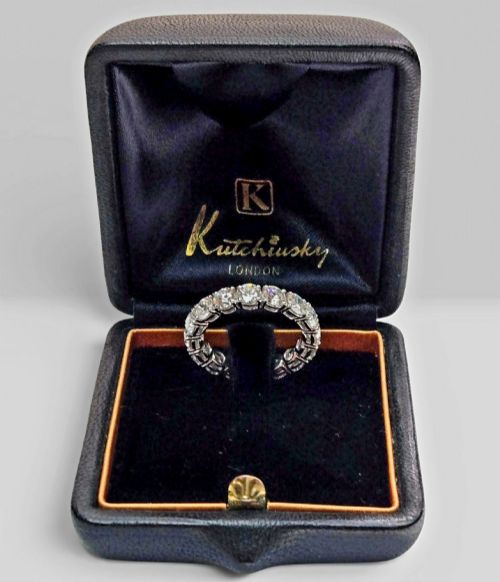
Kutchinsky
The Vintage Eternity Wedding Band Glossary
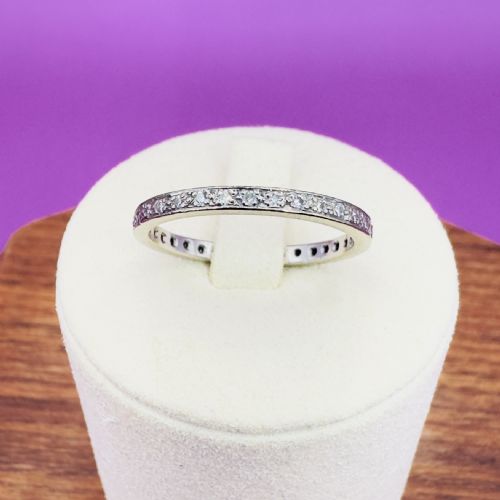
- Full Eternity Ring
- A ring featuring an unbroken circle of gemstones set all the way around the band.
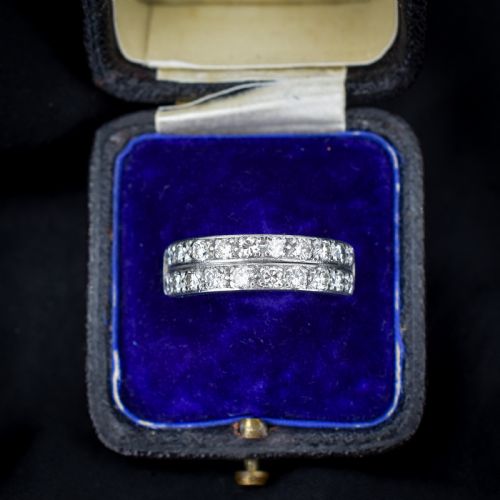
- Half Eternity Ring
- A design where gemstones encircle only the top half or front portion of the ring shank.
- Platinum
- A dense, durable, naturally white precious metal favoured for high-end ring mountings.
- Spinels
- A hard gemstone occurring in various colours, including the blue varieties found in mid-century pieces.
- Art Deco
- A design style prominent in the 1920s and 1930s characterised by geometric symmetry and clean lines.
Vintage Eternity Wedding Band: Frequently Asked Questions
Can eternity rings be resized?
Full eternity rings are exceptionally difficult or impossible to resize due to the continuous pattern of stones around the band. Half eternity rings offer more flexibility since the plain metal shank at the back can be adjusted by a skilled jeweller.
Buyers should verify their exact ring size before purchasing a full eternity band to avoid fit issues.
What is the difference between half and full eternity?
A full eternity band displays stones completely around the finger, whereas a half eternity ring places gems only across the top visible surface. Half eternity options often provide greater comfort on the palm side of the hand.
Both styles deliver the distinct visual impact associated with vintage ring designs.
How do I wear an eternity band with an engagement ring?
Eternity bands traditionally sit alongside the engagement ring and wedding band on the ring finger. Many buyers match the metal type, such as platinum or 18ct white gold, to create a cohesive stack.
Alternatively, mixed metal pairings from different decades create a personalised layered aesthetic.
What periods do these rings come from?
The available selection spans several decades from the early twentieth century through the 1960s. Art Deco pieces from the 1920s and 1930s feature geometric layouts, while 1950s and 1960s examples showcase mid-century modern styling.
Each era brings distinct gemstone cuts and mounting techniques to the collection.