


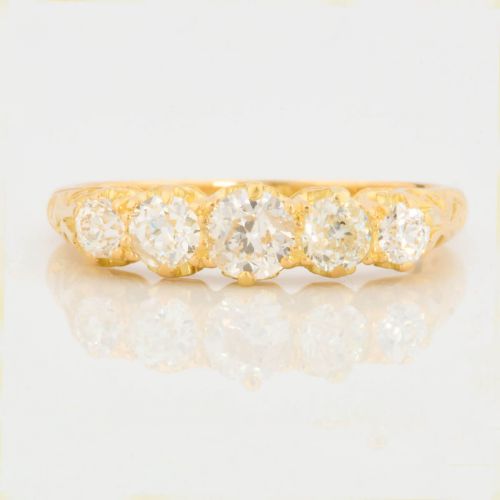


Vintage Eternity Band Ring
A vintage eternity band ring marks a continuous line of gemstones, carrying decades of craftsmanship on the hand.
Vintage Eternity Band Ring
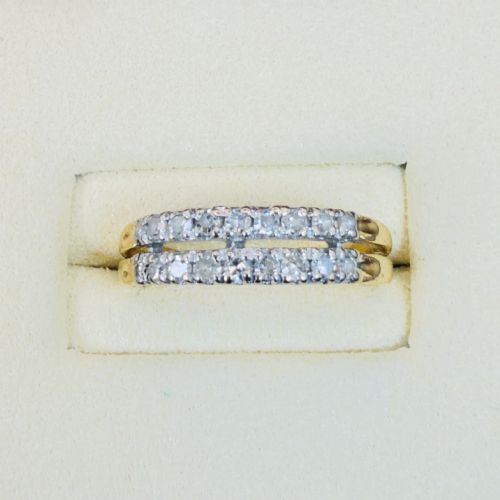
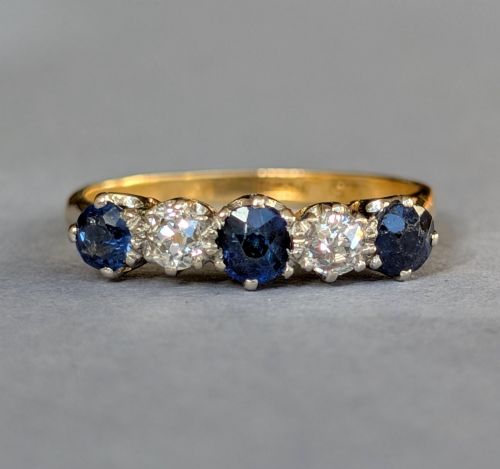
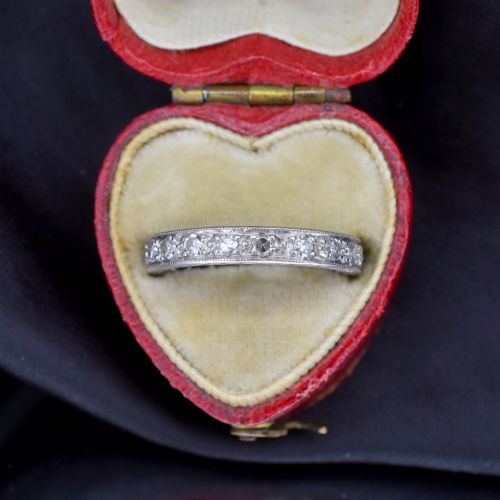
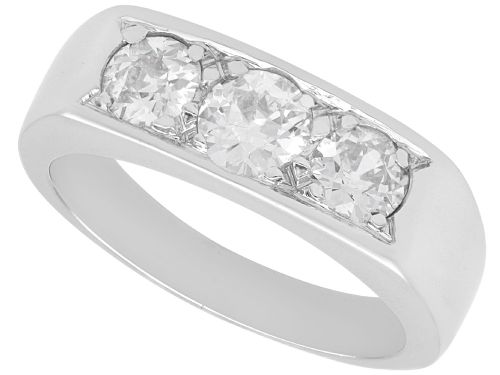
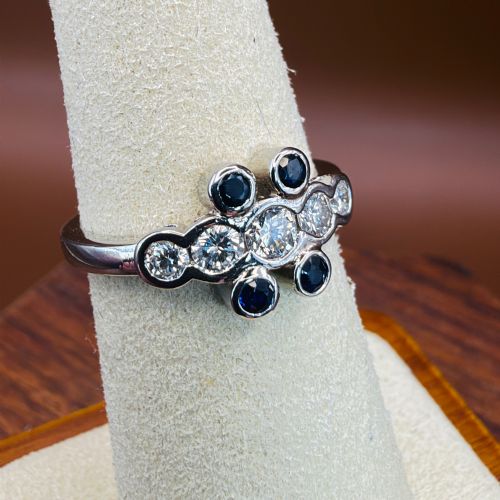
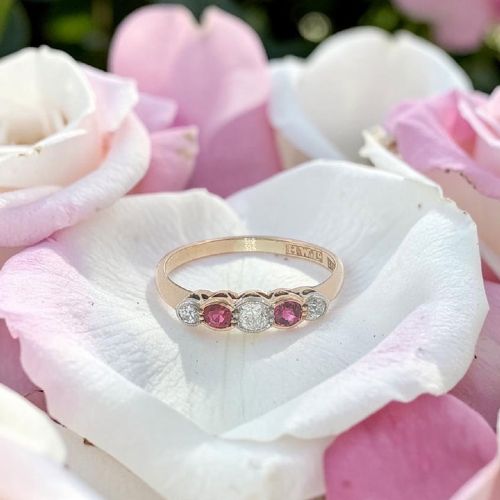
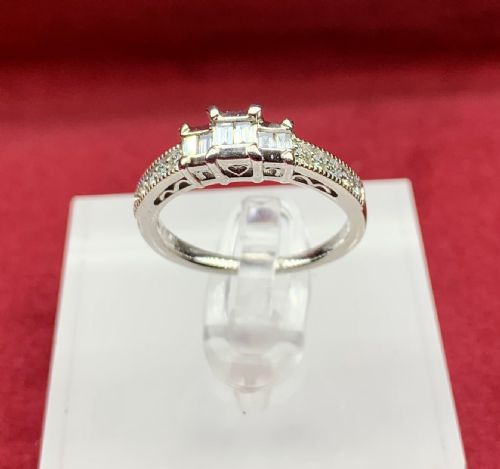
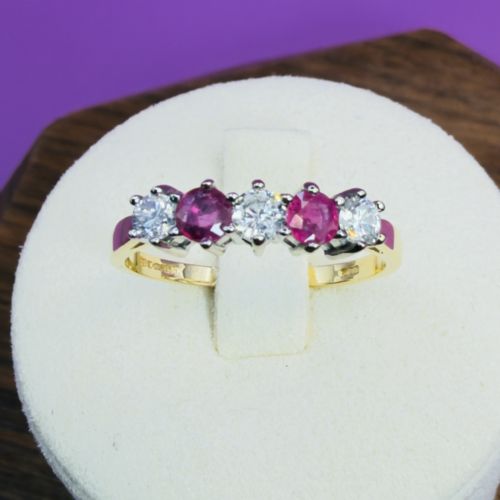
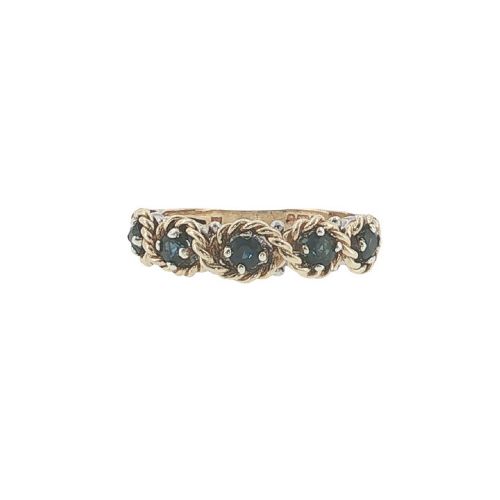
A vintage eternity band ring takes the form of a continuous circle of gemstones, most frequently diamonds, rubies, sapphires, or emeralds set into precious metal bands. When browsing this selection, the visitor encounters pieces spanning from Edwardian and Victorian origins through Art Deco, mid-century, and later twentieth-century periods.
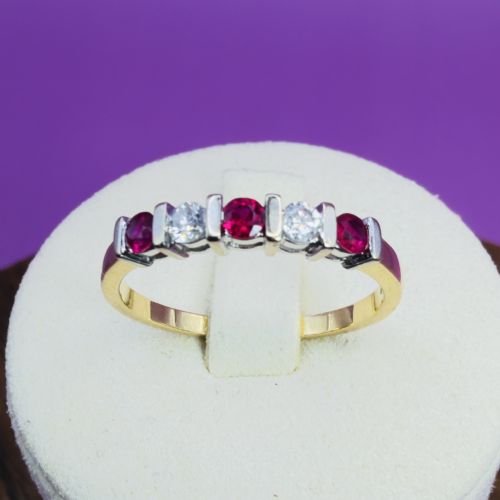
The most common formats met on this page are half-eternity, full-eternity, and five-stone or seven-stone configurations arranged in platinum or various carats of gold. These rings serve as enduring symbols of commitment or personal milestones, combining historical design with wearable elegance.
How they were made
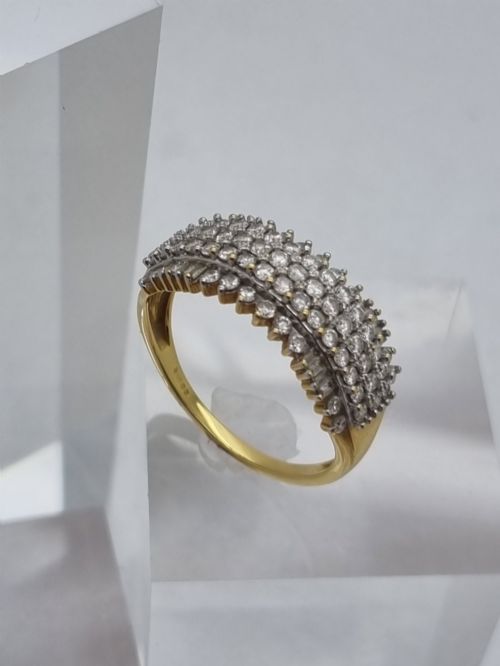
The construction of these rings relies heavily on precious metals including platinum, 18ct white gold, 18ct yellow gold, and 9ct gold, shaped to hold rows of matched gemstones. Goldsmiths utilised traditional techniques such as claw settings, channel settings, and pavé arrangements to secure diamonds, sapphires, and rubies tightly within the band.
Art Deco examples often display geometric platinum work, while mid-century and later pieces utilise structured gold mountings. The integration of old-cut and modern brilliant-cut stones reflects the evolving lapidary methods of each specific decade.
Vintage Eternity Band Ring Retail Price Guide 2026
Typical asking prices for vintage eternity band ring among the pieces listed under this phrase on Sellingantiques today, from the lower quarter to the upper quarter. They describe what is for sale here now, not the wider market.
The listings feature pieces spanning from the Edwardian era through the Art Deco, mid-century, and late twentieth-century periods.
What varies in quality
The distinction between tiers rests upon the precision of the stone matching and the integrity of the metal setting. Superior examples demonstrate uniform colour, clarity, and cut across every gemstone in the continuous or half-hoop channel, maintaining structural robustness without compromising delicacy.
Weight and metal purity further define the tier of the piece, with heavier platinum and solid 18ct gold mountings offering greater longevity than lighter 9ct alternatives. The finesse of the hand-finished metalwork around each individual stone separates standard production from exceptional goldsmithing.
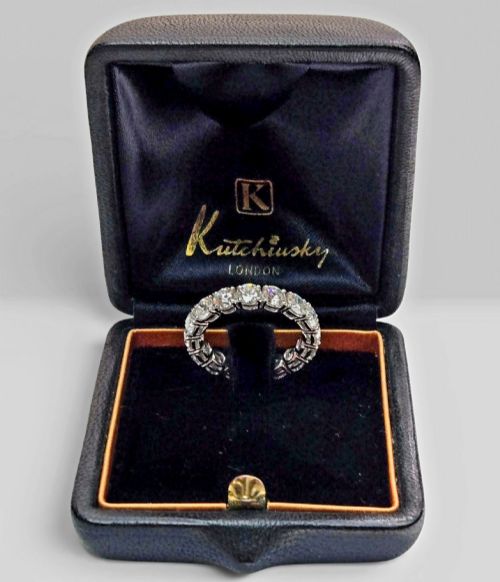
Kutchinsky
The Vintage Eternity Band Ring Glossary
- Eternity band
- A ring set with a continuous line of identically cut gemstones symbolising endless love. This form appears across various twentieth-century styles.
- Full eternity
- A design where gemstones encircle the entire circumference of the finger. It requires precise sizing as altering the band proves difficult.
- Half eternity
- A style where gemstones cover only the upper half of the band. This configuration allows for easier resizing by a jeweller.
- Old cut
- A diamond cutting style prevalent in antique and early twentieth-century jewellery, characterised by a smaller table and larger culet. These stones exhibit a softer, deeper candlelit sparkle.
- Platinum
- A dense, durable, and naturally white precious metal frequently utilised in Edwardian and Art Deco mountings. It holds stones securely with minimal visible metal.
Vintage Eternity Band Ring: Frequently Asked Questions
How do I wear an eternity ring with other rings?
An eternity band sits comfortably alongside an engagement ring and a wedding band, often stacked directly against them on the finger. Because the continuous setting creates a uniform height, pairing it with a similarly profiled band keeps the stack balanced.
For full eternity rings, matching the metal type prevents friction wear between adjacent bands over time. Many choose to wear a half-eternity ring alone or let it anchor a multi-ring arrangement.
Can an eternity ring be resized?
Resizing depends entirely on whether the piece is a half-eternity or a full-eternity design. Half-eternity rings feature a plain metal shank at the back, which allows a skilled goldsmith to add or remove metal and adjust the size.
Full-eternity rings cannot be altered easily because the gemstones run continuously around the entire band. Adjusting the circumference would disrupt the unbroken line of stones and the structural integrity of the setting.
How do I identify the period of my ring?
Dating relies on examining the hallmarks stamped inside the band, the cutting style of the gemstones, and the overarching manufacturing techniques. Maker marks and metal purity stamps often provide direct clues to the decade of creation.
Stylistic markers also help distinguish eras, such as geometric platinum scrollwork in Art Deco pieces versus heavier yellow gold profiles from later decades. Comparing these structural elements to documented examples clarifies the historical context.