



Vintage Escritoire
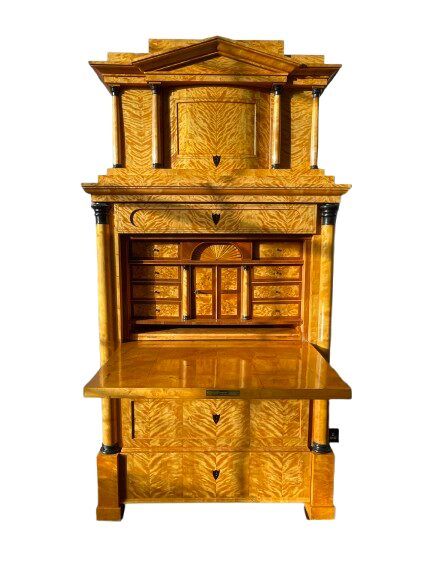
A vintage escritoire brings together fine cabinet-making and practical workspace, offering a drop-down writing surface alongside fitted internal drawers.
Vintage Escritoire
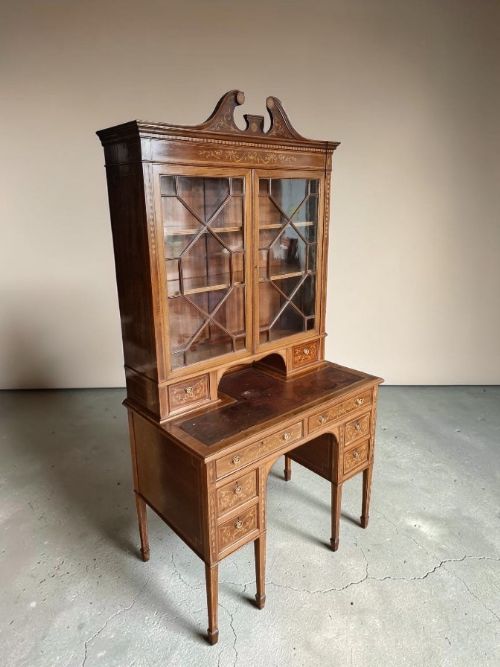
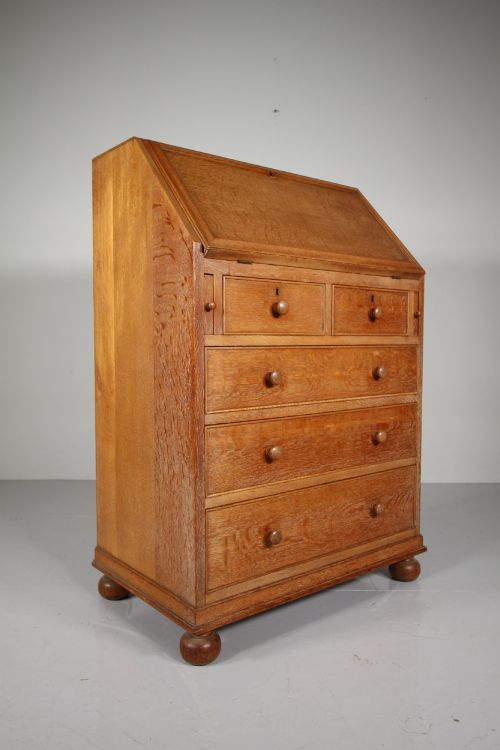
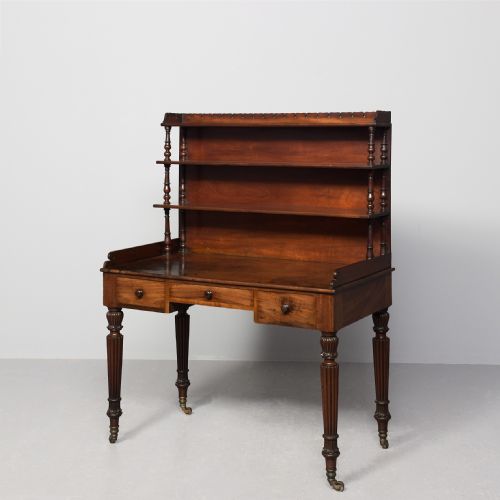
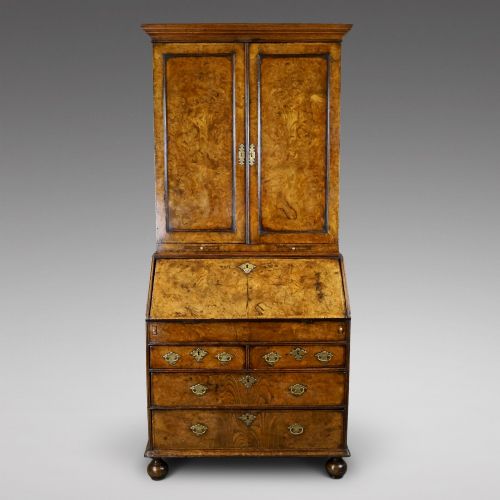
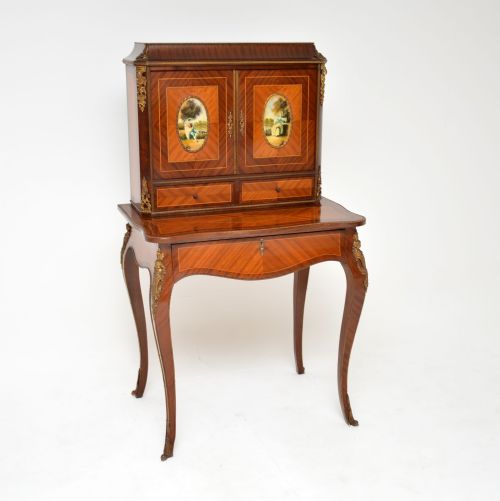
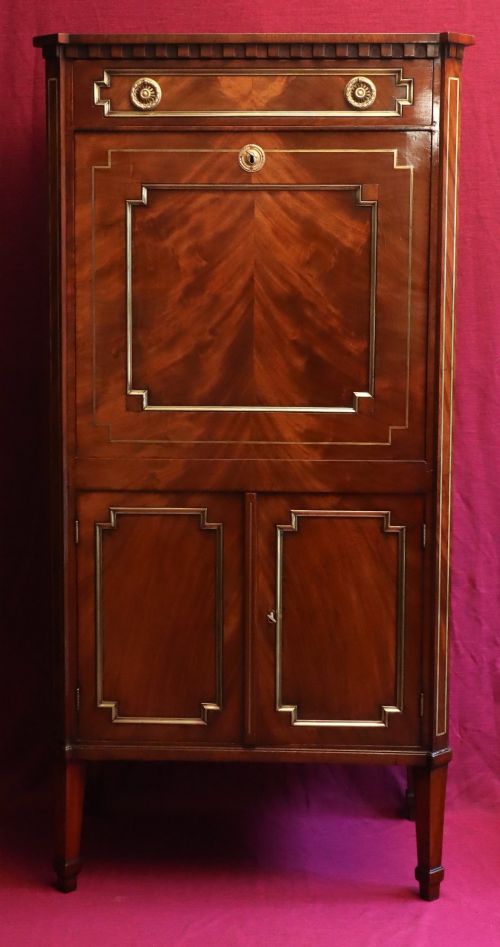
A vintage escritoire encompasses various forms of writing cabinets, fall-front desks, and bureau bookcases spanning the seventeenth century through to the Edwardian era. Buyers examining these pieces encounter formats ranging from French marquetry secretaire a abattants to compact ladies writing desks.
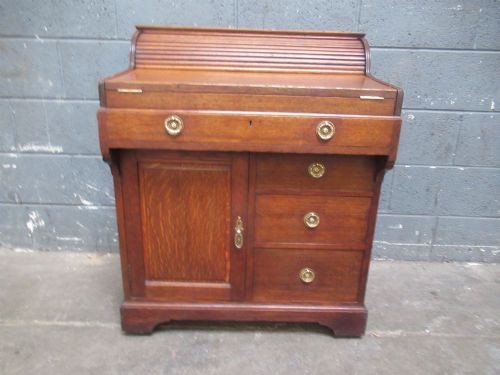
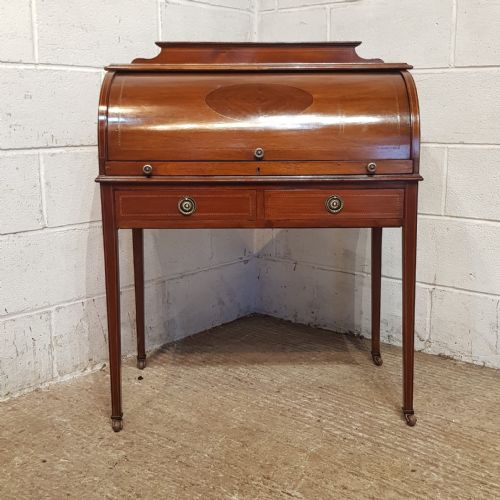
The nineteenth century and the nineteen-twenties provide the bulk of the examples seen here, often rendered in walnut, mahogany, or oak. These pieces function primarily as compact writing stations while concealing compartments for correspondence behind hinged or cylinder fronts.
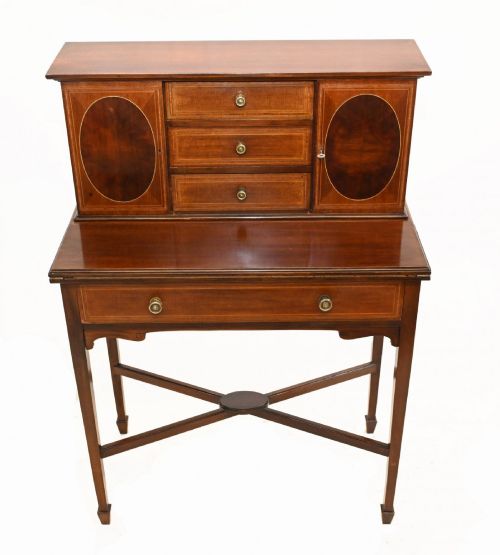
Origin styles vary widely, encompassing French Rococo Revival, Jacobean Revival, and Edwardian Sheraton Revival alongside plain structural forms. The domestic desk remains the most frequently met version on this page.
How they were made
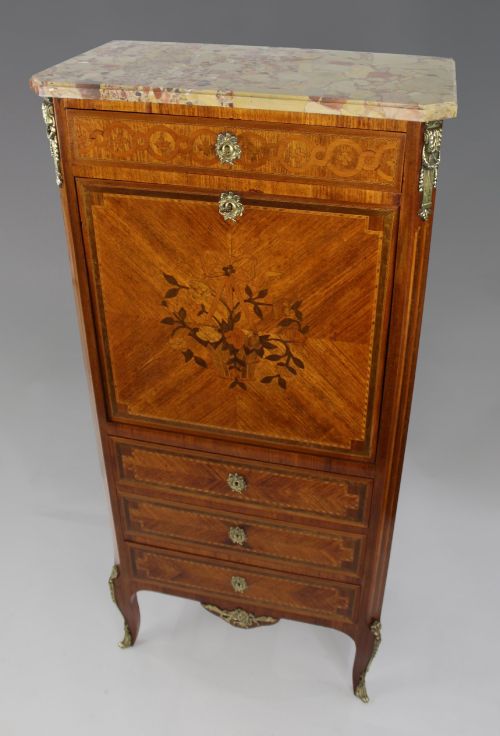
Cabinet-makers built these escritoires using sturdy timbers such as mahogany, oak, and walnut, frequently applying fine veneers of satinwood, kingwood, or burr elm across the principal surfaces. Marquetry inlay and ormolu mounts appear on continental European examples, while brass handles and hardware secure the internal compartments.
Structural integrity relies on traditional joinery methods that support heavy fall-front panels and cylinder lids. Interior partitions incorporate smaller pigeonholes and drawers constructed to house writing materials securely.
Vintage Escritoire Retail Price Guide 2026
Typical asking prices for vintage escritoire among the pieces listed under this phrase on Sellingantiques today, from the lower quarter to the upper quarter. They describe what is for sale here now, not the wider market.
Some nineteenth-century cylinder desks hide secret spring-loaded compartments that pop open only when you press a hidden internal wooden peg.
What varies in quality
The refinement of the timber selection and the precision of the marquetry distinguish superior pieces from standard workshop production. Grain matching across drawer fronts and fall panels indicates deliberate planning by the maker.
Hardware execution and the integration of secondary materials like marble tops or ormolu mounts signal higher grade workmanship. The smoothness of the fall-front action and the snugness of internal pigeonholes reflect structural execution.
James Mein of Kelso·Heals
The Vintage Escritoire Glossary
- Escritoire
- A writing cabinet featuring a fall-front flap that lowers to form a desk surface, concealing internal compartments.
- Secretaire a abattant
- A tall, upright cabinet with a vertical front that drops down to create a writing ledge, originating largely from French ateliers.
- Marquetry
- Decorative patterns formed by inserting thin pieces of wood veneer into a background panel to create elaborate pictorial designs.
- Ormolu
- Gilded bronze ornamentation applied to furniture mounts, prevalent on nineteenth-century continental pieces.
- Cylinder desk
- A desk featuring a rolling curved wooden shutter that retracts to reveal the writing surface and interior fittings.
Vintage Escritoire: Frequently Asked Questions
What is an escritoire used for?
An escritoire serves primarily as a compact writing desk and storage cabinet for correspondence and paperwork. The hinged fall-front drops down to provide a stable surface for writing.
Interior compartments organise letters and small stationery items, keeping private documents concealed when the desk is closed.
How do I identify a French escritoire?
French examples often display marquetry inlay, kingwood or walnut veneers, and cast ormolu mounts. The form frequently follows a tall secretaire a abattant structure.
Many of these continental pieces incorporate marble tops above the primary writing cabinet.
Are these desks suitable for daily use?
These writing desks accommodate modern laptops and paperwork provided the fall-front hinges and support ledges remain structurally sound. Consideration of surface depths helps match the desk to contemporary seating.
Protecting timber surfaces from moisture and heavy wear preserves the underlying veneers and polish.
How do I tell different periods apart?
Seventeenth-century pieces typically feature burr elm or oyster walnut with robust structural forms, while Victorian and Edwardian examples lean towards mahogany and lighter inlaid satinwood.
Revival styles from the late nineteenth century borrow decorative motifs from earlier eras like the Jacobean or Louis XV periods.