






Vintage Entry Stand
A vintage entry stand organises the threshold, offering a dedicated place for hats, coats, sticks and umbrellas as you step inside.
Vintage Entry Stand
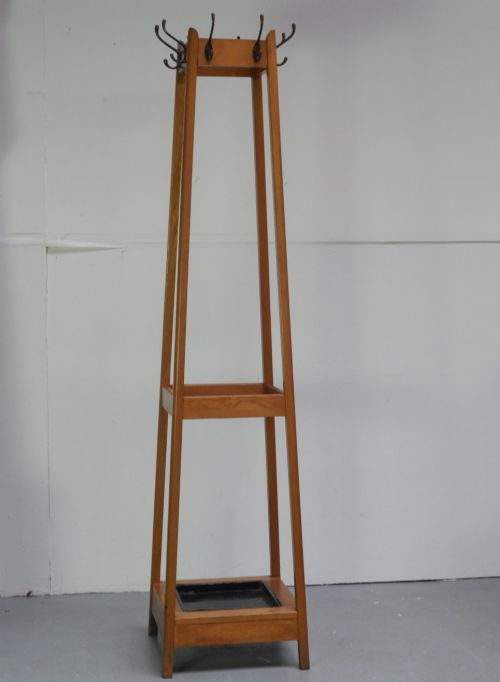
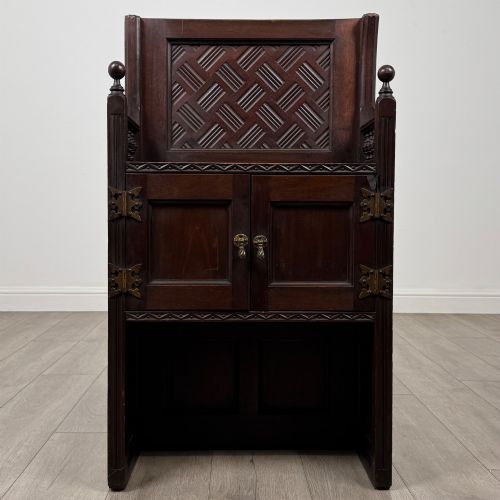
When you search for a vintage entry stand, you encounter hall stands, console tables, umbrella stands, coat racks and stick stands designed to furnish hallways. These pieces span from the Victorian and Edwardian eras into the early twentieth century, taking the form of tall wooden fixtures with mirrors and hooks or compact iron umbrella holders.
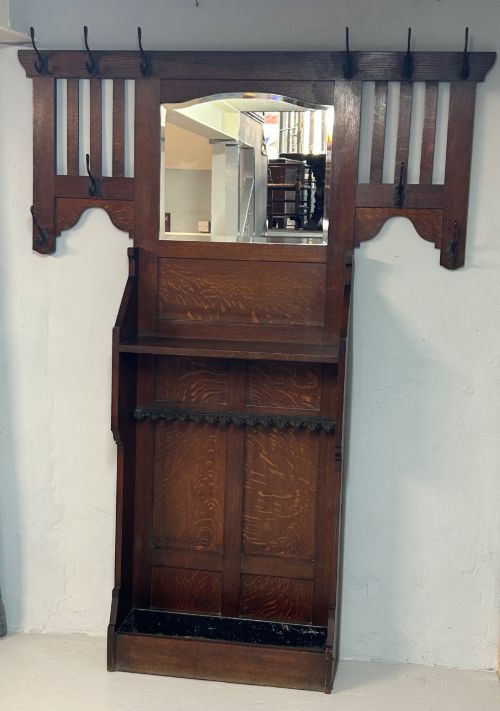
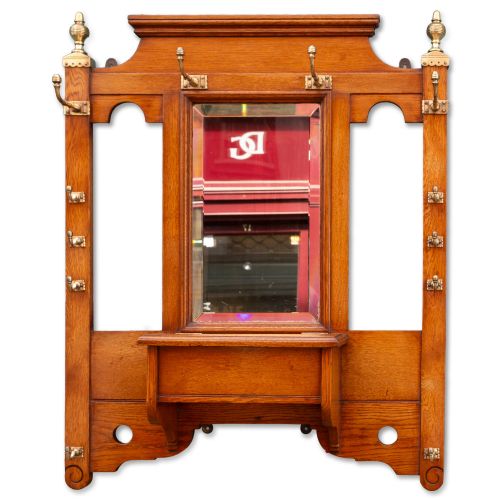
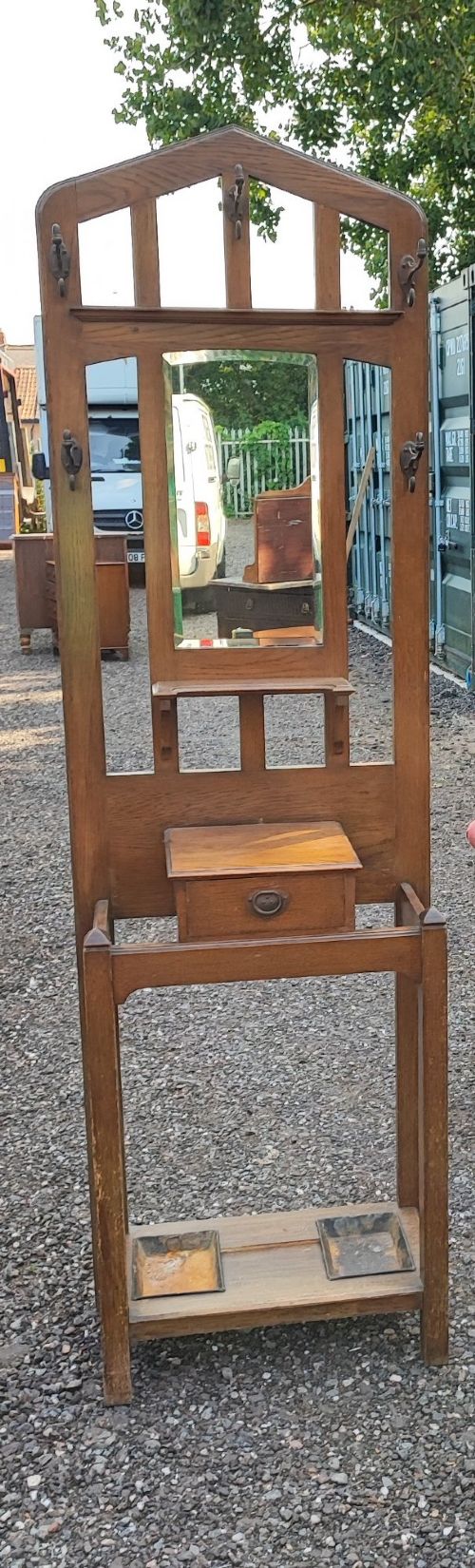
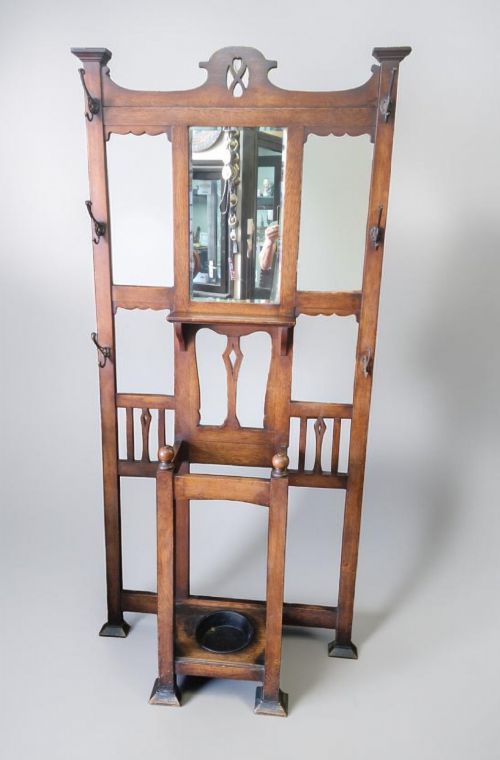
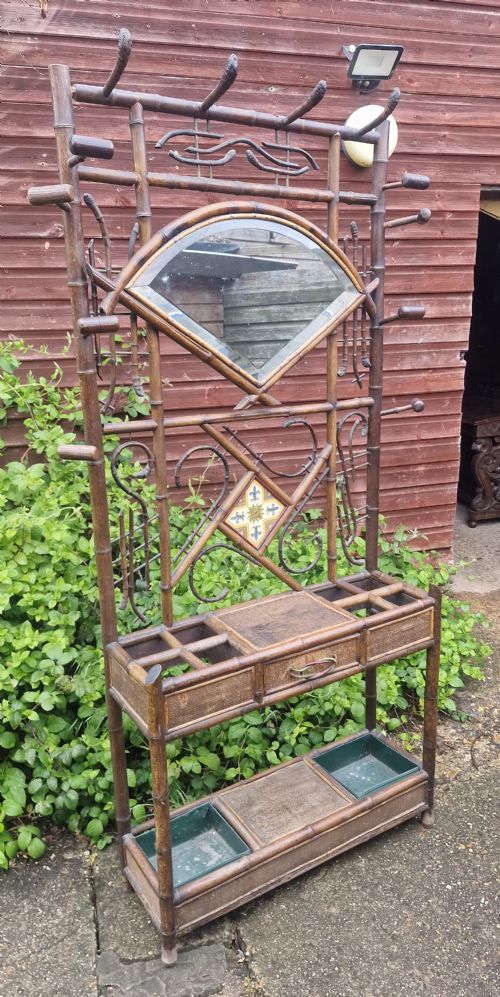
The version most likely to meet you on this page is the Victorian or early twentieth-century oak or mahogany hall stand, frequently incorporating brass hooks, a central glove box or a mirrored backplate. Alongside these, you find bamboo and bentwood examples from the nineteen-hundreds and nineteen-twenties, as well as cast iron stick stands.
These items served domestic and commercial spaces alike, functioning in country houses, hotels and shops to manage outerwear and walking accessories. The surviving examples demonstrate how entrance furniture adapted to hold hats, coats, sticks and umbrellas within a single footprint.
Materials and construction methods
Cabinet makers utilised solid and veneered timbers including oak, mahogany, walnut, pitch pine and bamboo, shaping them into carved, fretted or bentwood frames. Many pieces integrate timber structures with cast iron, brass, nickel-plating or wrought iron to form durable frameworks for daily use.
Mirrors with original glass plates feature frequently within the wooden framework, whilst cast iron and brass components provide the rigidity required for heavy umbrella and stick stands. Inlaid details, carved ornamentation and bentwood steam-shaping define the decorative and structural techniques applied to these hallway furnishings.
Vintage Entry Stand Retail Price Guide 2026
Typical asking prices for vintage entry stand among the pieces listed under this phrase on Sellingantiques today, from the lower quarter to the upper quarter. They describe what is for sale here now, not the wider market.
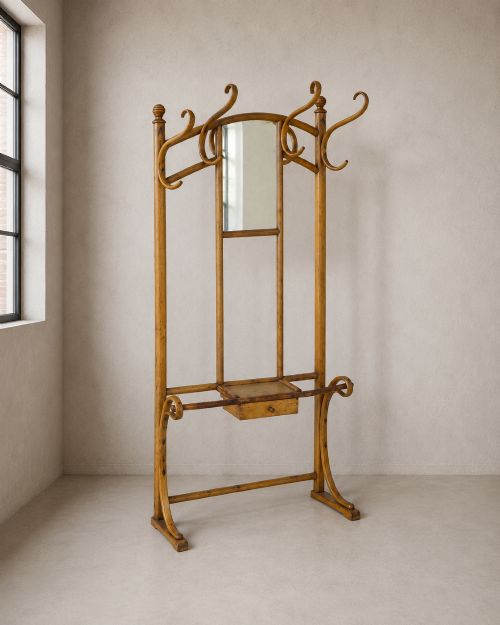
Honey-coloured bentwood stands remind us that even walking stick storage once followed the revolutionary steam-bent curves of Vienna.
Distinctions in construction and design
The standard of timber selection and carving separates standard production items from finer workshop pieces, with dense oak, figured walnut and mahogany displaying superior grain and deep colour. Elaborate fretwork, hand-carved panels and integrated mirrors indicate a higher grade of design compared to simpler utility models.
Hardware quality further defines the hierarchy, distinguishing solid brass hooks and heavy cast iron trays from lighter plated alternatives. The integrity of the original mirror plate and the complexity of the frame construction determine the overall refinement of the piece.
Thonet·Coalbrookdale
The Vintage Entry Stand Glossary
- Hall stand
- A tall piece of hallway furniture combining coat hooks, a mirror, umbrella storage and frequently a small compartment for gloves or keys. These items formed the central station for outdoor wear in nineteenth and early twentieth-century homes.
- Bentwood
- Wood softened by steam and bent into curved structural forms, famously utilised by makers like Thonet. This technique created lightweight yet robust frames for chairs and stands.
- Demi-lune
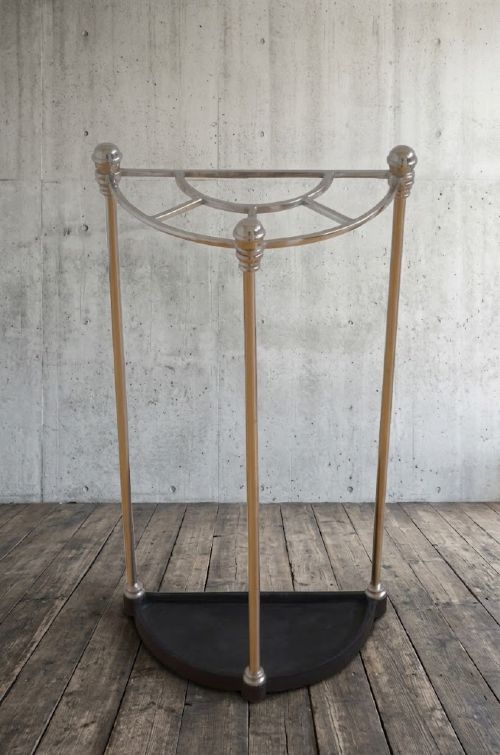
- Half-moon shape, describing tables and umbrella stands designed to sit flat against a hallway wall. This curved profile saved valuable floor space in narrow entryways.
- Portmanteau
- A large freestanding hallway piece incorporating a mirror, hat racks, coat hooks and umbrella storage. These substantial items served grand entrance halls and reception areas.
- Stick stand
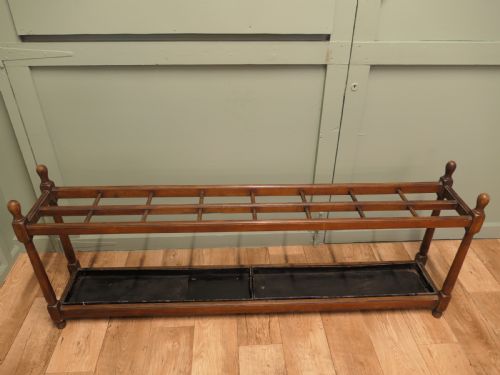
- A dedicated receptacle for walking sticks and canes, constructed from brass, cast iron or wrought iron. They often include an integrated drip tray at the base.
Vintage Entry Stand: Frequently Asked Questions
What is a vintage entry stand?
A vintage entry stand is a hallway furnishing designed to hold coats, hats, sticks and umbrellas. These pieces range from tall wooden hall stands with integrated mirrors to compact metal umbrella holders.
They serve as practical storage at the entrance of a home, keeping everyday outdoor garments and accessories neatly arranged.
Where were these pieces used?
These items stood in the entrance halls and corridors of domestic houses, country estates, hotels and commercial shops. Their primary purpose was to receive guests' outdoor wear immediately upon entry.
Larger versions accommodated the heavy coats and walking sticks of Victorian households, whilst smaller metal stands suited tighter urban hallways.
How do I date a hall stand?
Dating relies on observing the prevailing styles, materials and manufacturing techniques present in the piece. Victorian examples often feature heavy carved oak or walnut, whilst Art Nouveau pieces display organic floral motifs and Edwardian items show lighter mahogany frames.
Bentwood and nickel-plated stands typically point towards the nineteen-twenties and nineteen-thirties.
How do I care for wooden hall furniture?
Maintain wooden hall stands by keeping them away from direct heat sources and sudden temperature changes that can dry out the timber. Regular dusting and occasional application of appropriate furniture wax preserve the finish and grain.
Check brass and iron fittings periodically to ensure they remain secure within the wooden framework.