


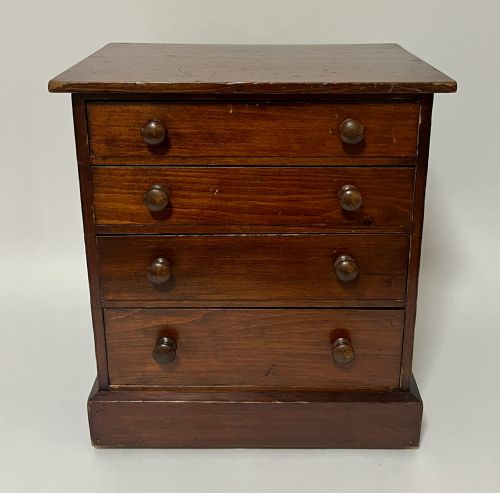


Vintage Entomology Chest
A vintage entomology chest holds fragile specimens in shallow drawers, offering the serious collector a traditional way to organise and preserve natural history collections.
Vintage Entomology Chest
A vintage entomology chest functions as a specialist piece of furniture designed to house butterflies, insects, and natural specimens safely away from light and dust. Buyers searching for a vintage entomology chest will find pieces originating from the Georgian, Victorian, and Edwardian eras, spanning the nineteenth and early twentieth centuries. These items appear primarily as collectors cabinets, specimen cabinets, and collectors chests with multiple shallow drawers.
The most common versions met on this page are mahogany and oak cabinets featuring banks of drawers, alongside examples constructed from pine, walnut, and pitch pine. Certain pieces incorporate glass fronts or secure locking mechanisms with keys for added display and protection. The forms range from small tabletop specimen cases to large multdrawer floor-standing units created by known cabinet makers.
How they were made
Cabinet makers utilised dense hardwoods such as mahogany, oak, and walnut alongside softer timbers like pine and deal to construct these sturdy carcases. Individual drawers were meticulously joined and fitted with glass panels or protective glazed covers to shield delicate contents from environmental damage.
Brass handles, pulls, and escutcheons were fitted to the drawer fronts and doors, often paired with boxwood inlay for decorative contrast. Certain workshop productions also employed painted finishes or satinwood highlights to elevate the visual appearance of the cabinetry.
Vintage Entomology Chest Retail Price Guide 2026
Typical asking prices for vintage entomology chest among the pieces listed under this phrase on Sellingantiques today, from the lower quarter to the upper quarter. They describe what is for sale here now, not the wider market.
One exceptional cabinet preserves the recorded lifetime of nineteenth-century naturalist William John Burchall.
What varies in quality
The distinction between standard utility storage and superior cabinet making rests in the selection of timber and the precision of the drawer construction. Mahogany and figured pitch pine examples with numerous uniform drawers represent the higher tier of production.
Named makers and specialised workshop output introduce greater workshop skill, evident in refined boxwood inlay, superior brass hardware, and tightly fitted dust-proof drawer frames. Simpler stained deal or pine pieces offer functional storage without the intricate detailing found in the finest specimen furniture.
Brady of Edmonton·Charles William Schofield·J.T. Crockett
The Vintage Entomology Chest Glossary
- Collectors cabinet
- A multi-drawer piece of furniture designed specifically for housing natural history specimens, coins, or small antiquities.
- Escutcheon
- A flat plate surrounding a keyhole, usually cast in brass, protecting the surrounding wood from wear.
- Pitch pine
- A resinous North American pine variety utilised for durable drawer construction and cabinet carcases.
- Satinwood
- A pale, lustrous exotic hardwood employed for contrasting stringing and inlay work on fine furniture.
Vintage Entomology Chest: Frequently Asked Questions
What is a vintage entomology chest?
A vintage entomology chest is a multi-drawer wooden cabinet built to store and protect natural history specimens. These pieces typically feature shallow drawers designed for holding insect pins and glass slides.
They reflect historical methods of scientific collecting, originating predominantly from the Georgian, Victorian, and Edwardian periods.
How were these cabinets used?
Naturalists and collectors utilised these chests to classify, protect, and display butterflies, moths, beetles, and botanical samples. The shallow drawers prevented specimens from stacking up and damaging each other.
Glass fronts or tight-fitting drawer covers kept out pests and dust while allowing researchers to view the collection without handling individual items.
How do I date a specimen cabinet?
Dating relies on timber selection, construction techniques, and hardware styles. Georgian and early Victorian pieces often feature solid mahogany with hand-cut dovetails and heavy brass drop handles.
Later Victorian and Edwardian examples may utilise pitch pine, stained deal, or oak, occasionally accompanied by maker plaques or specific locking mechanisms.
Where should I place an entomology chest?
Place your chest in a stable environment away from direct sunlight and damp conditions to protect both the timber carcase and any historic contents. Rooms with consistent ambient temperature prevent the wood from warping and protect delicate internal linings.
Ensure the floor is level, particularly with larger multi-drawer floor-standing cabinets, to keep the drawers running smoothly in their tracks.