


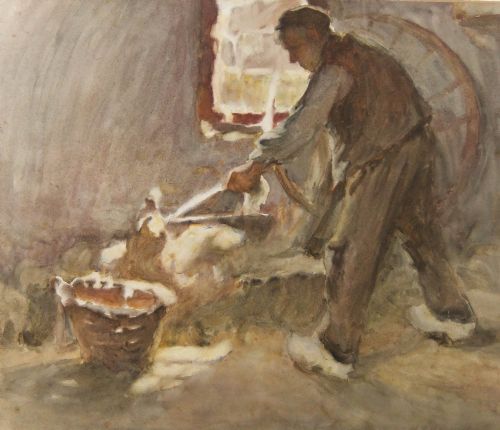
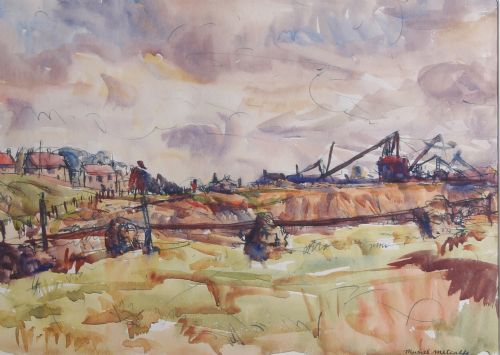
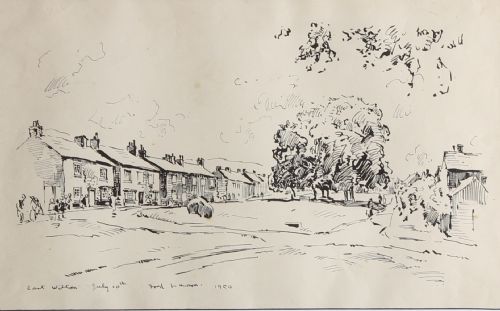
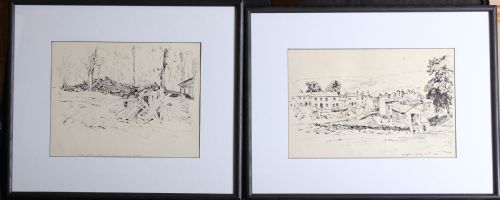
Vintage English Watercolours
Vintage English watercolours capture pastoral landscapes and coastal scenes on paper through delicate pigment and ink.
Vintage English Watercolours
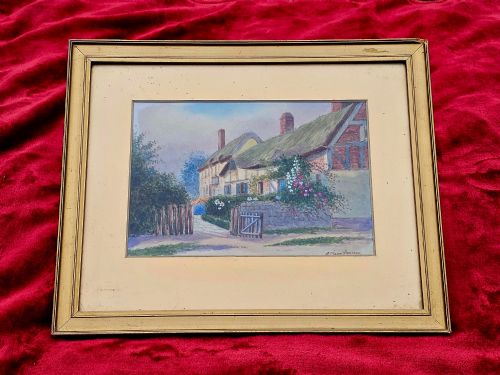
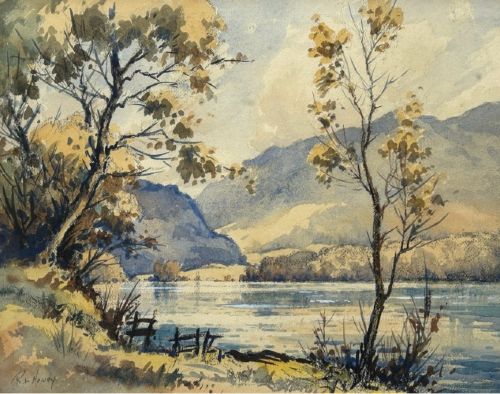
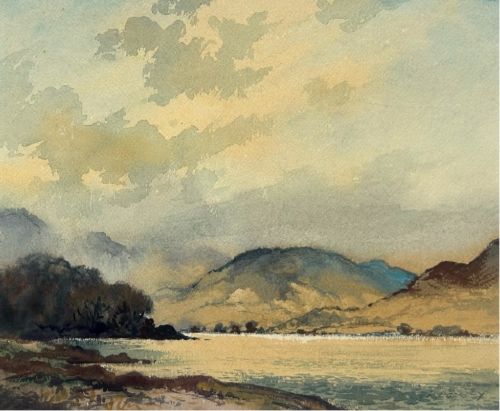
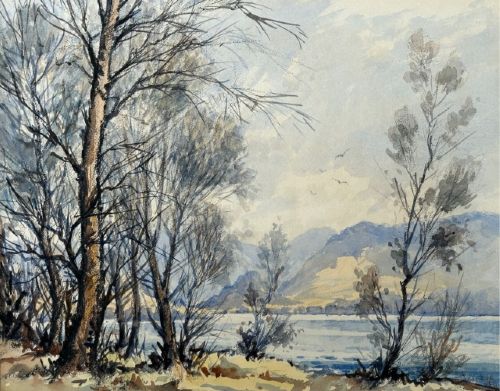
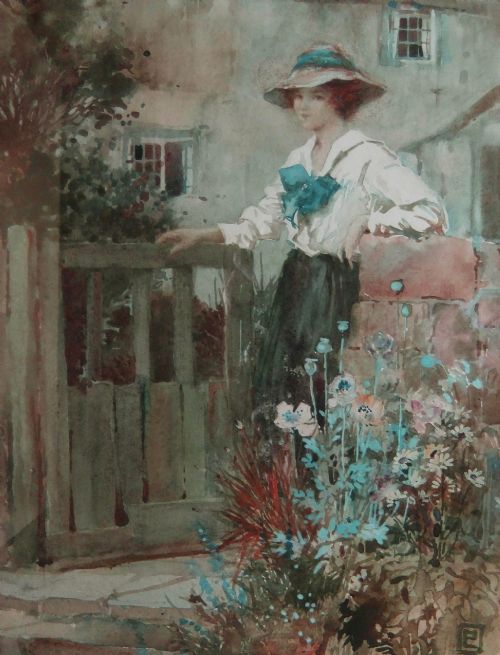
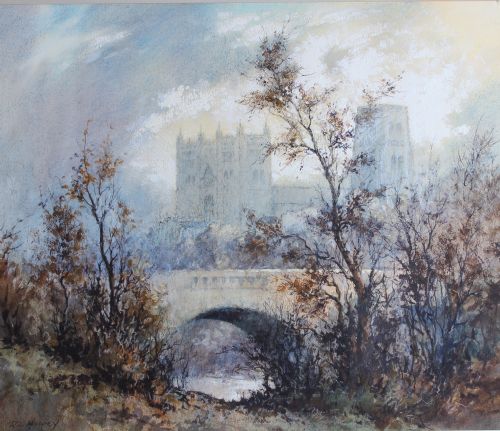
Vintage English watercolours comprise original paintings and drawings on paper depicting regional landscapes, maritime views, and botanical studies. These works span the nineteenth and twentieth centuries, encompassing Victorian, Edwardian, and Modern British artistic movements.
Works on paper preserve the spontaneous touch of the artist through layered pigments and delicate ink linework. Each piece offers a direct connection to British topographical traditions and provincial scenery.
How they were made
Artists applied watercolour pigment and ink onto paper supports, occasionally combining gouache and pencil for heightened opacity and detail. These mediums allowed for rapid plein air sketching as well as intricate studio compositions.
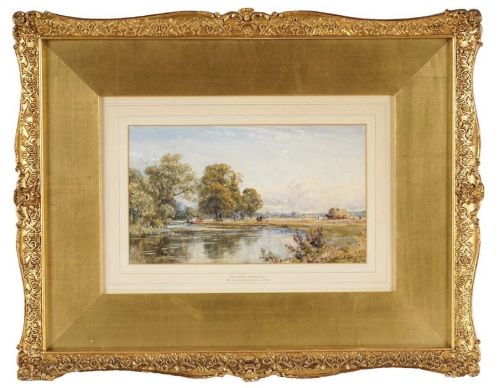
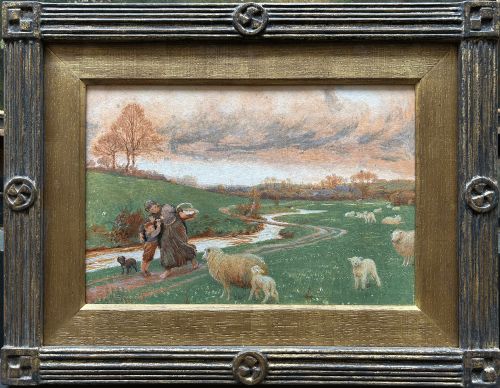
Completed paintings were protected beneath glass and housed within wooden frames, frequently finished in gilt wood or gold leaf to complement the delicate tones of the artwork.
Several artists clearly braved harsh northern winds, capturing Yorkshire castles and Cumbrian lakes with fingers freezing to their ink pens.
What varies in quality
The strength of composition and surety of brushwork separate accomplished paintings from simpler sketches. Mastery over the translucent medium determines how effectively light and atmosphere are rendered across the paper.
The preservation of the paper support and the vibrancy of the original watercolour pigments influence the overall visual impact. Original period frames and secure mounting under glass also contribute to the integrity of the piece.
Alfred Young Nutt·A. Marie Parsons·Robert Leslie Howey·William Banks Fortescue·Henry Silkstone Hopwood·Muriel Metcalfe·Fred Lawson·Robert Thorne Waite·John Smith Atherton·Frederick Walker·Percy Lancaster·David Cox·Herman S Melville·Charles Edward Wilson·F A Roylance·John Bedloe Goddard·James Tower·Richard Harry Carter·Henry Charles Fox·Arthur Wardle·Harry Wanless·Cuthbert Crossley·George Graham·Arthur Tucker·James William Booth
The Vintage English Watercolours Glossary
- Watercolour pigment
- Finely ground colour particles mixed with a water-soluble binder, applied in translucent washes to paper. This medium relies on the white of the paper to reflect light back through the layers.
- Gouache
- An opaque water-soluble paint similar to watercolour but manufactured with added chalk to create solid, heavier coverage. Artists often combined it with transparent watercolour to highlight details.
- Plein air
- The practice of painting outdoors directly from the subject to capture natural light and transient weather conditions. Many regional landscapes in this collection originated from direct observation in the field.
- Gilt wood
- Wood carved and coated with a thin layer of gold leaf or metallic gilt paint. This traditional framing technique enhances the warmth of antique works on paper.
Vintage English Watercolours: Frequently Asked Questions
How should I hang and display these watercolours?
Keep works on paper away from direct sunlight to prevent the watercolour pigments from fading over time. Maintain stable indoor humidity levels to protect both the paper support and the antique wooden frames.
Use professional framing methods that prevent the paper from touching the glass directly. Proper spacing preserves the delicate surface texture of the painting.
What subjects do these paintings typically cover?
The selections focus heavily on British topography, including Cumbrian lakes, Yorkshire villages, and Cornish harbours. Pastoral landscape scenes and botanical studies appear frequently across the periods.
Artists also recorded architectural landmarks, coastal shipping, and quiet cottage gardens. These regional views document changing rural and urban environments across Britain.
How do I identify the period of a watercolour?
Examine the stylistic markers, such as the transition from detailed Victorian realism to looser British Impressionism and Modern British abstraction. Signatures, inscriptions, and artist dates often provide a reliable timeframe.
Frame construction and materials can also offer clues regarding the era of creation. Nineteenth-century works frequently display heavier gilt moulding compared to mid-century examples.
Are these watercolours original works?
The listings consist primarily of original hand-painted watercolours and ink drawings executed directly on paper. Each piece represents a singular artistic effort rather than a mass-produced print.
Signatures and studio notes on the mounts or reverse sides frequently confirm individual authorship. Occasional lithographic reproductions appear when explicitly noted.