
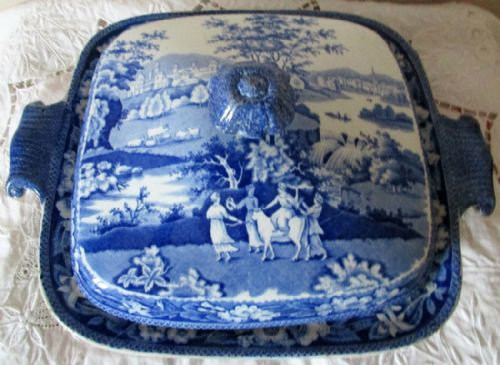


Vintage English Blue Transferware
Vintage English blue transferware brings pattern-printed ceramic history to the table, offering collectors centuries of detailed blue scenes across plates, platters and tureens.
Vintage English Blue Transferware
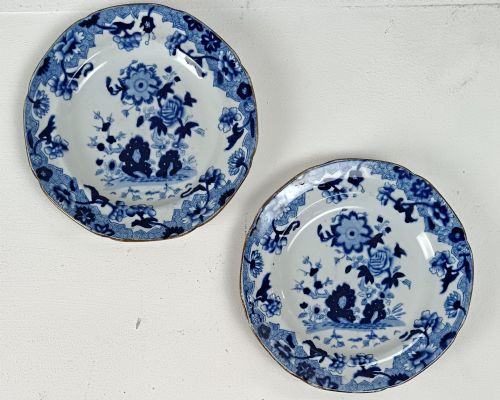
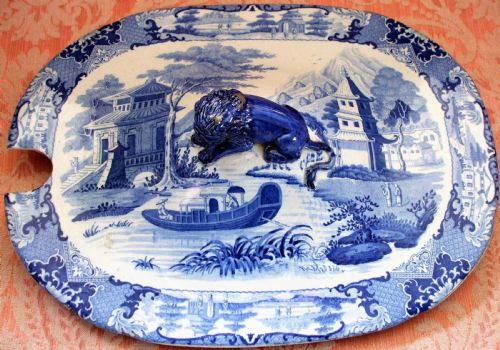
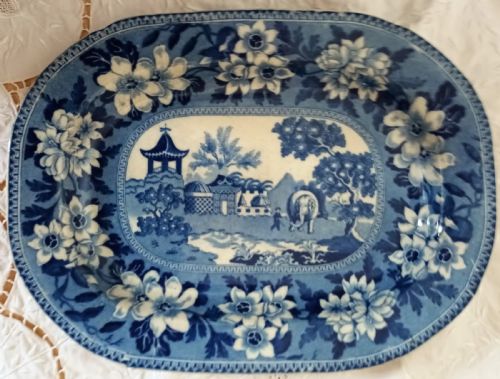
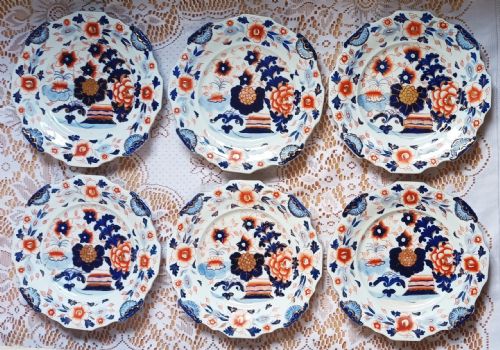
Vintage English blue transferware consists of ceramic tableware and serving pieces decorated with blue printed patterns transferred from engraved copper plates. The pieces on this page span the Georgian, Regency and Victorian periods, showcasing domestic and exotic designs.
The selection ranges from large serving platters and vegetable tureens to tea plates, meat drainers and cheese dishes. Most examples originate from the nineteenth century, reflecting the peak era of English transfer-printing production.
Makers and potteries stamped or printed their patterns using names like Canton River Scene, Elephant, Japan and Tower. These motifs draw upon Chinoiserie, English country views and romantic landscapes.
How vintage English blue transferware was made
Potters utilised earthenware, ironstone, pearlware, porcelain and ceramic bodies to form the base plates, dishes and tureens. The raw clay was shaped and fired before receiving its decoration.
Engraved copper plates applied cobalt blue ink onto tissue paper, which was then rubbed onto the ceramic surface to transfer the design. A clear glaze was applied over the print before a final kiln firing fixed the colour and created the glossy finish.
Listings feature nineteenth-century items spanning earthenware, ironstone, pearlware and porcelain across forms from tea plates to cheese dishes.
What varies in quality
The clarity and registration of the transfer print separate finer examples from simpler output, as blurred lines or smudged cobalt indicate rushed production. Well-engraved plates show crisp architectural details and sharp foliage across the entire surface.
The choice of ceramic body also determines the tier of the piece, with dense ironstone and refined porcelain standing apart from standard earthenware. Maker attribution plays a role, as documented works by Spode, Mason and Rogers command greater interest than unmarked pieces.
Spode·Robert Hamilton·John Rogers and Son·John and Richard Riley·J and R Clews·Pettys and Co Leeds·William Adams·Mintons·Mason·Caughley Coalport·Copeland Spode
The Vintage English Blue Transferware Glossary
- Transferware
- Pottery decorated by transferring a printed design from an engraved copper plate onto the ceramic body via tissue paper. This technique allowed factories to mass-produce intricate pictorial patterns with consistent detail.
- Ironstone
- A heavy, durable type of feldspathic earthenware patented in the nineteenth century to imitate Chinese porcelain. It resists chipping and forms a robust base for large platters and tureens.
- Pearlware
- A refined earthenware featuring a bluish-white glaze that pooled in crevices, developed to rival true porcelain. It was widely used during the Georgian and Regency periods.
- Chinoiserie
- European decorative style reflecting Chinese artistic motifs, featuring imaginary landscapes, pagodas and figures. It appears frequently on nineteenth-century blue and white ceramics.
- Meat drainer
- A perforated ceramic insert placed inside a serving platter to keep roast meat elevated from its juices. These functional pieces often feature elaborate printed borders.
Vintage English Blue Transferware: Frequently Asked Questions
How do I date vintage English blue transferware?
Dating relies on maker marks, ceramic bodies such as pearlware versus ironstone, and stylistic cues like Georgian borders or Victorian motifs.
Specific pattern names and registry stamps also help narrow the production window to a particular decade in the nineteenth century.
Can I use these pieces for serving food?
Many items, including platters, tureens and plates, were originally designed for dining and functional food service.
However, glaze wear and age recommend gentle hand washing rather than modern dishwasher use to preserve the blue print.
What is the difference between earthenware and ironstone?
Earthenware is a porous, lower-fired ceramic body that requires a complete glaze to become waterproof and withstand daily use.
Ironstone is a much denser, harder composite containing slag and feldspar, created to endure heavy dining service.
Why are some pieces marked with pattern names?
Factories often titled their engraved copper plates after exotic locations, literary themes or specific scenic views to aid identification and marketing.
Names like Tower, Genevese or Canton River Scene help collectors trace the exact series and manufacturing period.