


Vintage Enamelled Jewellery
These pieces of vintage enamelled jewellery bring together coloured glass fused to metal bases across decades of design.
Vintage Enamelled Jewellery
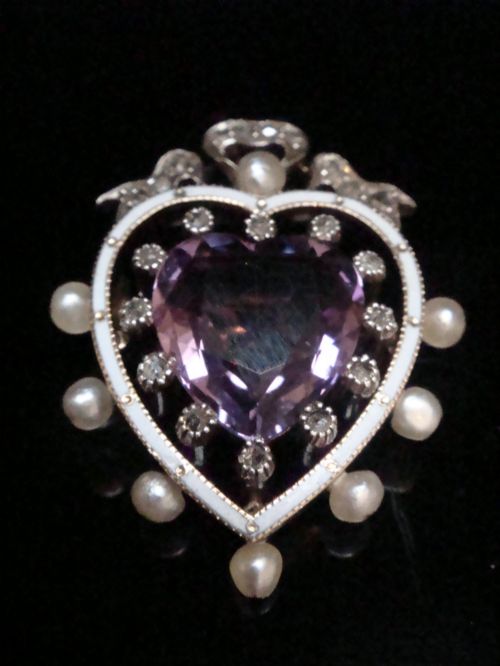
Vintage enamelled jewellery encompasses wearable items ornamented with fused glass layers, spanning from early twentieth-century examples to mid-century Scandinavian pieces. Brooches, pendants, bracelets and earrings form the majority of the selection on this page.
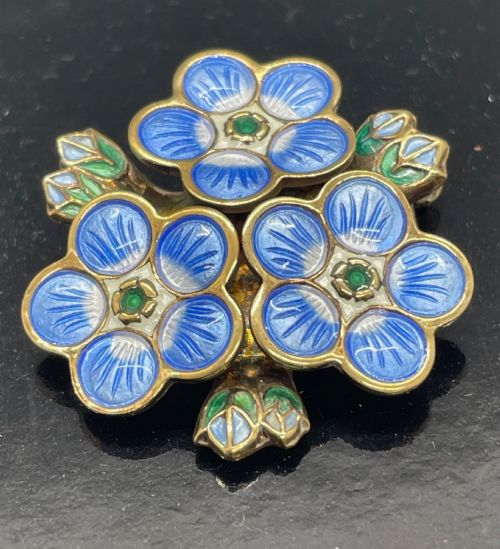
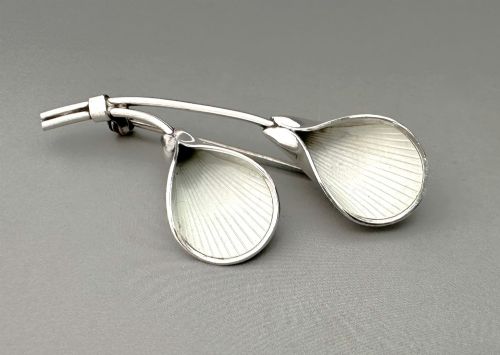
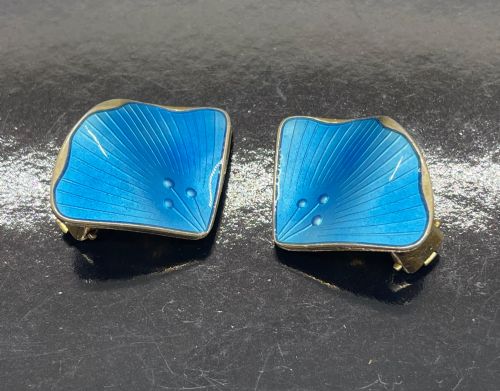
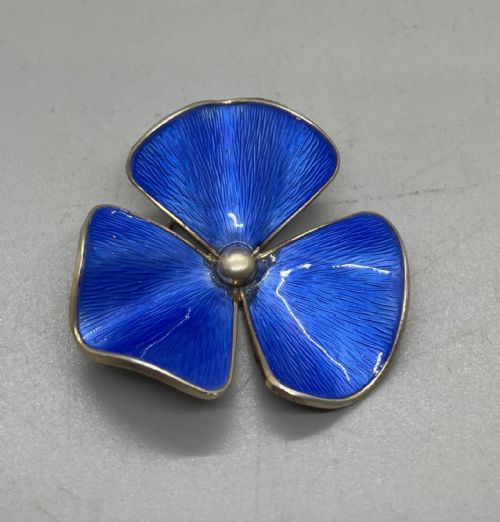
Makers from Norway, Britain and continental Europe feature prominently in the current selection. Styles range from organic Arts and Crafts and flowing Art Nouveau motifs to geometric Art Deco designs and mid-century modern floral themes.
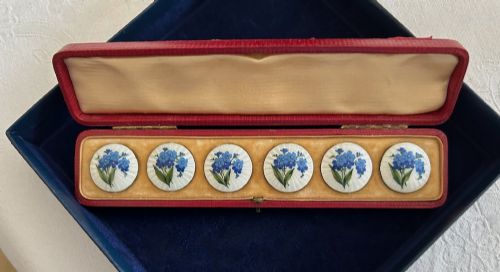
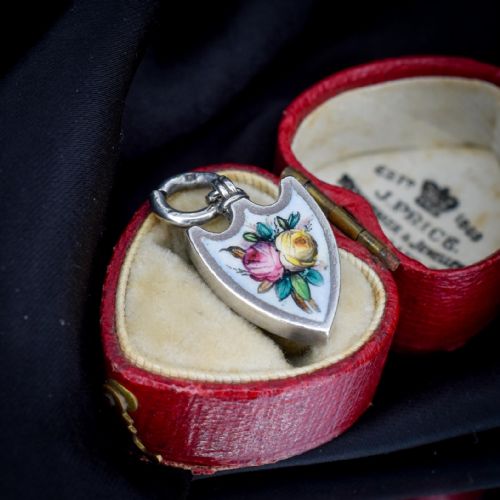
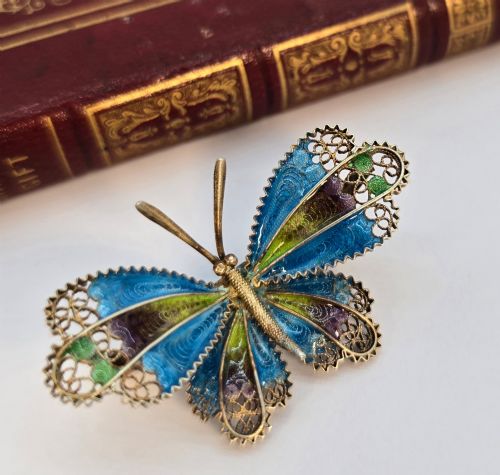
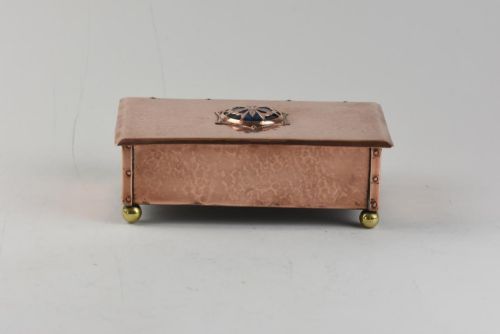
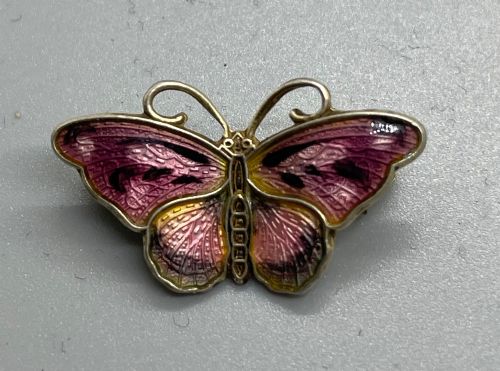
Silver and silver gilt serve as the primary foundational metals, though gold, brass, copper and chromium also appear. Pieces frequently incorporate decorative motifs such as butterflies, flowers and abstract patterns rendered in vitreous enamel.
How They Were Made
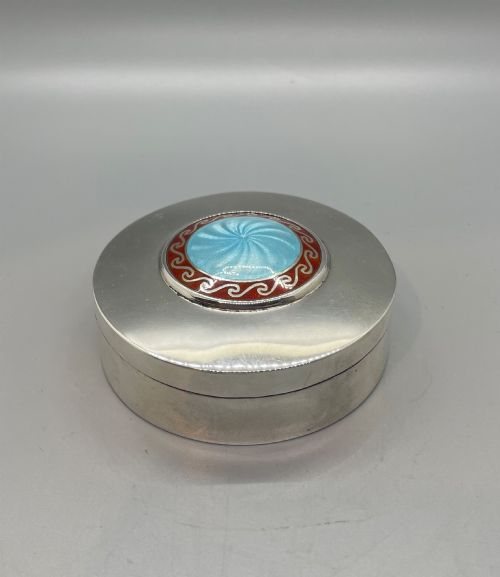
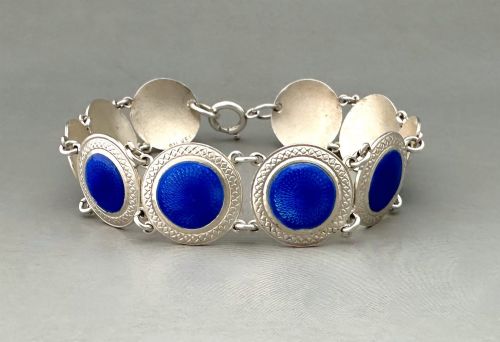
Vitreous enamel is applied to metal bases such as silver, gold or copper through high-temperature firing. Craftsmen utilise techniques including guilloche, where intricate patterns are engine-turned into the metal beneath translucent enamel, and cloisonné, which uses thin wire cells to contain different coloured pastes.
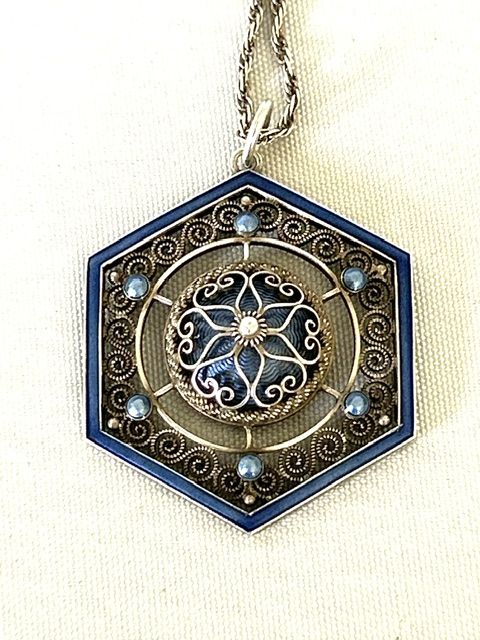
Silver gilt is frequently employed to provide a rich golden surface over silver elements. Filigree wirework and hand-cut stones like pearl, chalcedony and malachite are integrated alongside the enamel work.
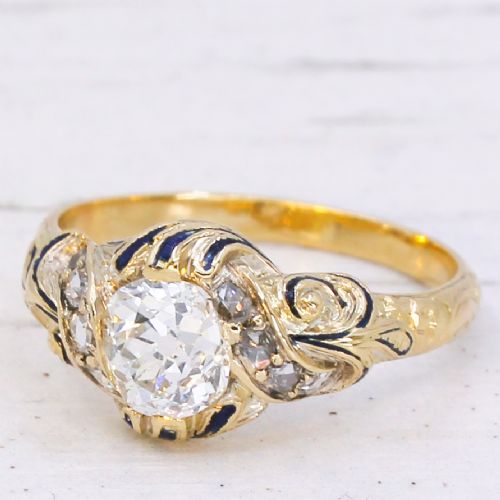
The listings span eight distinct periods, reaching from the Georgian era through to the 1960s.
What Varies in Quality
The precision of the metalwork and the clarity of the enamel layer distinguish finer examples from standard production. Guilloche engraving beneath translucent enamel exhibits superior depth and light reflection when executed by skilled hands.
The complexity of the design, whether multi-coloured floral motifs or detailed wire filigree, dictates the level of craftsmanship involved. Well-preserved enamel surfaces retain an even gloss without structural cracking to the glass paste.
Marius Hammer·Aksel Holmsen·A H Darby And Son·Hroar Prydz·Harold Arthur Lazarus·Jakob Bengel·Solomon Blanckensee Son
The Vintage Enamelled Jewellery Glossary
- Guilloche
- An ornamental technique where a mechanical lathe engraves precise geometric patterns into a metal substrate. Translucent enamel is then applied over the top to let the pattern show through.
- Vitreous enamel
- Glass powder fused to a metal base through firing at high temperatures. This creates a durable coloured coating.
- Silver gilt
- Silver that has been coated with a thin layer of gold. It provides the appearance of gold while utilising a silver base.
- Cloisonne
- A technique where thin metal wires are attached to form cells that are filled with enamel paste before firing. Each colour remains separated by the metal boundary.
- Filigree
- Delicate metalwork formed from fine threads of gold or silver soldered together in intricate patterns. It frequently surrounds enamel panels in period pieces.
Vintage Enamelled Jewellery: Frequently Asked Questions
How do I clean vintage enamelled jewellery?
Clean these pieces gently using a soft cloth and lukewarm soapy water. Avoid harsh chemical dips or ultrasonic cleaners which can damage the enamel surface or loosen glued stones.
Pat the item completely dry immediately after washing. Store pieces individually in soft pouches to prevent scratching against other metal items.
What is guilloche enamel?
Guilloche enamel involves engraving a precise mechanical pattern into silver or gold before applying a translucent coloured glass coating. The pattern beneath shines through the enamel to create a reflective depth.
This technique appeared frequently on mid-century Scandinavian pieces and Edwardian accessories.
How can I date a piece?
Dating relies on stylistic markers, materials and maker marks. Art Nouveau and Arts and Crafts pieces date to the early 1900s, while geometric chromium designs point to the 1930s.
Mid-century Scandinavian items often feature vibrant floral enamel on silver gilt from the 1950s and 1960s.
Are these pieces made of solid silver?
Many items utilise sterling silver or silver gilt as the main structural metal. Some Scandinavian designs use silver gilt to give a rich golden finish over the silver base.
Gold, brass, copper and chromium also appear depending on the period and manufacturer.