


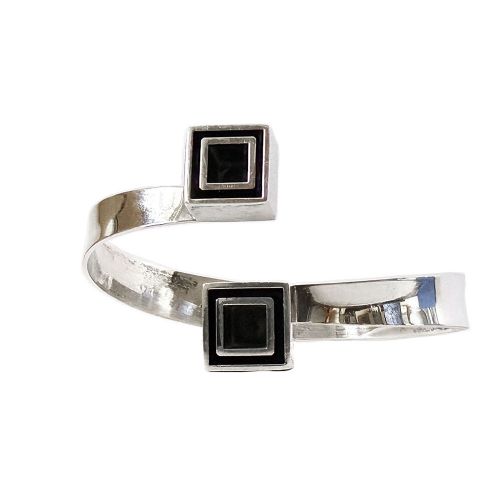


Vintage Enamelled Bracelet
A vintage enamelled bracelet brings together rich metallic hues and intricate coloured glass work from past decades.
Vintage Enamelled Bracelet
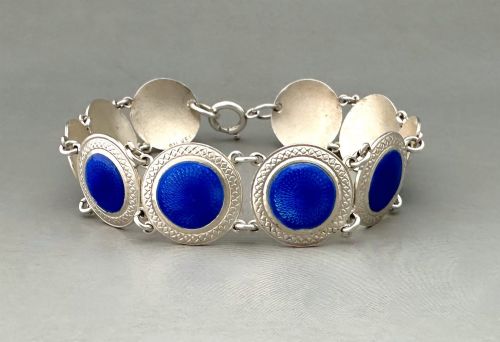
When you search for a vintage enamelled bracelet, you encounter pieces spanning from the Victorian era through the Edwardian period and into the mid-century decades. The selection includes geometric Art Deco creations, handmade Arts and Crafts silver pieces, and Scandinavian modern designs.
Most examples found here date from the 1930s, heavily featuring the chrome and silver work characteristic of that period alongside gold designs and charm bracelets. These items range from rigid bangles and hinged bracelets to delicate panel links set with glass and precious metals.
Materials and Construction Techniques
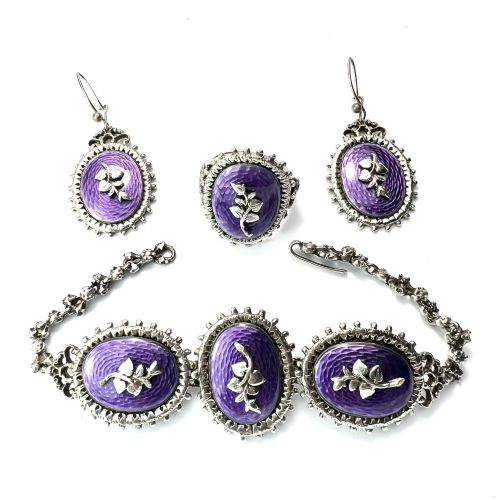
The construction of these pieces relies on fusing vitreous enamel or hand-painted enamel onto sterling silver, chrome, or various grades of gold including nine-carat and fifteen-carat variants. Artisans applied the glassy coatings to metal bases, often utilising techniques such as guilloche engraving beneath translucent layers to create depth.
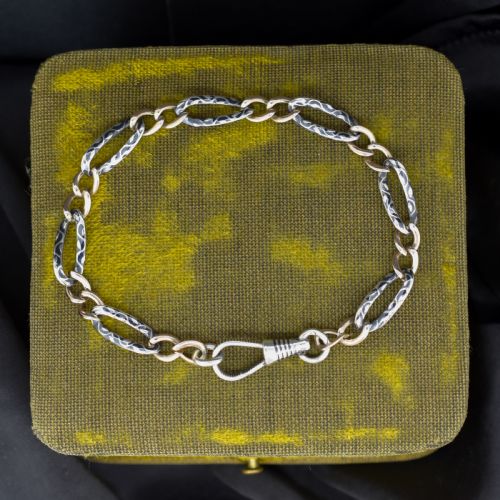
Makers incorporated supplementary elements like marcasite, pearls, chalcedony, and niello work to enhance the primary metal framework. Hinged closures, dog clips, and secure clasp mechanisms ensure the structural integrity of these wearable ornaments.
The listings show pieces incorporating silver, gold, chrome, and multiple styles of enamel work across eight distinct historical periods.
Distinctions in Quality
The standard of a piece depends on the precision of the metalwork and the preservation of the enamel surface. Master workshops achieved crisp geometric alignments and smooth, even vitreous coatings that sit flush within their metal settings.
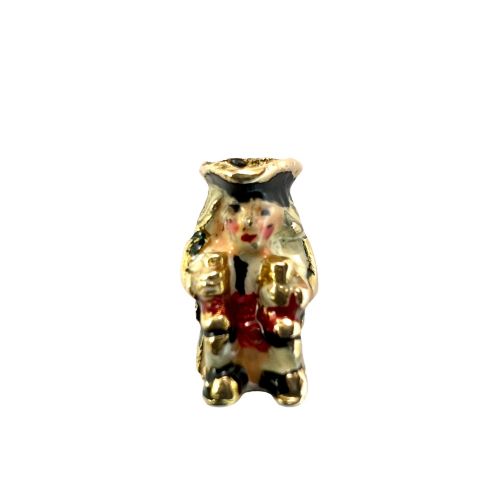
Artisanal signatures and maker attributions elevate certain items, particularly those produced by recognised German or British designers. The complexity of the link construction and the depth of hand-painted miniature details further differentiate standard production items from exceptional workshop creations.
Harold Arthur Lazarus·Jakob Bengel·Murrle Bennett·Alton·Fahrner and Bennett
The Vintage Enamelled Bracelet Glossary
- Vitreous enamel
- A material made by fusing powdered glass to a metallic substrate at high temperatures. This process results in a glossy, durable coloured coating found across various historical periods.
- Guilloche
- An ornamental technique in which a precise, intricate repeating pattern is mechanically engraved into a metal surface. Translucent enamel is frequently layered over this engraving to produce shimmering visual effects.
- Niello
- A black metallic alloy used as a contrast inlay on engraved silver surfaces. The mixture typically consists of silver, copper, and lead sulphides.
- Marcasite
- Small faceted pyrite stones set into silver mountings to resemble cut steel. These stones provide dark metallic sparkle alongside enamel sections.
- Filigree
- Delicate jewellery metalwork formed from fine threads of gold or silver soldered together in openwork patterns. This technique appears frequently in antique silver panel bracelets.
Vintage Enamelled Bracelet: Frequently Asked Questions
How do I date a vintage enamelled bracelet?
Dating relies on stylistic markers such as the geometric lines of Art Deco pieces or the natural motifs of the Arts and Crafts movement. Hallmarks stamped onto the metal provide further chronological reference points.
Examining the construction techniques and closure types also helps determine the decade of manufacture.
How should I care for my enamel bracelet?
Enamel requires gentle handling because the glass coating can chip upon sharp impact with hard surfaces. Clean the pieces using a soft cloth and mild soapy water, avoiding harsh chemical dips.
Store each item separately in a lined box to prevent scratching against other jewellery.
What is a brickwork bracelet?
Brickwork bracelets feature interlocking metal links arranged in a pattern resembling staggered masonry blocks. This specific construction style was popularised by European manufacturers during the 1930s.
The design allows the rigid metal sections to curve flexibly around the wrist.