
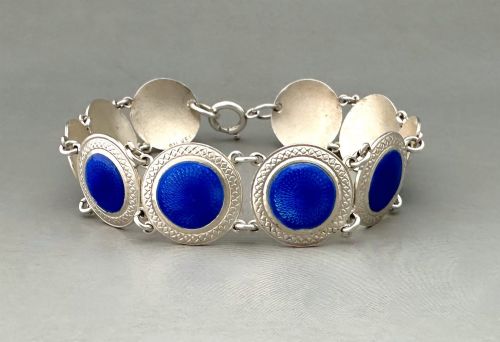


Antique Enamel Panel Bracelet
An antique enamel panel bracelet brings striking colour and geometric or naturalistic design directly to the wrist.
Antique Enamel Panel Bracelet
An antique enamel panel bracelet consists of linked segments decorated with vitreous or hand-painted enamel, frequently paired with silver or chrome. Buyers seeking an antique enamel panel bracelet encounter distinctive works originating from the twentieth century, specifically spanning the nineteen-hundreds to the nineteen-fifties.
The pieces appearing on this page showcase varied movements including Art Deco, Arts and Crafts, Jugendstil, and Scandinavian Modern design. Geometric brickwork motifs, floral miniatures, and silver filigree structures define the visual character of these distinct wearable panels.
Forms range from solid silver settings holding guilloche enamel to chromium frames incorporating glass and chalcedony. Each linked composition relies on articulated metal sections designed to drape comfortably around the wrist.
Materials and construction
Maker workshops utilised sterling silver, solid silver, and chrome alongside vitreous enamel and glass to construct durable panel links. Metalworking techniques involved silver filigree work, hand painting, and structural framing to secure delicate enamelled sections.
Artisans applied enamel pigments onto textured or guilloche metal bases, firing the pieces to achieve vibrant, glossy surface finishes. Structural integrity depended on secure hinge or jump-ring connections joining each individual decorative panel together.
Listings feature periods from nineteen hundred to nineteen fifty, encompassing Art Deco, Jugendstil, and Arts and Crafts styles.
Assessing quality and execution
Excellence in these bracelets rests on the precision of the metalwork and the depth of the enamel surface. Superior examples demonstrate meticulous hand painting, intricate silver filigree, or clean geometric alignment typical of advanced period manufacturing.
The choice of base metal and secondary stones also distinguishes individual pieces, with solid silver and marcasite accents marking a higher tier of production compared to standard chrome or glass compositions.
Jakob Bengel·Murrle Bennett·Fahrner and Bennett
The Antique Enamel Panel Bracelet Glossary
- Guilloche enamel
- A decorative technique where transparent enamel is layered over mechanically engraved metal. This method creates repetitive geometric patterns that show through the glossy coloured surface.
- Vitreous enamel
- A material made by fusing powdered glass to a substrate by firing. It provides a durable, glass-like coating famous for retaining rich colour over decades.
- Filigree
- An ornate form of delicate metalwork using fine silver wire. Artisans twist and solder these threads into openwork patterns resembling lace.
- Jugendstil
- The continental European manifestation of Art Nouveau. This artistic style emphasises flowing, organic lines and natural motifs popular around nineteen hundred.
Antique Enamel Panel Bracelet: Frequently Asked Questions
What periods do these bracelets date from?
The available selection spans from the nineteen-hundreds through the nineteen-fifties. Major design movements represented include the Arts and Crafts era, Jugendstil, and Art Deco.
Twentieth-century manufacturing methods evolved across these decades, shifting from organic handcrafted silver filigree towards streamlined chromium and geometric modernist styles.
How do I care for my bracelet?
Enamel and silver require gentle handling to preserve their original surface condition. Avoid exposing the glass surfaces to harsh chemicals, ultrasonic cleaners, or hard impacts.
Store the piece flat or wrapped in a soft cloth away from other hard jewellery to prevent scratching the delicate metal links and vitreous panels.
What metals are used in these pieces?
Makers primarily employed silver, sterling silver, and chrome for the structural frames and connecting links. Some designs incorporate nickel, glass, chalcedony, and marcasite alongside the main enamel panels.
Precious metal content varies by maker and period, with solid silver providing a traditional foundation for early twentieth-century decorative work.
How are the panels connected?
Individual sections join via small hinges, loops, or rings that allow the bracelet to curve naturally around the wrist. This articulated construction ensures the rigid enamelled panels sit comfortably against the skin.
Inspecting the reverse side reveals the joining mechanisms and any maker stamps or silver hallmarks stamped into the metal.