


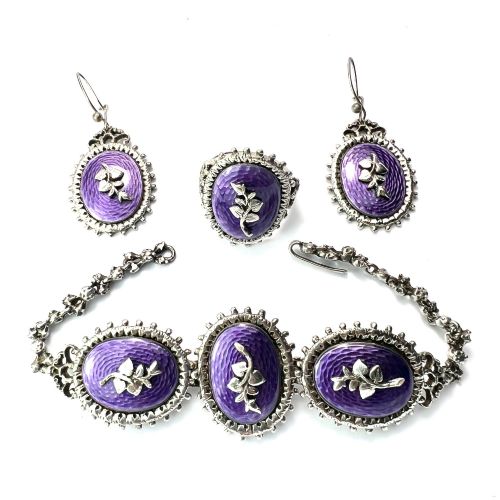


Vintage Enamel Ring
A vintage enamel ring brings together brilliant metallic colour and historical design, spanning Victorian elegance to mid-century modernism.
Vintage Enamel Ring
A vintage enamel ring is a piece of jewellery that combines decorative vitreous glass or enamel work with precious metals such as sterling silver, 14K white gold, and yellow gold. The pieces found here range from delicate Victorian and Edwardian examples to bold Art Deco and mid-century designs.
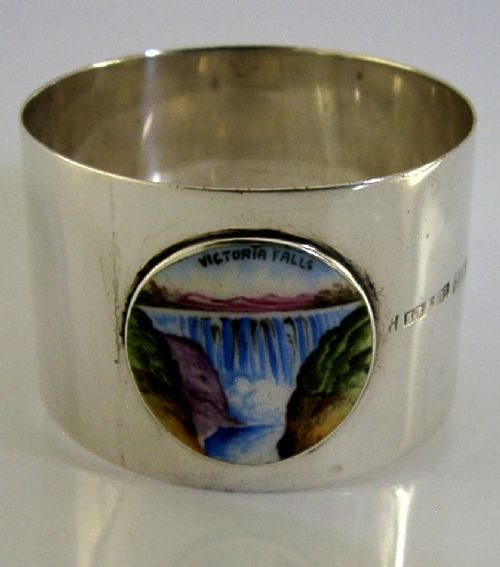
While the search term brings up a variety of items including napkin rings, badges, and powder compacts, the finger rings themselves showcase distinct historical periods. Buyers will encounter geometric Art Deco cluster styles alongside colourful mid-century creations.
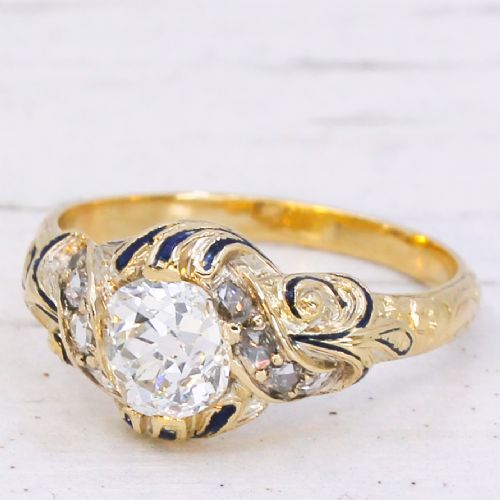
The selection draws on several decades of craftsmanship, incorporating gemstones like old-cut diamonds alongside colourful enamel. Each era brings a different aesthetic, from the romantic motifs of the late nineteenth century to the sleek lines of the 1920s and 1930s.
How they were made
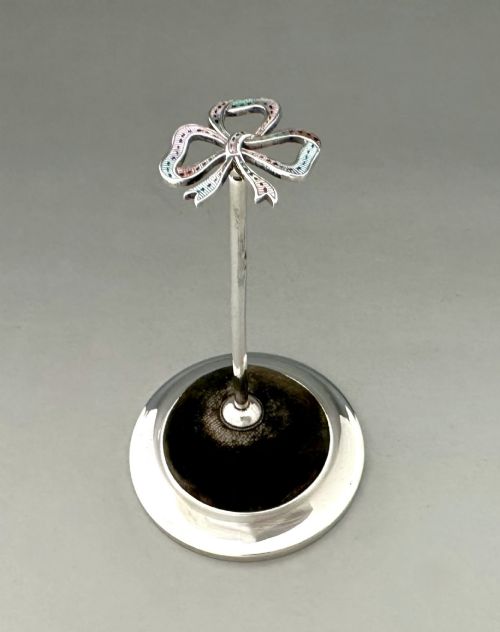
Metalsmiths constructed these rings using sterling silver, yellow gold, and platinum as a base for the applied vitreous enamel. Jewelers often integrated techniques like guilloche, laying translucent enamel over engine-turned metal grounds to create a shimmering patterned effect.
Many designs incorporate diamonds, pearls, and other gemstones set directly into the metal alongside the coloured glass layers. Artisans fused the powdered glass to the metal substrate under high heat in a kiln, producing a durable and glossy finish.
Vintage Enamel Ring Retail Price Guide 2026
Typical asking prices for vintage enamel ring among the pieces listed under this phrase on Sellingantiques today, from the lower quarter to the upper quarter. They describe what is for sale here now, not the wider market.
The inventory records enamel rings spanning the Victorian, Edwardian, Art Deco, and mid-century periods, fashioned in sterling silver, yellow gold, and platinum.
What varies in quality
The distinction between tiers often lies in the complexity of the metalwork and the precision of the enamel application. Pieces featuring hand-turned guilloche patterns under translucent coloured glass demand a higher level of artisan skill than flat opaque enamel.
The incorporation of quality gemstones, such as old-cut diamonds set in platinum or 14K white gold, elevates a piece. Furthermore, the overall preservation of the glass surface without chips or stress fractures dictates the standing of an individual ring.
Harold Arthur Lazarus·Liberty and Co·David-Andersen·Richard Hudnut
The Vintage Enamel Ring Glossary
- Vitreous Enamel
- A material made by fusing powdered glass to a metallic substrate at high temperatures. This technique produces a hard, glossy, and colourful decorative surface that resists fading.
- Guilloche
- A decorative engraving technique where a precise, intricate repeating pattern is mechanically etched into a metal surface. Enamellists frequently apply translucent coloured glass over this texture to create depth.
- Art Deco
- A design style popular during the 1920s and 1930s characterised by sleek geometric shapes, stylised motifs, and high-contrast colour combinations. Rings from this movement often utilise platinum and white gold.
- Old Cut
- A historic diamond cutting style prevalent in the Victorian and Edwardian eras. These stones feature higher crowns and smaller tables than modern brilliant cuts, producing a distinctive softer sparkle under candlelight.
- Sterling Silver
- An alloy composed of silver and other metals designed to increase durability while maintaining a bright lustre. It serves as a primary mounting material in many mid-century and earlier rings.
Vintage Enamel Ring: Frequently Asked Questions
How do I care for my ring?
Vitreous enamel is essentially glass and can chip or scratch if struck against hard surfaces. Clean your ring gently using warm soapy water and a soft cloth, avoiding harsh chemical dips or ultrasonic cleaners that might damage the metal or stones.
Store your jewellery piece in a separate fabric pouch or lined compartment away from other items to prevent accidental friction. Taking the ring off before heavy manual work or swimming preserves both the enamel surface and the precious metal settings.
How do I date these rings?
Dating relies on stylistic clues, metal types, and hallmarks stamped into the band. Art Deco pieces show geometric lines and white metals, whereas Victorian examples tend towards yellow gold, pearls, and romantic motifs.
Examining the setting techniques and the specific shade of the enamel also provides strong clues. Makers' marks and assay office stamps offer the most precise historical timeline when present.
What is guilloche enamel?
Guilloche is a decorative technique where a machine engraves a precise, repeating geometric pattern into a metal disc or band. Translucent coloured enamel is then applied over the engraved metal, allowing the underlying pattern to shine through with a shimmering, three-dimensional effect.
This method was particularly popular during the early twentieth century. It requires immense skill to ensure the glass fires evenly across the complex metallic textures without trapping air bubbles.
Can antique rings be resized?
Resizing depends heavily on the construction of the band and how close the enamel work comes to the back of the shank. If the enamel wraps entirely around the hoop, altering the size becomes extremely difficult without damaging the glass.
Consult a specialist jeweller who has experience working with antique and enamoured pieces before attempting any alterations. They can assess whether the metal gauge and structural integrity allow for a safe adjustment.