


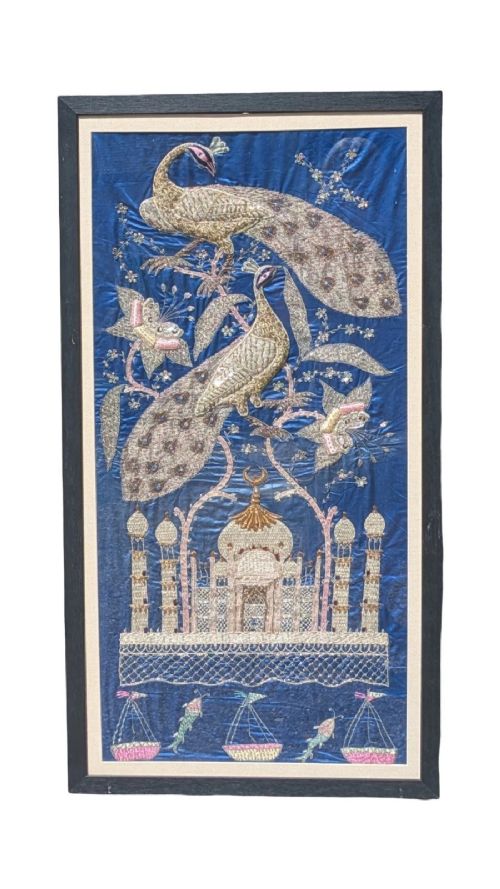
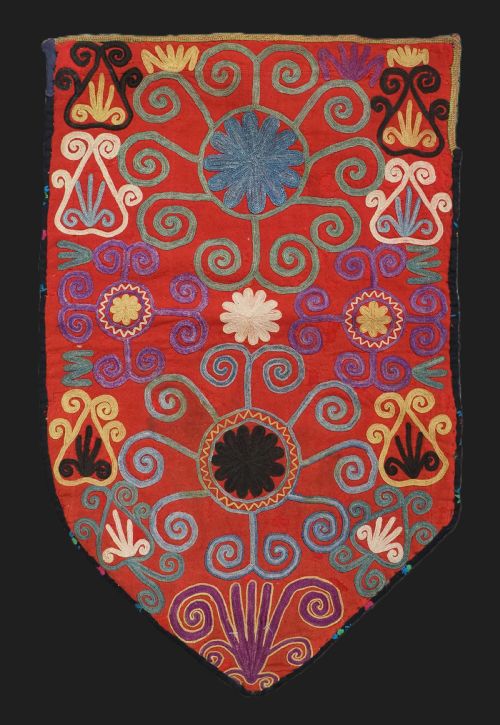
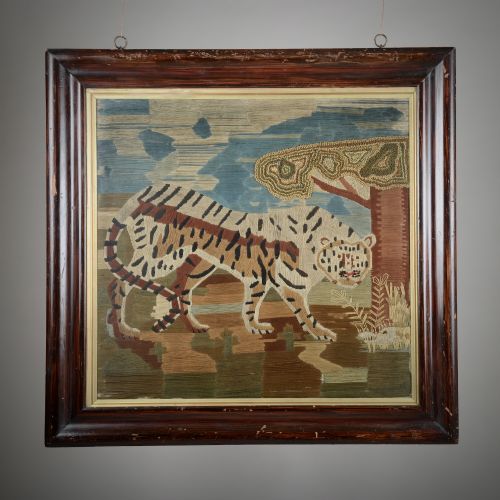
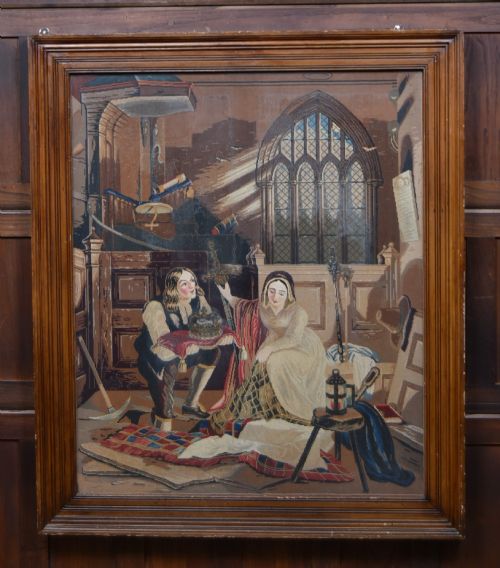

Vintage Embroidered Art
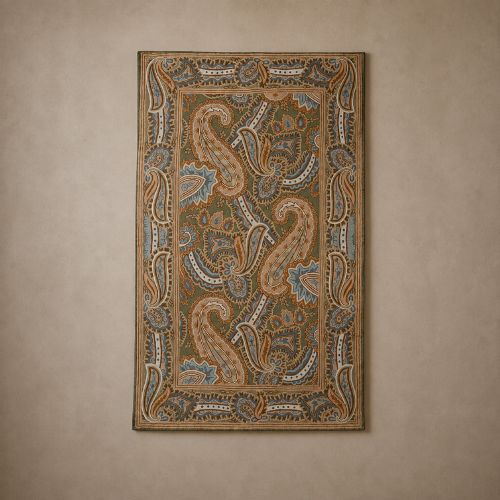
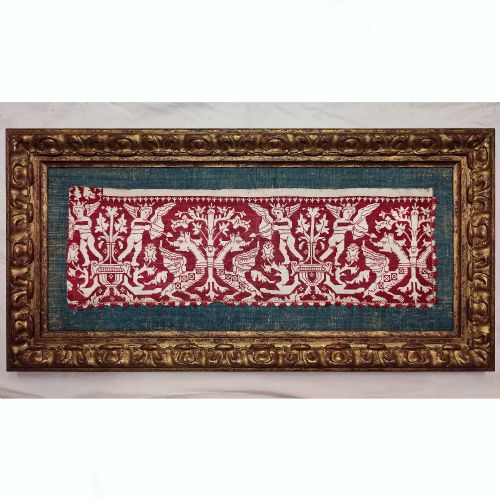
Vintage embroidered art brings together centuries of needlework, silk panels, and tribal wall hangings that transform plain walls into displays of texture and colour.
Vintage Embroidered Art
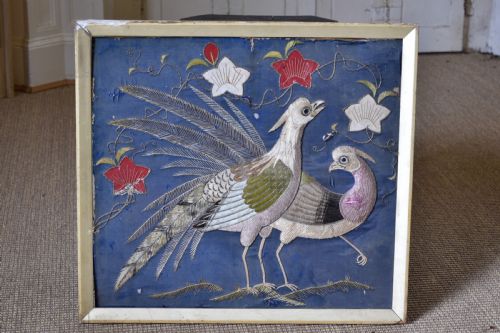
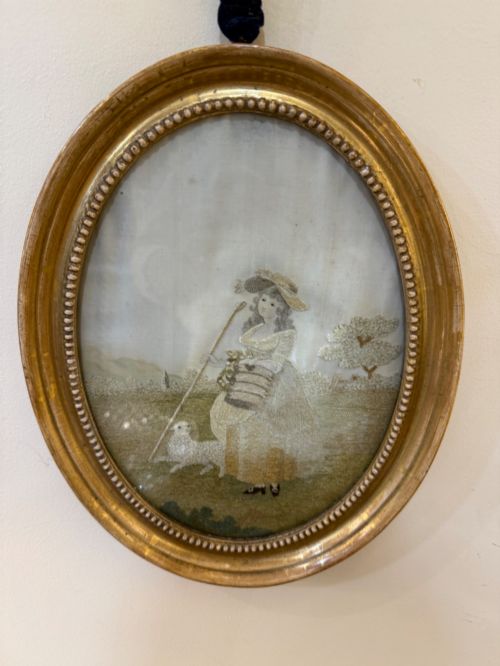
Vintage embroidered art spans diverse forms, including English silk pictures from the eighteenth century, framed samplers, and Central Asian wall hangings. Buyers encounter everything from formal European needlework to tribal hangings created for domestic spaces and ceremonies.
The selection ranges across centuries, recording periods from the seventeenth century through to the Edwardian era and the early twentieth century. Works appear as framed panels, tapestries, and textiles preserved behind glass in wood or gilt frames.
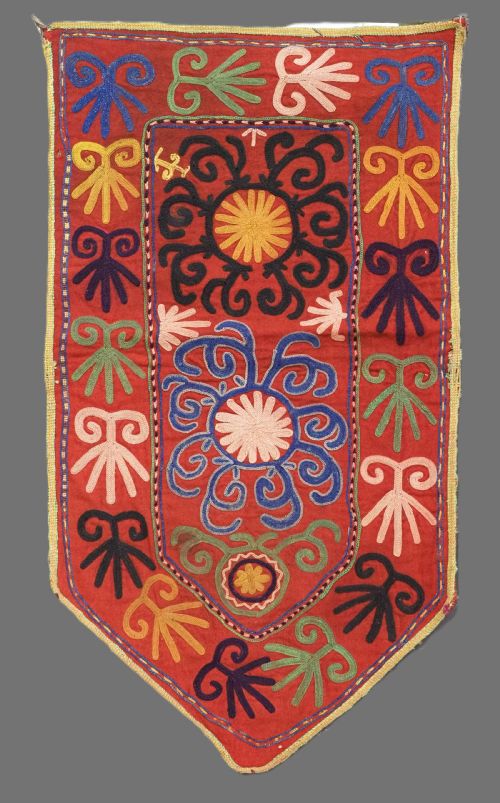
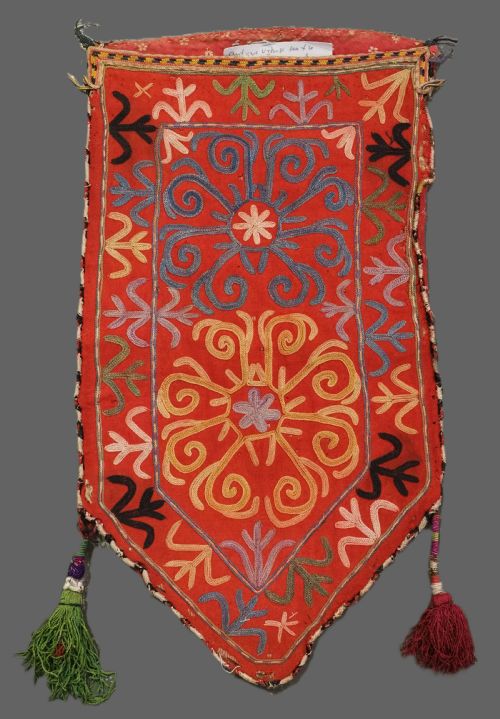
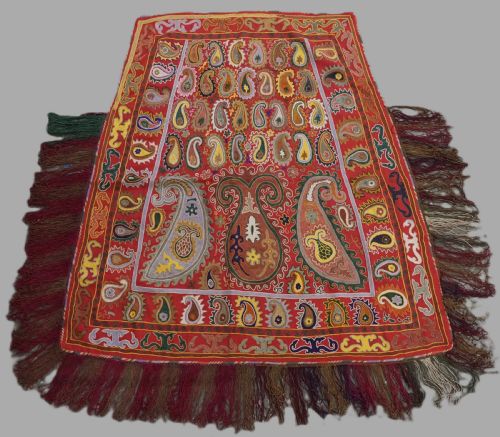
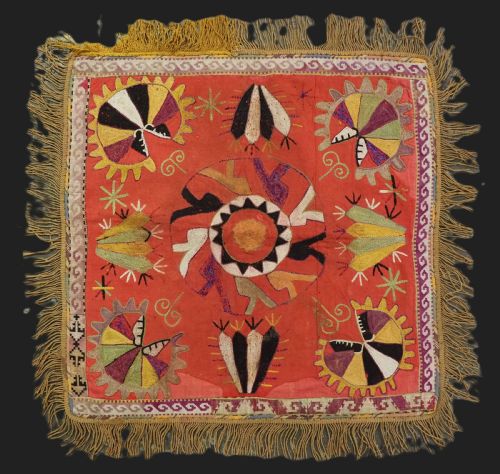
Geographic origins vary widely between European needlework traditions and Central Asian tribal works. Pieces such as Uzbek suzanis, Kyrgyz yurt wall hangings, and Lakai tribeilgich panels form a distinct group alongside English and French needlepoint pictures.
Materials and construction techniques
Needlework pieces rely on grounds of linen, cotton, wool, and silk, stitched with threads of silk, wool, and metallic thread. Tribal pieces often combine wool embroidery on felt grounds or cotton foundations.
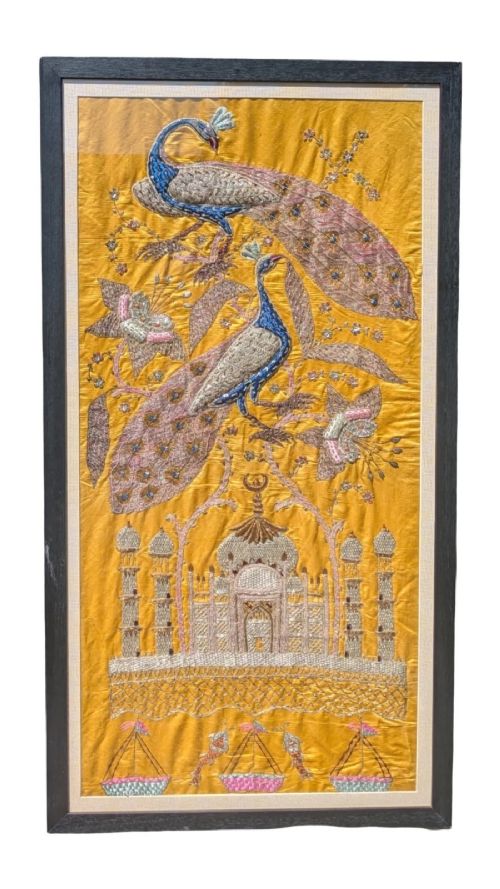
Execution involves varied stitches, from fine gros-point and petit-point wool work to intricate silk embroidery and crewelwork. Many textile panels incorporate beads or gilt elements within the stitched design.
Framing methods protect delicate fibres, utilising glass and wood frames, sometimes finished in gilt wood. Wall hangings and dowry pieces like suzanis and ilgich fragments survive as unmounted textiles or framed wall art.
Vintage Embroidered Art Retail Price Guide 2026
Typical asking prices for vintage embroidered art among the pieces listed under this phrase on Sellingantiques today, from the lower quarter to the upper quarter. They describe what is for sale here now, not the wider market.
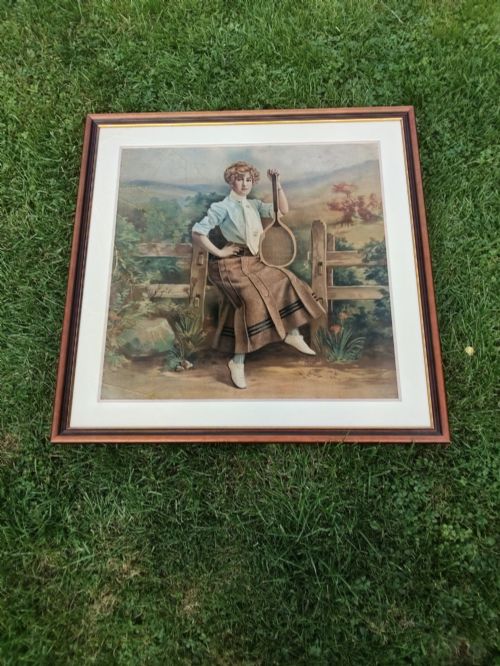
Stitched centuries ago by steady hands, these panels preserve everything from royal hunting scenes to tennis-playing Edwardian ladies in wool.
Distinctions in quality and execution
Quality rests in the precision of the stitching and the complexity of the design. Finer works display tight, even needlework and sophisticated pictorial composition, whether depicting figures, birds, or geometric tribal motifs.
The preservation of the ground material and the vibrancy of the original threads determine the condition of the piece. Intact metallic threads and stable silk or wool grounds separate well-preserved examples from heavily degraded textiles.
The origin and cultural context influence the character of the piece, with specialised tribal dowry embroidery or documented English samplers representing distinct levels of traditional craftsmanship.
The Vintage Embroidered Art Glossary
- Sampler
- A piece of needlework demonstrating various stitches and patterns, traditionally worked by young stitchers to practice their skill.
- Suzani
- A large embroidered tribal wall hanging from Central Asia, typically worked in silk on a cotton or linen ground with floral and geometric motifs.
- Gros-point
- A type of needlepoint embroidery worked on canvas using a coarse wool yarn to create durable pictorial panels.
- Crewelwork
- A traditional form of surface embroidery utilising wool yarn to execute flowing designs on linen or cotton twill grounds.
- Ilgich
- A Central Asian embroidered hanging, often made by the Lakai tribe as part of dowry furnishings and home decoration.
Vintage Embroidered Art: Frequently Asked Questions
How should I hang vintage embroidered art?
Framed textile art under glass needs placement away from direct sunlight to protect silk and wool threads from fading. Use stable wall fixings suited to the weight of wood and gilt frames.
Unframed wall hangings and textile panels require specialist mounting or lightweight support bars to distribute the weight evenly across the fabric without causing strain.
What is the difference between a sampler and a tapestry?
A sampler focuses on practicing and displaying various alphabet scripts, motifs, and stitches on a single linen or cotton ground. These are typically English or European works from the seventeenth to nineteenth centuries.
Tapistries and embroidered pictures depict complete pictorial scenes, such as historical figures, landscapes, or animals, using dense wool or silk stitching across the entire surface.
How do I identify Central Asian textiles?
Central Asian pieces like suzanis and ilgich panels feature bold, vibrant silk embroidery on cotton or wool grounds, often displaying distinctive tribal motifs and regional patterns. They originate from communities in Uzbekistan and surrounding areas.
European embroidered art relies on different stylistic conventions, frequently drawing on Georgian, Victorian, or medieval pictorial traditions with distinct framing and subject matter.
Can I clean vintage embroidered textiles?
Surface dust on framed pieces behind glass stays safe if you gently wipe the exterior frame and glass with a dry cloth. Avoid opening sealed frames yourself.
Unframed textiles and delicate wall hangings require professional textile conservators for cleaning, as water and standard detergents damage old silk, wool, and cotton fibres.