



Vintage Dumbwaiter
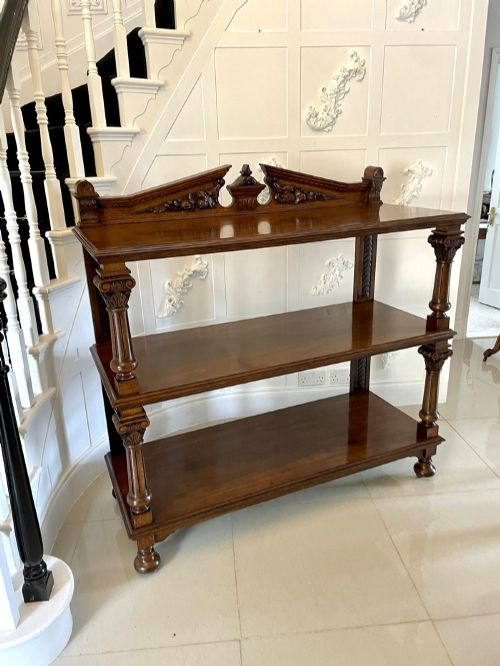
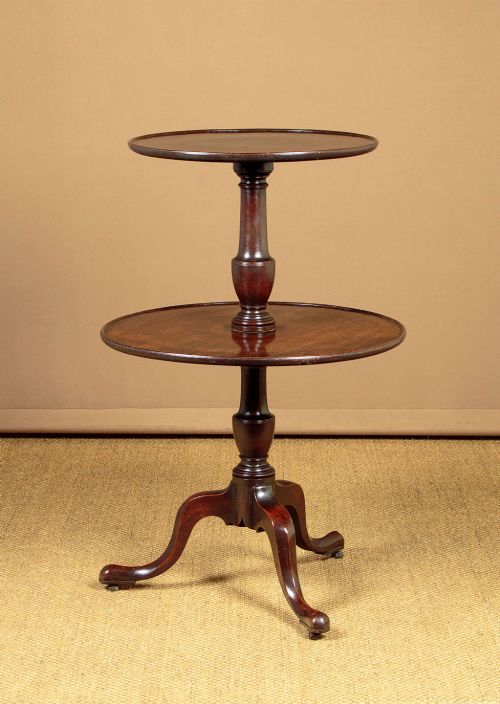
These vintage dumbwaiter pieces provide tiered serving space and revolve to keep dining items within reach without servants.
Vintage Dumbwaiter
A vintage dumbwaiter serves as a multi-tiered stand designed to hold food, drinks, or tableware during dining. Buyers seek these tiered pieces to add functional surface area and period character to dining rooms and living spaces.
The selections available range from 18th century and Georgian mahogany revolving tiers to later Edwardian and 1920s folding cake stands and etageres. Mahogany forms the backbone of these offerings, supplemented by oak, walnut, and brass-mounted pieces.
Most items take the form of circular tiered tables, buffet servers, or folding stands originating from the Georgian, Regency, Victorian, and Edwardian eras. These tiered structures provide practical vertical storage while maintaining a traditional footprint.
Materials and Construction
Cabinetmakers built these pieces predominantly from solid mahogany, oak, and walnut, often employing turned central columns to support graduated circular tiers. Brass castors, hinges, and mounts appear on campaign and folding variants to permit movement and collapse.
Joinery techniques include pegged joints, rotating pivots for revolving tiers, and folding mechanisms that allow multiple shelves to drop down for storage. Finer examples incorporate inlaid marquetry, leather top inserts, and carved detailing along the edges of the tiers.
Vintage Dumbwaiter Retail Price Guide 2026
Typical asking prices for vintage dumbwaiter among the pieces listed under this phrase on Sellingantiques today, from the lower quarter to the upper quarter. They describe what is for sale here now, not the wider market.
Listings feature woods such as mahogany, oak, walnut, rosewood, satinwood, and padauk wood alongside brass and glass elements.
Evaluating Quality and Craftsmanship
Quality rests in the stability of the central column and the smoothness of the revolving or folding mechanisms. Better examples maintain rigid tier alignment without wobble, whereas lesser pieces show wear in the joints and pivots.
The choice of timber and secondary materials dictates the tier of craftsmanship, with dense Cuban mahogany and precise brass mounts sitting above standard softwood framing. Carved detailing on the edges and legs separates standard utility items from higher workshop productions.
Gillows
The Vintage Dumbwaiter Glossary
- Dumbwaiter
- A freestanding multi-tiered piece of dining room furniture used for holding food and tableware. These tiers often revolve around a central pillar.
- Etagere
- A set of open shelves or tiers used for displaying objects or serving items. This French form offers multiple levels of display space.
- Lazy Susan
- A revolving circular tray or stand placed on a table or tier to allow easy access to items. Versions appear as standalone table tops or integrated tiers.
- Campaign
- Furniture constructed to be easily dismantled or folded for travel. These pieces typically feature recessed brass hardware and reinforced corners.
- Buffet
- A low side table or tiered stand utilised for serving food and drinks. The form provides surface area supplementary to the main dining table.
Vintage Dumbwaiter: Frequently Asked Questions
What is a vintage dumbwaiter used for?
These tiered stands function as auxiliary serving tables during meals to hold extra plates, glasses, and dishes.
Today, owners utilise the multiple levels to display plants, books, and decorative objects in living areas.
How do revolving dumbwaiters work?
The circular tiers attach to a central wooden spindle via a pivot mechanism that allows each shelf to turn independently.
This rotation lets diners reach specific dishes without passing heavy platters across the main table.
Are all dumbwaiters folding?
Only certain periods and styles incorporate folding or collapsible tier mechanisms, often associated with cake stands or campaign furniture.
Heavier Georgian and Regency tier stands utilise fixed columns designed for permanence in the dining room.
How do I date a mahogany dumbwaiter?
Dating relies on timber density, turning style, and joinery methods, with 18th-century pieces showing heavy Cuban mahogany and hand-turned pillars.
Later 19th-century and 1920s examples introduce simpler fixings, lighter woods, and mechanical folding actions.