






Vintage Drop Prism Lusters
Vintage drop prism lustres catch the daylight and throw candlelight across a room, bringing instant warmth and movement to a mantelpiece.
Vintage Drop Prism Lusters
Vintage drop prism lustres are decorative candleholders and tabletop ornaments hung with faceted crystal drops that refract light around the room. These pieces function as both lighting and ornamentation, traditionally displayed in pairs upon drawing-room mantelpieces or dining tables.
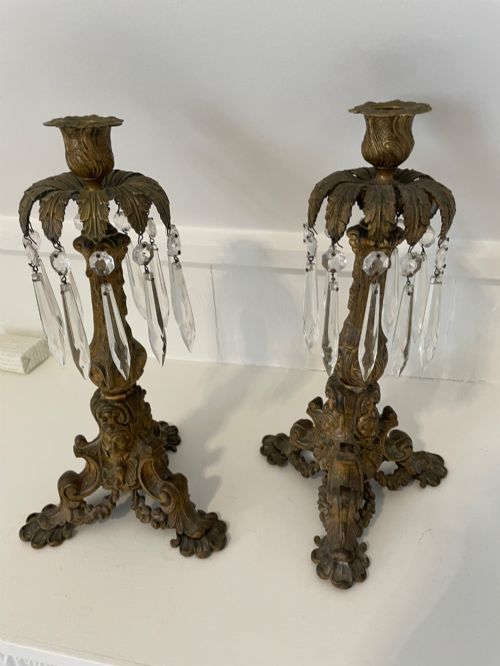
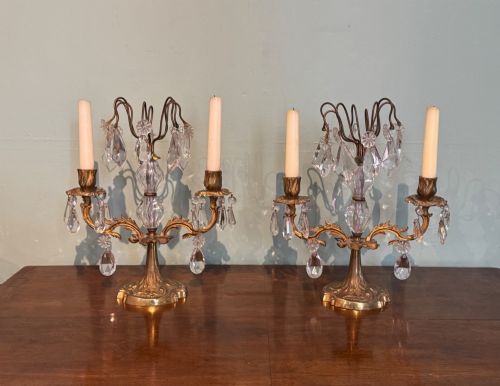
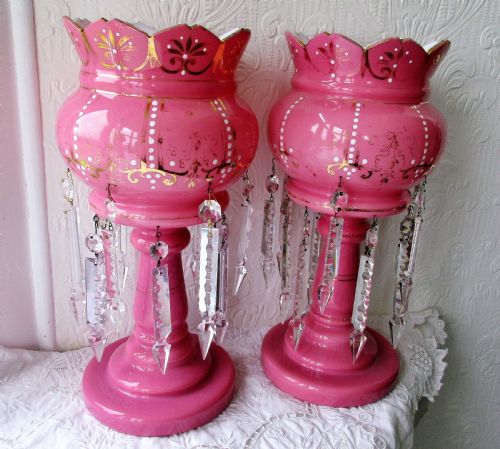
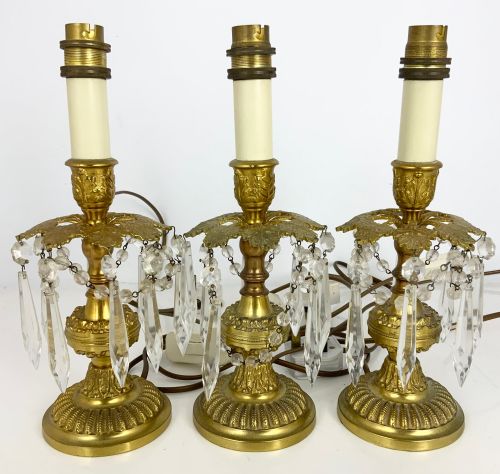
The versions most commonly met on this page are Victorian glass table lustres and mantel lustres, alongside occasional pairs of brass candlesticks and chandeliers dressed with similar hanging prisms. They appear in rich hues of green and pink glass, as well as clear cut crystal.
Origins span the nineteenth and early twentieth centuries, drawing on styles such as French Rococo Revival, French Classical, and early twentieth-century interpretations. Makers utilised gilt brass, ormolu, and heavy moulded glass to create substantial decorative statements.
Materials and construction methods
Makers shaped glass and crystal through blowing and heavy cutting, creating the faceted surfaces necessary to catch and disperse light effectively. These glass bodies are frequently paired with cast brass, gilt metal, and ormolu mounts.
Hanging glass prisms are attached to the main body using delicate wire loops or metal pins threaded through drilled apertures in the glass. This allows the drops to sway and chime softly with air currents in the room.
Vintage Drop Prism Lusters Retail Price Guide 2026
Typical asking prices for vintage drop prism lusters among the pieces listed under this phrase on Sellingantiques today, from the lower quarter to the upper quarter. They describe what is for sale here now, not the wider market.
Listings feature items from the Regency period through to the early twentieth century, showcasing glass, brass, and cut crystal.
Distinctions in quality
Quality rests heavily on the depth of the glass cutting and the weight of the metal components, with heavier cast brass and deeply refractive cut crystal sitting at the upper end. Finer pieces display crisp facets on every drop and well-balanced proportions between the central column and the hanging prisms.
The integrity of the ensemble matters significantly, particularly whether the hanging drops match the body and retain their original configuration. Variations also arise in the richness of coloured glass used in the body, ranging from translucent pinks and greens to opaque hues.
The Vintage Drop Prism Lusters Glossary
- Lustre
- A decorative tabletop candleholder hung with glass prisms that catch and reflect light. They were popular in Victorian parlours for both their appearance and their optical effects.
- Prism
- A cut glass pendant suspended from the rim or body of a lustre. These drops are faceted to refract candlelight.
- Ormolu
- Gilt bronze or brass mounts applied to decorative objects. This technique gives metalwork a rich golden finish.
- Mantel lustre
- A specific form designed to sit upon a fireplace mantelpiece, usually in matched pairs. They often feature elaborate enamel or gilt decoration on the glass body.
Vintage Drop Prism Lusters: Frequently Asked Questions
What are vintage drop prism lusters?
These decorative objects are ornamental candleholders adorned with hanging glass drops designed to refract light. They serve as striking focal points on mantelpieces and side tables.
Most examples date from the nineteenth and early twentieth centuries, incorporating materials like cut glass, brass, and ormolu.
How were lustres used originally?
Victorian households placed them on mantelpieces and tables to brighten rooms by multiplying the flickering light of candles. The hanging prisms moved and sparkled in the draughts of the room.
They functioned primarily as decorative status symbols rather than utilitarian light sources during periods when artificial lighting was scarce.
How do I clean vintage glass lusters?
Cleaning requires patience and mild soapy water applied gently with a soft cloth to protect the glass and gilt surfaces. Prisms can be unhooked individually for thorough washing.
Harsh chemical cleaners and abrasive cloths must be avoided to prevent damage to the historic metal finishes and glass facets.
How do I date a pair of lusters?
Dating relies on observing the weight of the glass, the style of the metal mountings, and the colour palette of the piece. Victorian examples often feature rich green or pink glass paired with heavy brass.
Early twentieth-century pieces lean towards simpler chandelier forms or lighter cut crystal designs without the ornate Victorian colouring.