




Vintage Drinks Waiter Tray
A vintage drinks waiter tray brings period charm to home entertaining, offering a sturdy surface for cocktails and glassware.
Vintage Drinks Waiter Tray
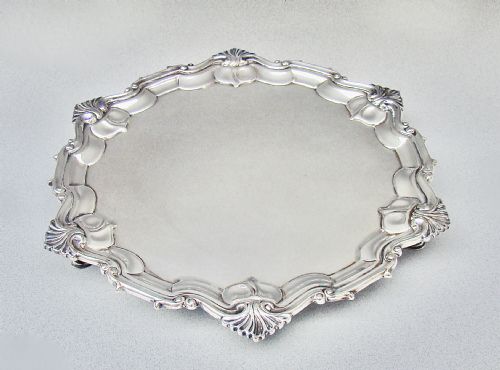
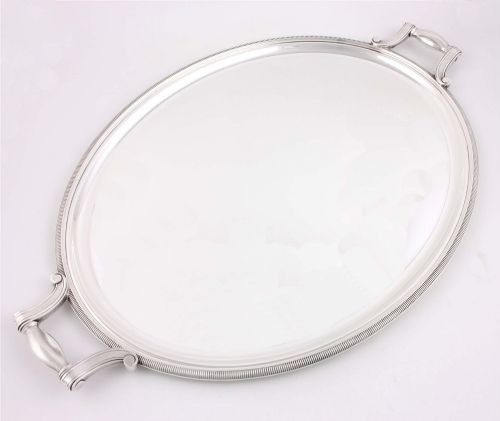
A vintage drinks waiter tray serves as a functional platform for glasses, decanters, and cocktail shakers during gatherings. The selection ranges from compact circular salvers to large oval butler trays designed for substantial service.
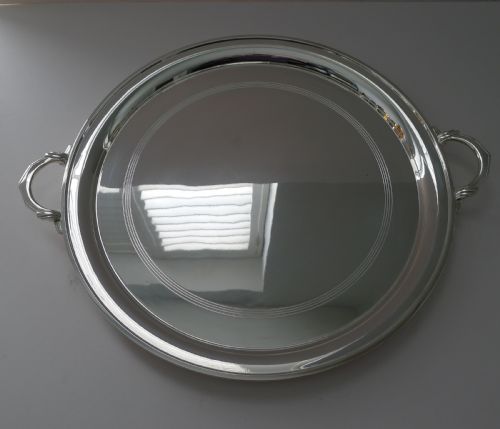
Most examples found here date from the Victorian and Edwardian eras through to the Art Deco period of the twentieth century. Makers fashioned these utilitarian objects in various forms, including traditional tea trays, gallery trays with raised pierced borders, and occasional serving tables.
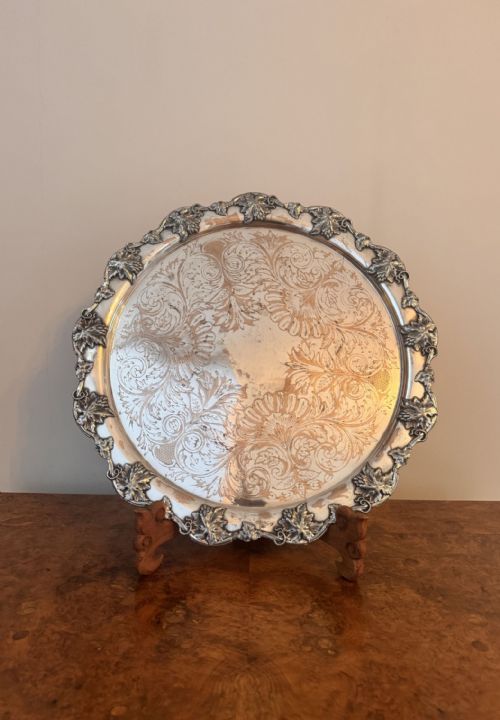
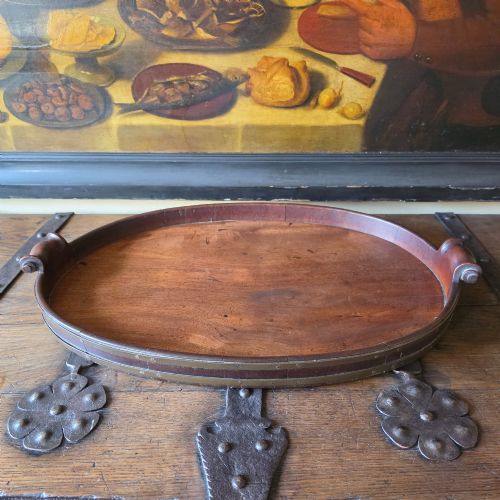
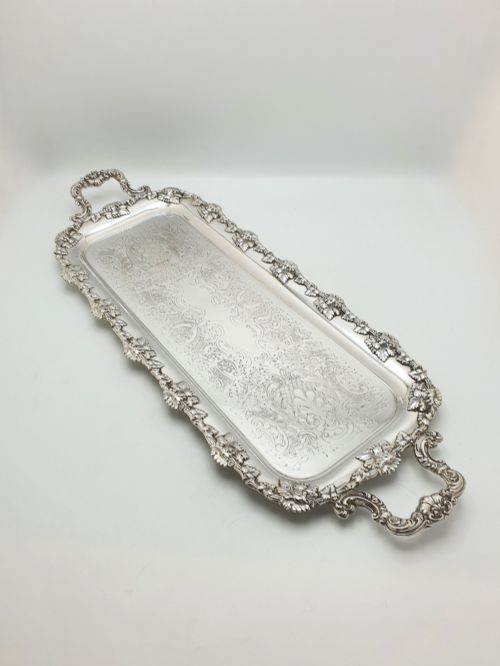
Originating primarily from English workshops, these pieces encompass formal silver-plated designs alongside occasional wooden variations like mahogany dumb waiters. Buyers encounter everything from simple engraved surfaces to elaborate pieces bearing detailed cast borders.
How they were made
Makers utilised silver plate, electroplated nickel silver (EPNS), and base metals as the foundation for the majority of these serving pieces. Artisans also worked with solid woods such as mahogany for specialised table forms and incorporated brass and copper details.
Surface ornamentation relied on techniques like hand engraving, engine turning, and applied chased borders featuring grapevines or geometric motifs. Manufacturers often mounted handles securely to the main body to withstand the weight of heavy glassware.
Listings feature silver plate, base metals, copper, brass, and mahogany across forms from the 18th century to the 1960s.
What varies in quality
The distinction between standard items and exceptional examples often lies in the weight of the base metal and the crispness of the engraved decoration. Substantial gauge silver plate provides greater durability over decades of use compared to thinner plating.
Master silversmiths and established firms applied superior attention to detail in the casting of handles, feet, and raised rims. The integration of maker marks from recognised manufacturers adds verifiable pedigree to the construction.
Keith Murray For Mappin & Webb·William Hutton & Sons·Christofle·J B Chatterley & Sons·Walker & Hall·James Dixon & Sons·Peters Hamburg·Elkington·Atkin Brothers·Gillows
The Vintage Drinks Waiter Tray Glossary
- Salver
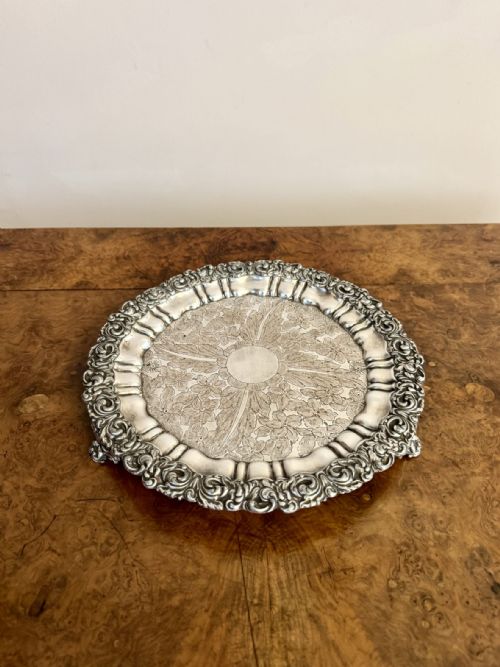
- A flat tray, typically made of silver or silver plate, used for serving food or drinks. These pieces often rest on small feet and feature an engraved centre.
- Gallery tray
- A tray surrounded by a pierced or pierced-metal gallery wall designed to prevent items from sliding off the edge. This style became particularly popular during the Edwardian period.
- Electroplated nickel silver
- A common base material, abbreviated as EPNS, formed by depositing a layer of silver onto a nickel silver alloy. This technique allowed makers to produce durable tableware efficiently.
- Engine turning
- A mechanical decoration technique that produces precise geometric patterns across the metal surface. Makers utilised this method to reduce glare and hide minor handling marks.
- Old Sheffield plate
- An early composite material made by fusing a thin sheet of sterling silver to a thicker copper core. Pieces created with this method show distinctive copper lines where the metals meet.
Vintage Drinks Waiter Tray: Frequently Asked Questions
How do I clean a silver plated drinks tray?
Use a soft cloth and a specialised silver cream to gently remove tarnish without scrubbing the plated surface too hard. Avoid harsh abrasive cleaners that can wear away the silver layer over time.
Rinse the tray thoroughly with lukewarm water and dry it immediately with a lint-free cloth to prevent water spots from forming on the metal.
Can I use these trays for daily serving?
Most silver-plated and metal trays are structurally robust enough for regular use during parties or family gatherings. Ensure you lift heavier pieces by their handles and avoid cutting food directly on the surface.
Permanent placement of wet glassware can leave rings, so wipe the tray down after your guests leave to maintain the finish.
What is the difference between a salver and a tray?
Salvers generally refer to circular serving platters that stand on small feet and display decorative engraving on the top surface. Trays often include handles and serve a broader utility for carrying multiple glasses.
Both forms belong to the wider category of serving wares, though salvers historically functioned for presenting letters or calling cards.
How do I identify the date of a silver plated tray?
Look closely at the surface for maker stamps, registry numbers, or manufacturing marks near the rim or underside. Different firms used specific punch marks that correspond to active production decades.
The overall aesthetic style, such as geometric Art Deco lines or floral Edwardian engraving, also provides strong clues to the period of creation.