
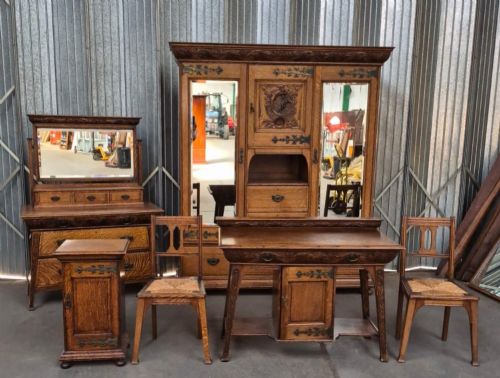


Vintage Dressing Table Chair
These vintage dressing table chair pieces offer a practical and decorative seat for a bedroom or vanity, shaped by decades of traditional craftsmanship.
Vintage Dressing Table Chair
A vintage dressing table chair encompasses various seating options designed for a vanity, dressing room, or bedroom. The pieces on this page span several periods, including Victorian, Edwardian, and Art Deco eras, reflecting shifting domestic habits.
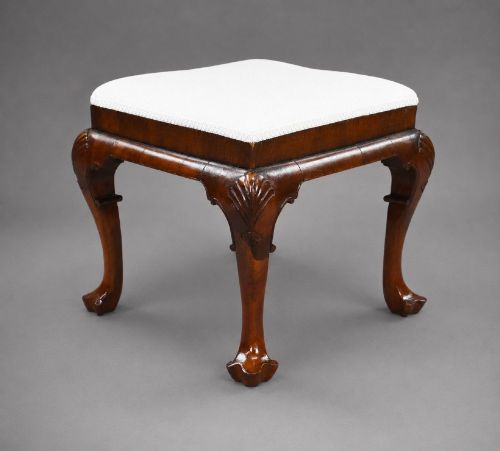
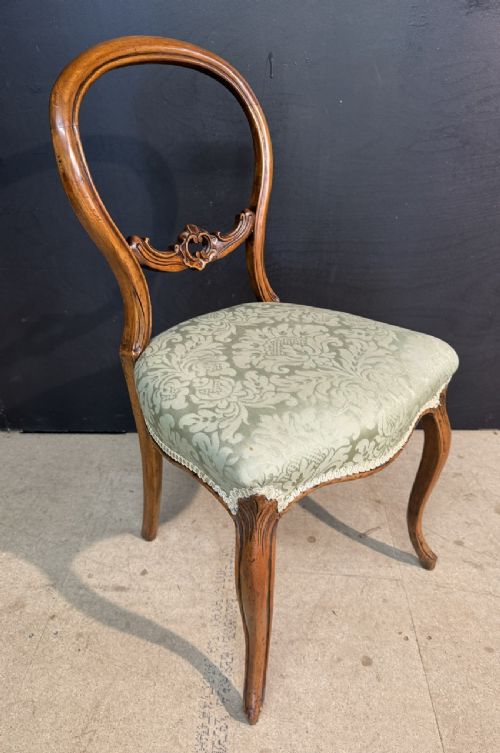
Forms range from compact stools and side chairs to armchairs and footstools, created from origins in the nineteenth and twentieth centuries. Walnut and mahogany predominate, paired with styles such as Queen Anne Revival, Louis XV style, and Arts and Crafts.
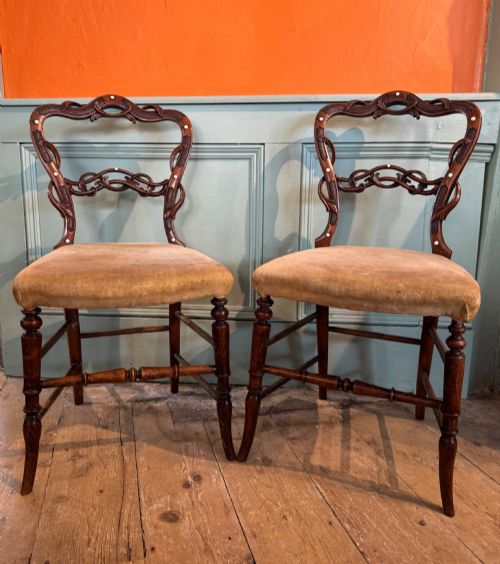
Buyers frequently encounter compact stools alongside side chairs and armchairs equipped with upholstered seats. These designs accommodate domestic spaces where a low profile or specific period aesthetic remains desirable.
Materials and construction
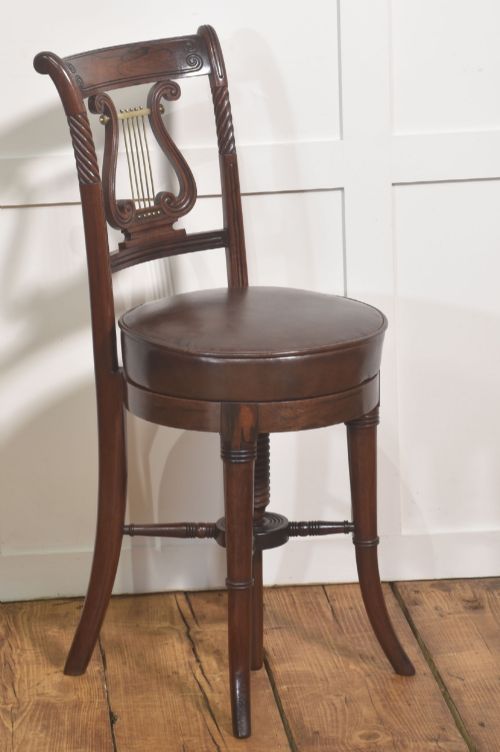
Makers utilised solid timbers such as walnut, mahogany, oak, and sycamore for the frames, often employing hand-carved details or inlaid veneers. Structural support relies on traditional joinery, sometimes supplemented by brass fittings or adjustable mechanisms.
Upholstery materials vary from leather and velvet to new flowery top covers, tweed linen, and needlepoint. These textiles cover padded seats designed for frequent use in domestic boudoirs and bedrooms.
One clever piece comes with built-in storage beneath the seat, perfect for hiding secret vanity powders.
Distinguishing quality
The standard of a vintage dressing table chair rests on the crispness of its carved woodwork, the stability of its frame joints, and the integrity of its timber. Examples featuring sophisticated stylistic details like cabriole legs or scroll-carved backs demonstrate greater attention by the original maker.
The condition and authenticity of the upholstery materials, whether preserved historical textile or renewed fabric, influence the overall character of the piece. Refined finishing touches, such as inlaid veneers or turned elements, elevate simpler structural forms.
Hille
The Vintage Dressing Table Chair Glossary
- Cabriole leg
- A furniture leg that curves out and then in, resembling the legs of an animal. This design feature appears frequently on Queen Anne style and eighteenth-century inspired seating.
- Boudoir stool
- A small, low seat intended for a private dressing room or bedroom. These pieces often feature decorative painted finishes or upholstered tops.
- Needlepoint
- A type of canvas work embroidery used for upholstery. It provides a textured, decorative surface commonly found on period stool tops.
- Side chair
- A chair without arms, designed to sit at a desk, dressing table, or against a wall. They offer a compact footprint for smaller rooms.
- Inlaid
- A technique where contrasting materials are set into the surface of wood to form decorative patterns. Edwardian pieces frequently utilise this method on mahogany frames.
Vintage Dressing Table Chair: Frequently Asked Questions
What is a dressing table chair?
A dressing table chair is a low seat or stool designed to fit beneath a vanity or dressing table for grooming.
These pieces range from simple wooden stools to upholstered armchairs and side chairs matching bedroom suites.
How do I choose the right height?
Measure the clearance underneath your dressing table to ensure the chair or stool slides in comfortably.
Some period examples feature adjustable mechanisms to accommodate different table heights and user preferences.
Are these chairs suitable for daily use?
Most pieces are built from sturdy hardwoods like mahogany, walnut, and oak, making them durable for regular seating.
Checking the frame stability and upholstery condition helps determine suitability for everyday vanity use.
How do I date a dressing table chair?
Dating relies on stylistic clues such as cabriole legs, inlaid woodwork, carved motifs, and the choice of primary timber.
Victorian, Edwardian, and Art Deco examples each display distinct decorative vocabularies associated with their respective periods.