
Vintage Dresser Base
A vintage dresser base offers practical low-level storage with a sturdy top surface, bridging country utility and formal dining room tradition.
Vintage Dresser Base
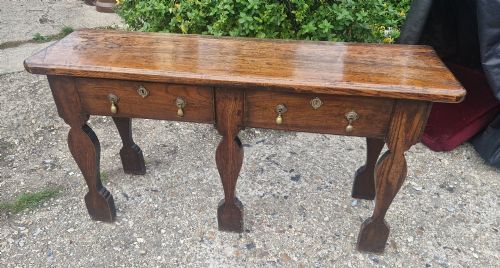
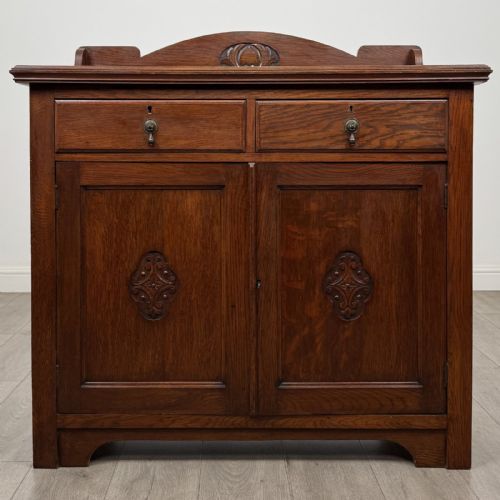
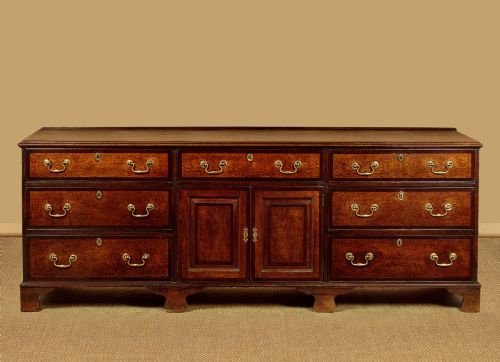
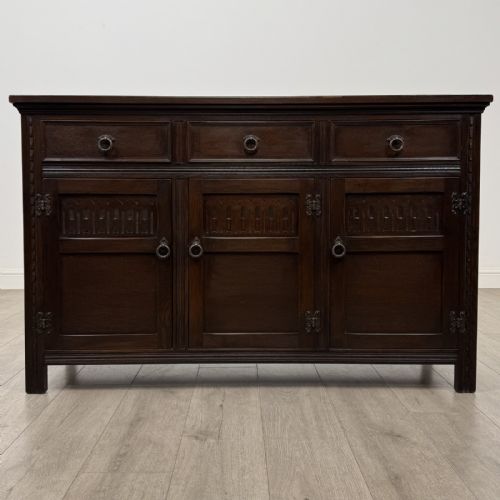
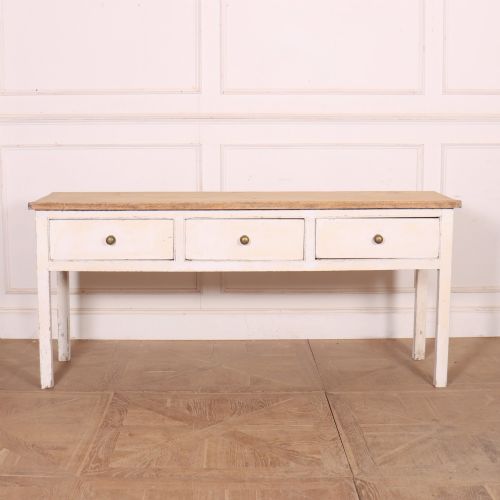
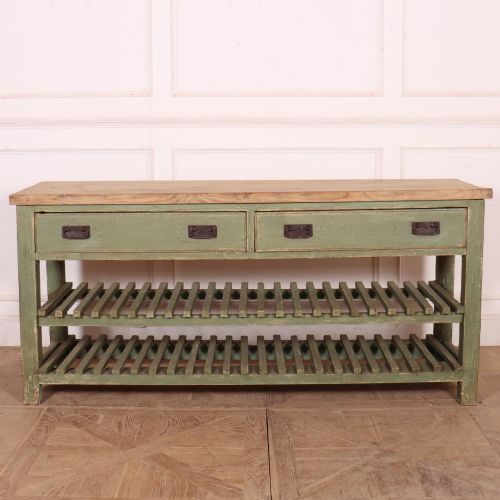
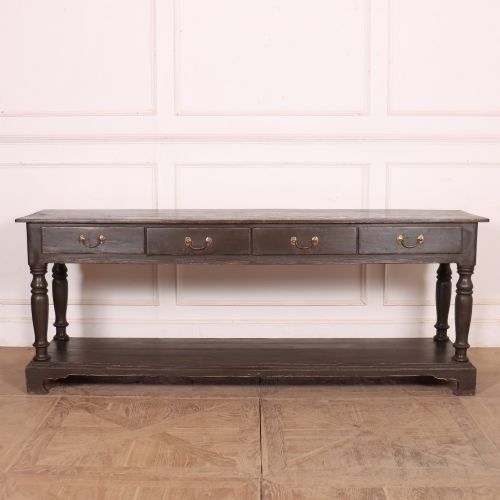
A vintage dresser base provides a long, low surface for serving and storage, typically fitted with a run of drawers above cupboards or an open potboard below. These foundational pieces of furniture appear frequently in solid oak, pine, and mahogany across centuries of British craftsmanship.
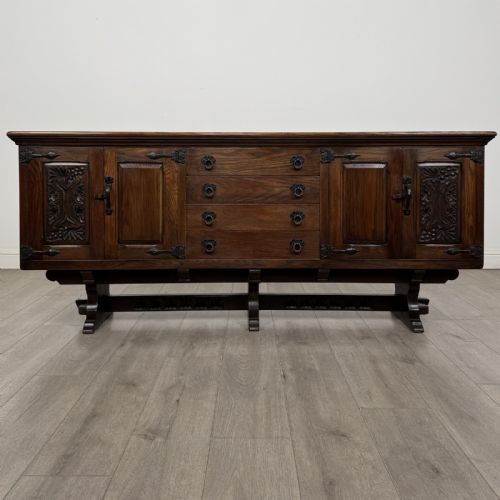
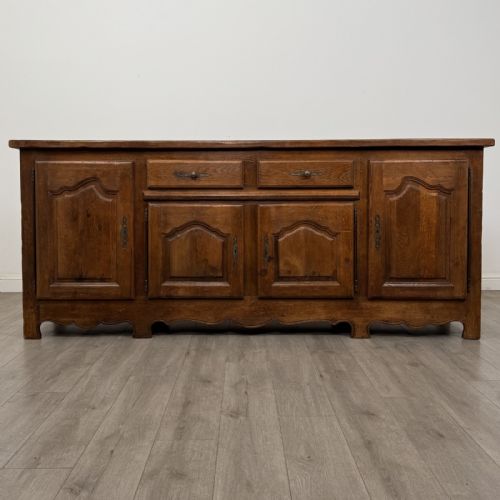
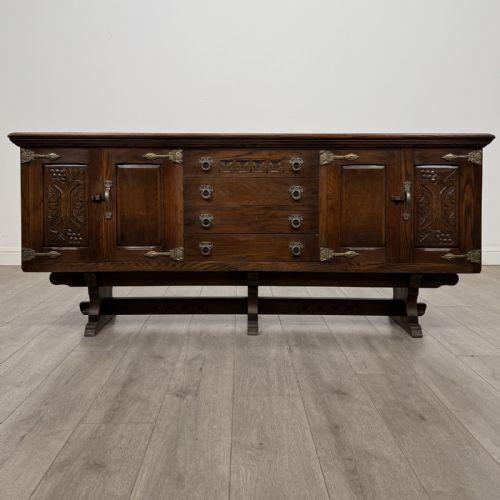
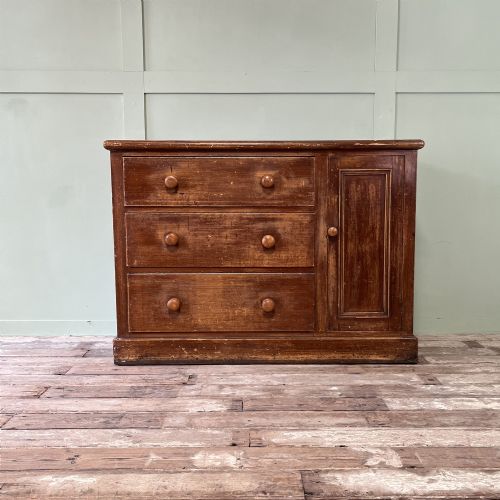
The selection ranges from robust 18th-century country pieces and regional Welsh or Cheshire formats to Edwardian revival iterations and Arts and Crafts designs. Buyers encounter everything from scrubbed pine kitchen units to deeply carved Jacobean revival sideboards and Georgian serving tables.
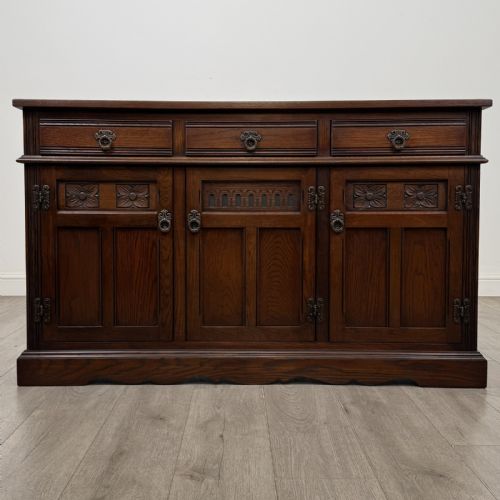
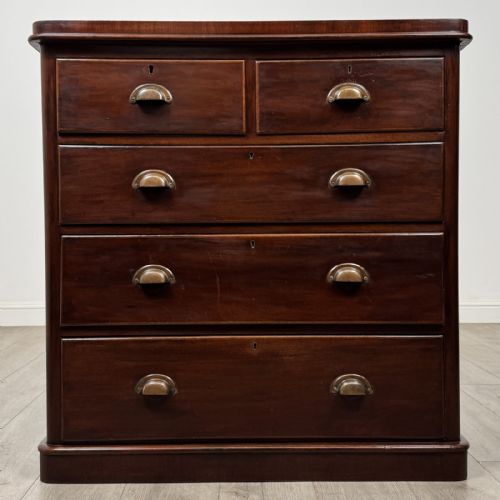
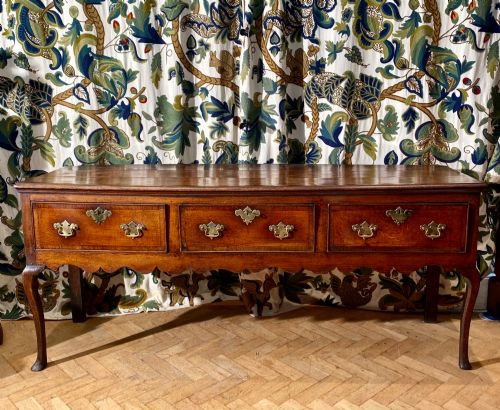
Regional variations introduce distinct character, such as Lancashire potboard bases and Scottish configurations. Many examples integrate brass cup handles, raised galleries, or inlaid detailing alongside traditional panelled doors.
Materials and construction
Construction relies heavily on solid native timbers, chiefly oak and pine in country workshops alongside mahogany for finer urban examples. Carpenters utilised traditional joinery methods, incorporating pegged mortise and tenon frames to ensure long-term stability.
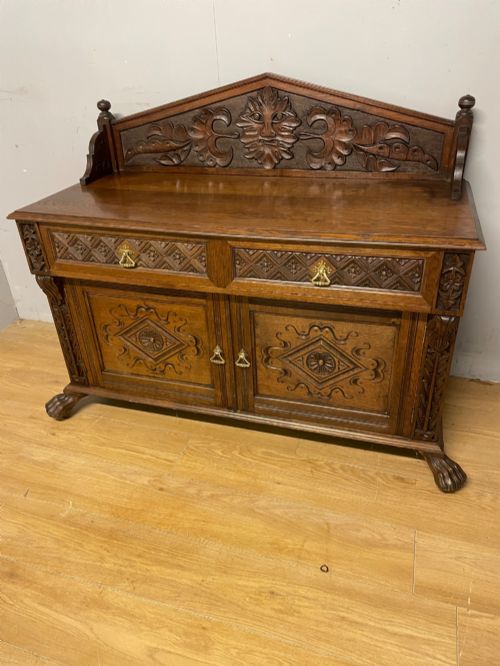
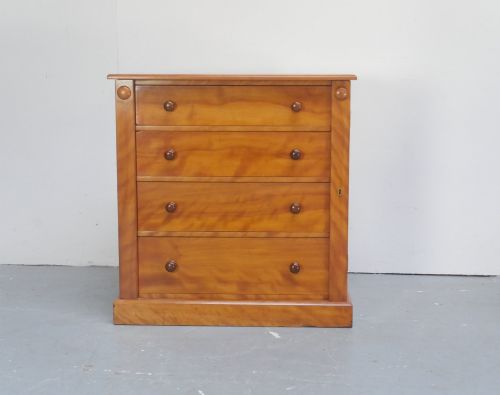
Surface treatments vary from waxed finishes on scrubbed pine and oak to polished flame mahogany veneer on formal pieces. Decorative elements include hand-carved green man motifs, linenfold panelling, and applied geometric mouldings typical of revival styles.
Keep an eye out for carved green man decorations peering out from the woodwork.
Assessing the standard
Quality rests on the integrity of the timber selection and the restraint of the carving. Superior examples display honest patination from decades of domestic use, retaining their original brass hardware and untouched drawer linings.
Structural honesty distinguishes finer specimens, where drawer runners operate smoothly and timber movement is accommodated naturally. Heavy alterations or mismatched hardware detract from the historical coherence of a piece.
The Vintage Dresser Base Glossary
- Potboard
- An open lower shelf beneath a dresser base traditionally used for storing pots and heavy kitchen utensils.
- Dresser base
- A low sideboard comprising drawers and cupboards without the upper plate rack of a traditional kitchen dresser.
- Raised gallery
- A decorative vertical timber upstand attached to the rear edge of the top surface to prevent items from sliding off.
- Linenfold
- A style of wood carving resembling folded vertical parchment, frequently seen on Tudor and revival cabinet doors.
- Stretcher base
- A horizontal timber framework connecting the lower legs to reinforce the structural stability of heavy tables and sideboards.
Vintage Dresser Base: Frequently Asked Questions
How do I use a dresser base in a modern home?
A dresser base serves brilliantly as a sideboard in a dining room, a television console in a living space, or a vanity unit in a large bathroom.
The deep drawers and enclosed cupboards swallow clutter easily while the broad timber top provides ample display area for lamps and ceramics.
What is the difference between a dresser base and a sideboard?
The terms often overlap in modern dealing, but a traditional dresser base stems from a country kitchen heritage, sometimes featuring an open potboard.
Sideboards generally evolved from more formal dining room lineages, often sitting higher on taller legs with less emphasis on open lower storage.
How can I tell an 18th-century piece from a revival copy?
Early pieces display hand-cut joinery marks, irregular timber thicknesses, and deep natural patination built up through centuries of wax and friction.
Revival furniture from the Edwardian era or the 1920s usually exhibits machine-sawn components, uniform timber grain, and factory-standard hardware fixings.
Are pine or oak dresser bases more durable?
Oak is a harder and denser hardwood that resists heavy knocks and supports substantial weight without sagging over long spans.
Pine is softer and lighter, yielding a more relaxed country aesthetic that absorbs daily wear gracefully when waxed and polished properly.