

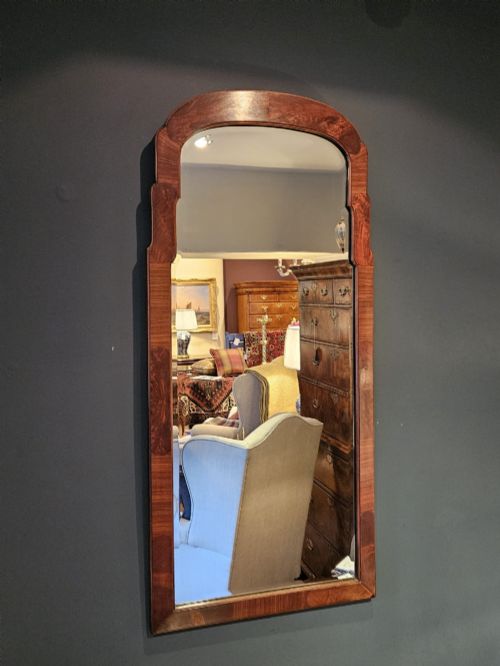
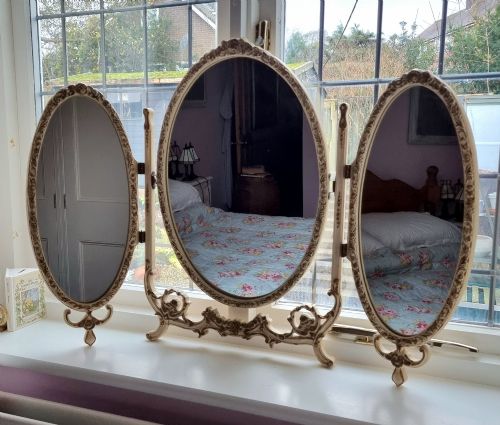
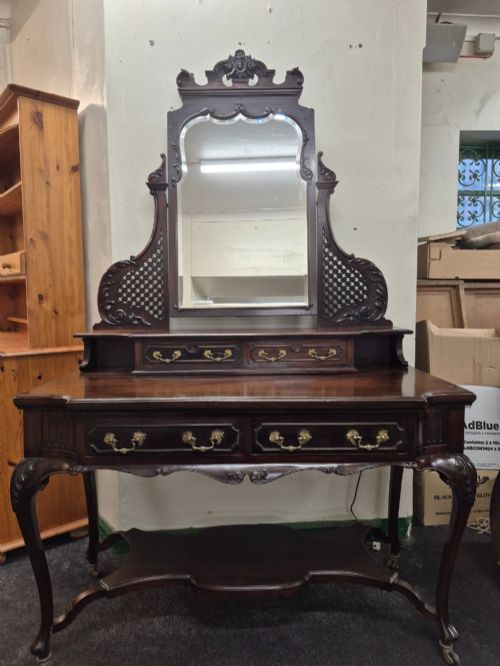
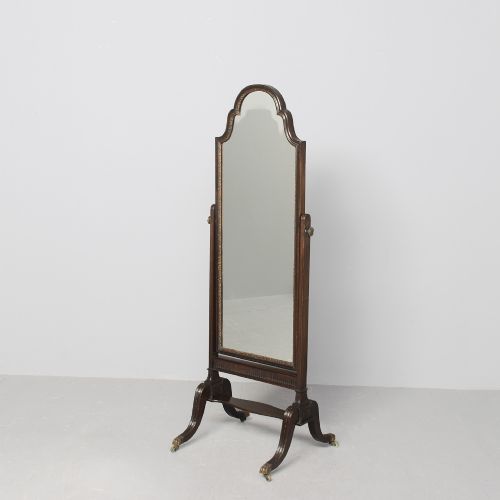
Vintage Dress Mirror
A vintage dress mirror stands ready to reflect a full figure or catch the morning light in walnut, mahogany, and brass.
Vintage Dress Mirror
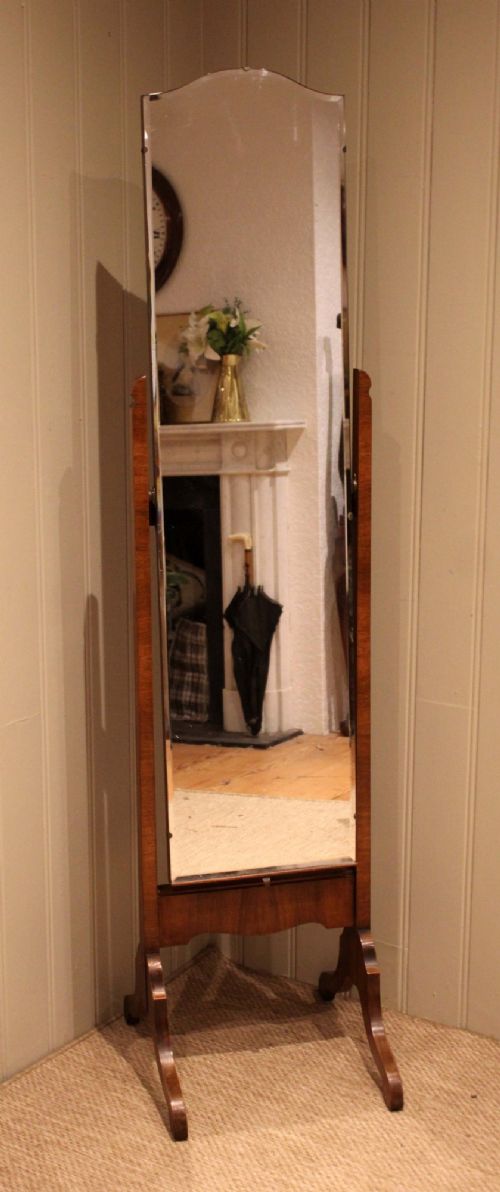
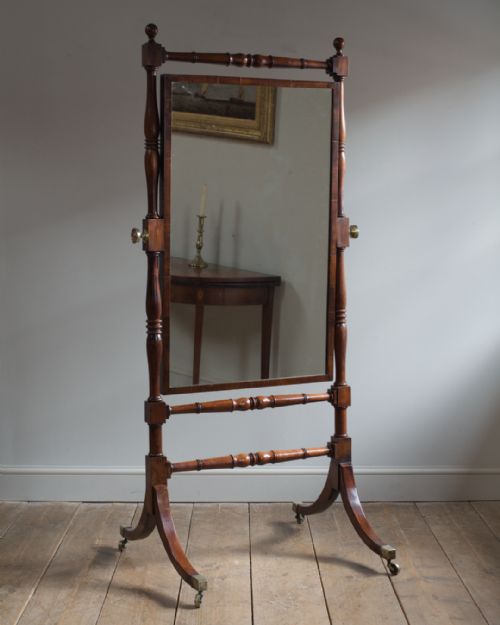
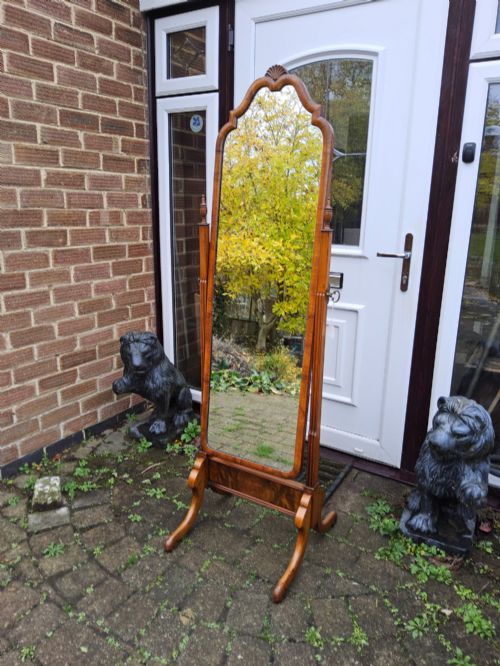
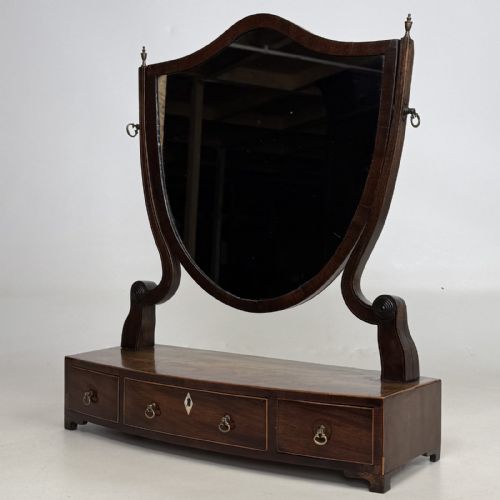
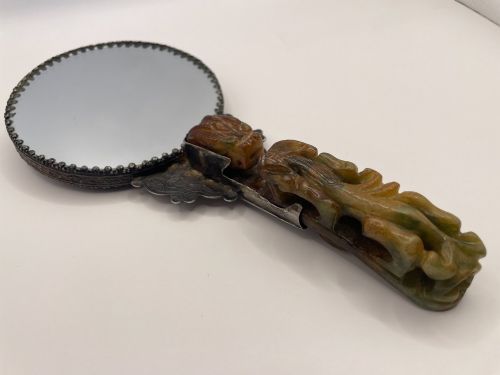
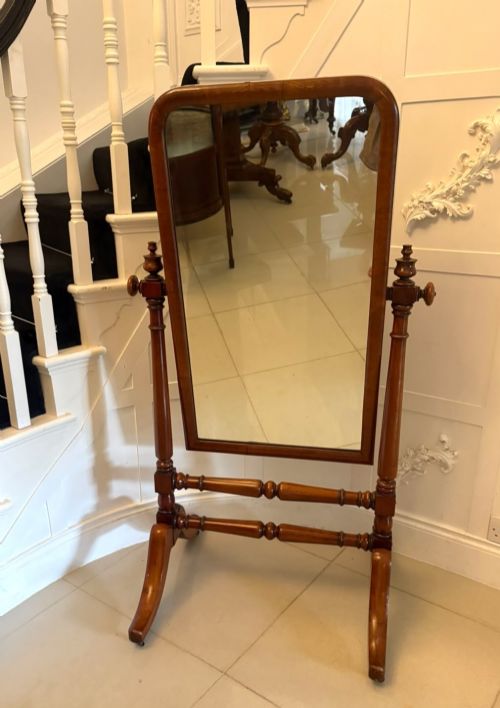
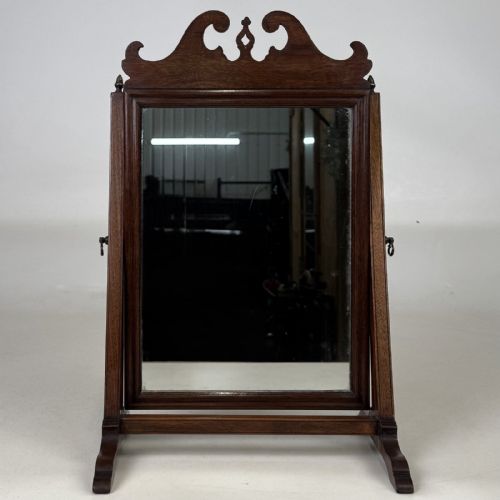
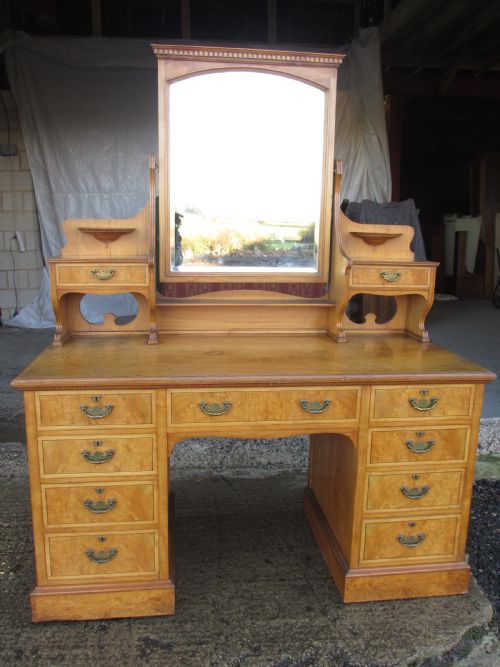
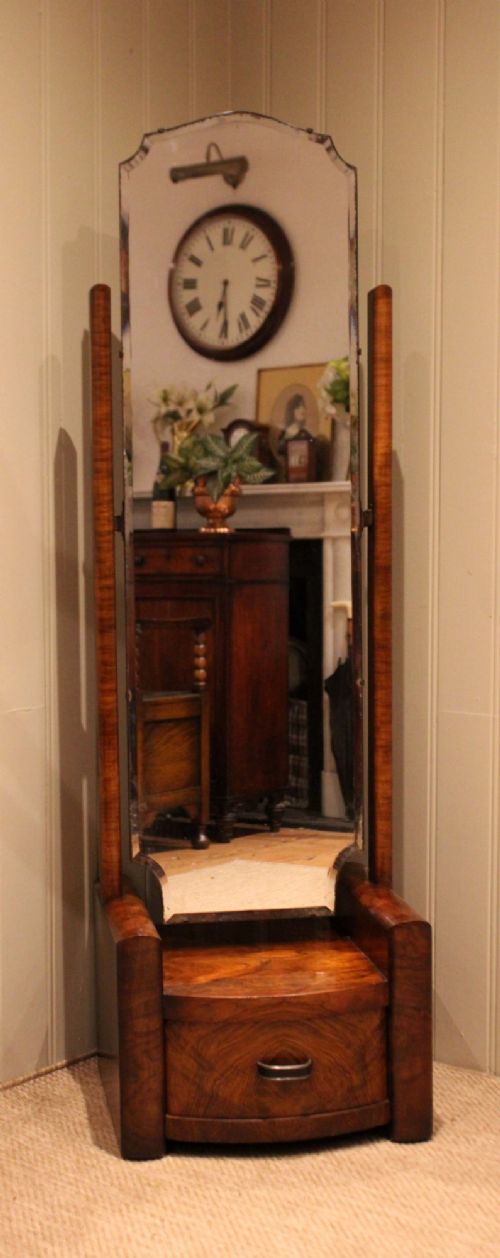
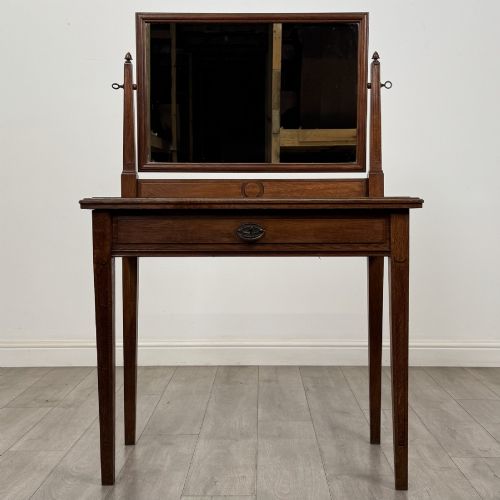
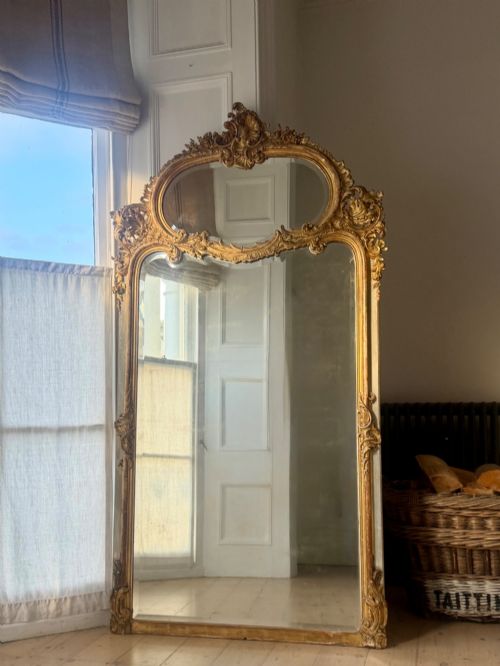
A vintage dress mirror serves as the central piece for checking attire, appearing across this page in formats from tall floor-standing cheval mirrors to tabletop swing glasses and compact hand mirrors. Buyers seek these objects to anchor a bedroom or dressing room with practical reflection and period charm.
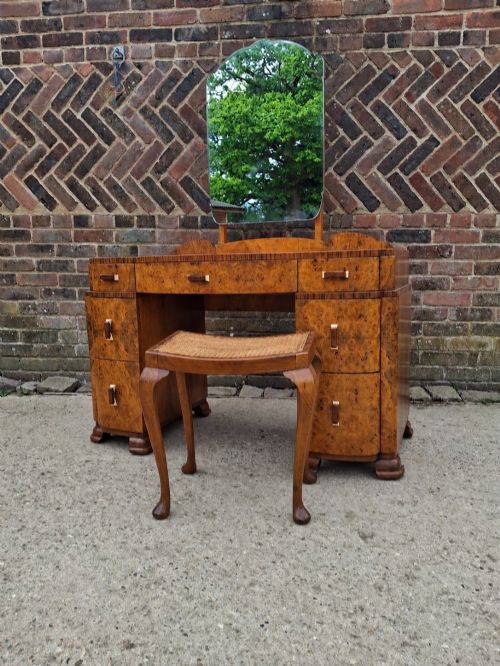
The selection ranges from large Victorian mahogany cheval frames resting on stable feet to Edwardian inlaid dressing mirrors and geometric Art Deco vanities from the nineteen-thirties. Walnut, mahogany, and satinwood dominate the standing and table forms, while smaller hand-held variants utilise silver, rosewood, and bakelite.
Freestanding cheval mirrors allow an observer to tilt the glass to various angles for a complete view of clothing. Dressing table mirrors sit atop matching vanities or chest units, offering a smaller reflective surface framed by polished timber.
Materials and Construction
Cabinetmakers constructed these frames using solid and veneered hardwoods, selecting figured mahogany, burr walnut, and satinwood for their rich grain patterns. Brass pivots, screws, and mounts secure the swing mirrors to their upright supports, allowing the glass to tilt smoothly.
Glass production relied on traditional silvering methods, and older examples occasionally exhibit mercury glass or subtle imperfections within the reflection. Inlaid stringing in lighter woods, mother-of-pearl accents, and carved mahogany details frequently decorate the structural uprights and bases.
Vintage Dress Mirror Retail Price Guide 2026
Typical asking prices for vintage dress mirror among the pieces listed under this phrase on Sellingantiques today, from the lower quarter to the upper quarter. They describe what is for sale here now, not the wider market.
Listings span the nineteenth and twentieth centuries, featuring materials such as mahogany, walnut, brass, satinwood, and bakelite across various table and floor forms.
Assessing Craftsmanship
Quality rests in the weight and stability of the timber frame, the clarity of the mirror plate, and the integrity of the brass pivot hardware. Superior examples maintain tight joinery in the upright supports and secure footing that prevents wobbling during adjustment.
Finer pieces display carefully matched wood veneers, such as burr walnut or figured mahogany, alongside hand-carved mouldings rather than cast substitutes. The silvering behind the glass plate also indicates standard; uniform reflection without heavy spotting or foxing distinguishes better-preserved mirrors.
Flashman & Co·Shapland & Petter
The Vintage Dress Mirror Glossary
- Cheval mirror
- A large, freestanding mirror suspended in a frame on pivots that allow it to swing vertically. This form permits a full-length view of the person standing before it.
- Swing mirror
- A smaller glass mounted on horizontal pivots between two upright posts, typically resting on a dressing table or bureau. It allows the user to tilt the angle of reflection.
- Mercury glass
- An early type of mirror glass produced by pouring a liquid mercury and tin amalgam between double-walled blown glass. It creates a distinctive deep reflection with scattered dark speckling.
- Stringing
- Thin inlay lines of contrasting wood set flush into the surface of a furniture piece. Edwardian and Georgian cabinetmakers used this technique to define panel edges.
Vintage Dress Mirror: Frequently Asked Questions
What is a cheval mirror?
A cheval mirror is a floor-standing glass held within a vertical frame by side pivots, allowing the user to tilt the entire plate.
These pieces were designed for bedrooms and dressing rooms to provide a full-length view of an outfit.
How do I date a dressing mirror?
Dating relies on timber choices, construction joints, and decorative styles such as Georgian mahogany, Victorian carving, or Art Deco geometry.
Hardware like brass pivots and the condition of the mirror plate also offer clues to the period of manufacture.
Where should I place a dressing mirror?
Floor-standing cheval mirrors suit corners or empty wall spaces in bedrooms where full-length reflections are useful.
Tabletop swing mirrors rest securely on top of chests of drawers, dressing tables, or sideboards to assist with grooming.
Are antique mirrors fragile?
While the timber frames are generally robust, the older glass plates require careful handling during relocation.
The original silvering behind the glass can be sensitive to moisture and harsh chemical cleaners.