

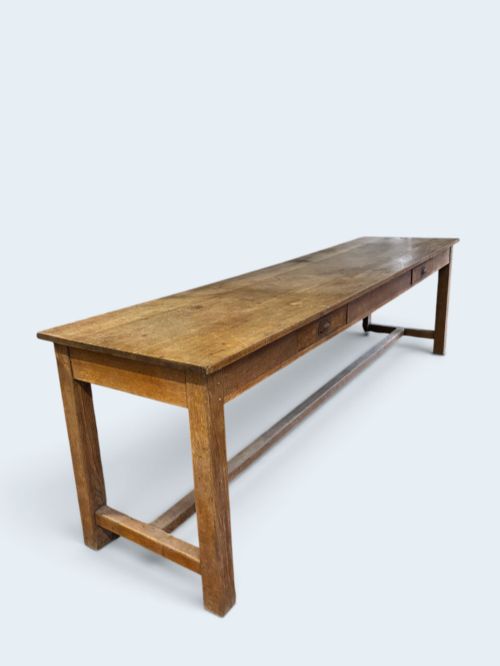
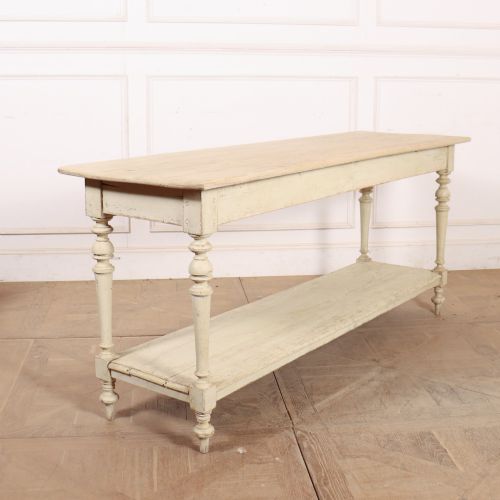


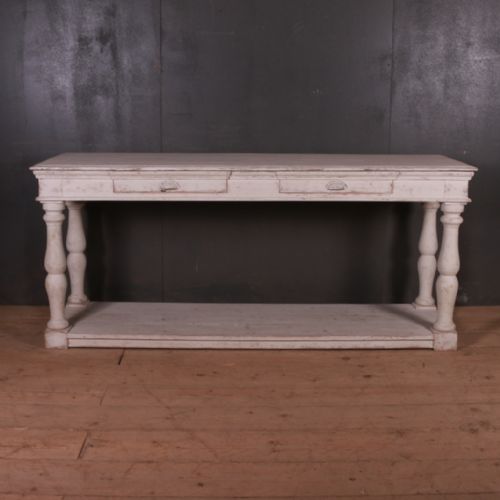

Vintage Drapers Table
A vintage drapers table brings working-century scale and honest timber into a modern room, ready for daily service.
Vintage Drapers Table
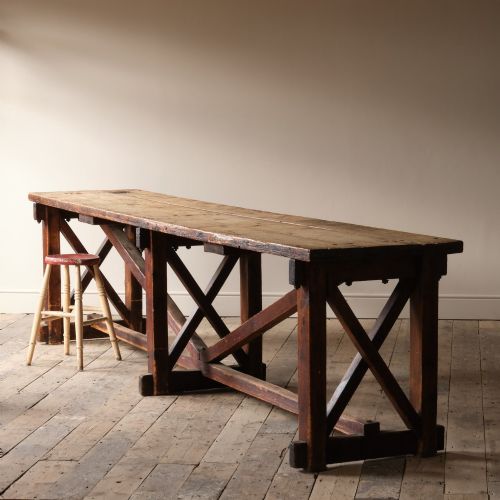
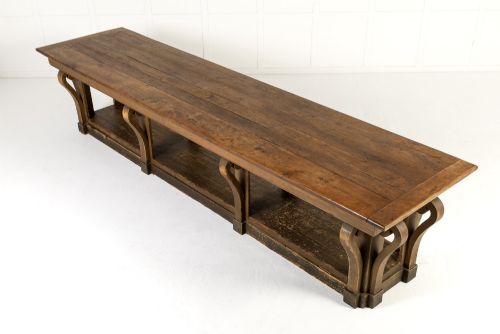
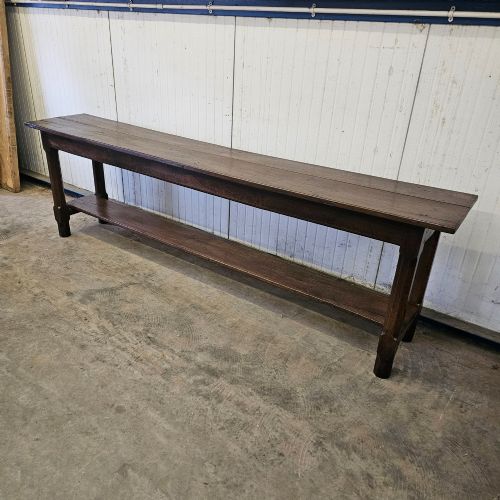
A vintage drapers table is a long, narrow work surface originally built for textile shops and merchant trading. These pieces provide substantial length while maintaining a shallow depth, making them adaptable for hallways, kitchens, and living spaces.
Most examples found here originate from nineteenth-century France, alongside pieces from England and Sweden. The forms span narrow console tables, low preparation benches, and monumental tables reaching several metres in length.
Makers designed these items for heavy commercial use rather than formal display. Consequently, surviving pieces carry the honest marks of daily labour across their tops and frames.
How they were made
Carpenters built these tables using solid timber frames of pine and oak, often topped with thick boards designed to withstand constant handling of heavy cloth. Joints were pegged or pegged-and-tenoned to ensure stability under working loads.
Secondary materials such as iron, brass, and applied paint appear on specific regional variants and display stands. Bleached oak finishes and painted wood surfaces reflect both original workshop utility and subsequent domestic adaptation.
Vintage Drapers Table Retail Price Guide 2026
Typical asking prices for vintage drapers table among the pieces listed under this phrase on Sellingantiques today, from the lower quarter to the upper quarter. They describe what is for sale here now, not the wider market.
The listings show nineteenth-century origins spanning pine, oak, painted wood, iron, and brass across French, English, and Scandinavian regional styles.
What varies in quality
Quality in a vintage drapers table rests in the integrity of the timber and the proportions of the frame. Long formats that retain rigid stretchers and straight tops demonstrate superior original construction.
The character of the surface timber dictates the visual weight of the piece. Untouched scrubbed pine, bleached oak, and original painted finishes carry distinct aesthetic merits depending on the depth of the grain and the honesty of the wear.
The Vintage Drapers Table Glossary
- Pine
- A softwood commonly used for the structural carcasses and table tops of nineteenth-century utility furniture. It ages with a soft, pale patina.
- Oak
- A dense hardwood utilised for heavy-duty framing and table tops. Bleached oak variants show a lighter, scrubbed surface tone.
- Console
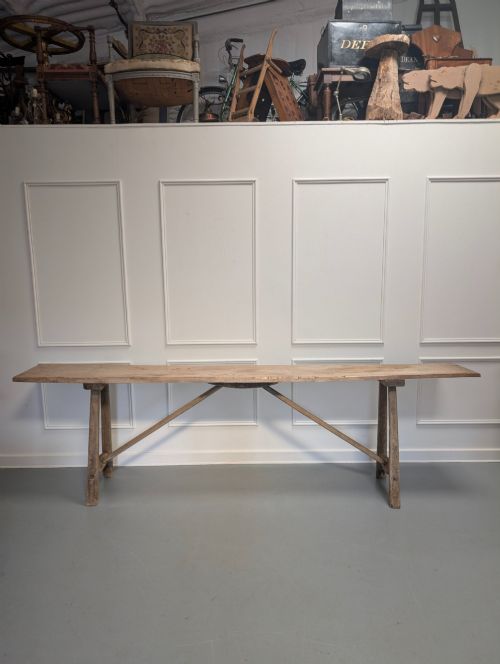
- A narrow table designed to stand against a wall. These variants offer the length of a trading table in a shallower footprint.
- Preparation table
- A heavy-duty work table built for domestic or commercial food and material handling. They share the robust proportions of merchant counters.
- Trestle table
- A table construction where the top rests on folding or fixed supports rather than four corner legs. This design provides maximum legroom along long spans.
Vintage Drapers Table: Frequently Asked Questions
What is a vintage drapers table?
A vintage drapers table is a long, narrow utility table originally used in merchant shops to measure and display textiles. They are characterised by their generous length and shallow depth.
Today, these pieces serve widely as kitchen islands, console tables, and dining surfaces in large rooms.
How do I clean a timber drapers table?
Clean the surface using a soft, dry cloth to remove dust and loose debris. Avoid harsh chemical cleaners that strip the historic finish.
For unsealed pine or oak, occasional waxing with a natural beeswax helps nourish the dry grain without creating an artificial gloss.
Are these tables suitable for everyday dining?
Many examples provide ample length and sturdy timber construction for regular meals. Their narrow proportions make them particularly useful in long, slender dining spaces.
Check the height from the floor to the underside of the rails to ensure comfortable leg clearance for chairs.
How can I tell the period of a table?
Dating relies on timber selection, tool marks, and construction methods visible beneath the frame. Nineteenth-century pieces typically feature hand-sawn boards and pegged joinery rather than modern screws.
Regional styles, such as French provincial framing or Scandinavian country forms, also offer clues to origin and era.