

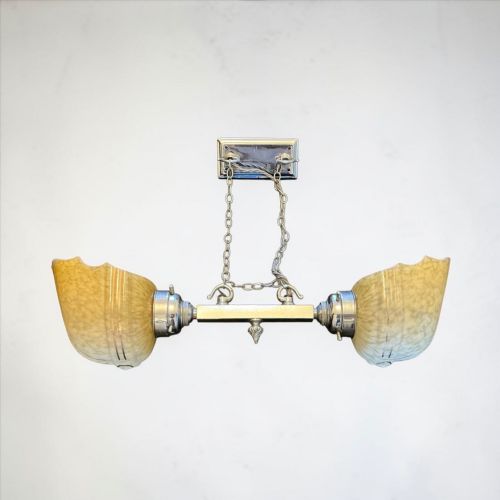


Vintage Double Pendant Light
These vintage double pendant light fixtures bring tiered illumination and period character to a room, spanning Edwardian brass and Art Deco chrome.
Vintage Double Pendant Light
When you search for a vintage double pendant light, you encounter multi-tier brass chandeliers, twin light lanterns, and industrial downlighters spanning the nineteenth century to the nineteen-forties. These pieces range from Dutch style copper designs and French gilded bronze to early prismatic Holophane pendants designed for functional interior spaces.
The selections available here lean heavily toward early twentieth century forms, notably Edwardian gothic brass styles and nineteen-thirties French chandeliers. Buyers frequently meet dual-tier configurations holding numerous lights alongside simpler twin light steel and brass lanterns.
Origin points stretch across European workshops, including Parisian pieces and Florentine polychrome works. Each object serves the dual purpose of architectural illumination and decorative period focal point.
How they were made
Constructed using traditional foundry and metalworking methods, these fixtures combine cast bronze, brass, steel, and copper frameworks. Metal components are frequently gilded, polychromed, or left in their industrial industrial metal finish.
Lighting elements incorporate blown glass globes, moulded glass, and clear crystal drops to diffuse the illumination. Prismatic glass techniques, such as those seen in Holophane pieces, direct light efficiently through specialised ribbed patterns.
Vintage Double Pendant Light Retail Price Guide 2026
Typical asking prices for vintage double pendant light among the pieces listed under this phrase on Sellingantiques today, from the lower quarter to the upper quarter. They describe what is for sale here now, not the wider market.
Current listings feature pieces spanning the nineteenth century through to nineteen-forties Parisian kitchen fittings, utilising brass, crystal, steel, and mottled glass.
What varies in quality
Quality rests in the crispness of the metal casting and the depth of the hand-finishing on bronze and brass frames. Heavier gauge metals and intricate tier construction separate substantial architectural pieces from simpler domestic variations.
The integrity of the glass elements defines the upper tier of these fixtures. Intact prismatic Holophane shades and heavy, fire-polished crystal drops command greater attention than standard replacement glass.
The Vintage Double Pendant Light Glossary
- Double Tiered
- A lighting fixture arranged with two distinct horizontal tiers of arms or lights, common in larger antique chandeliers. This design maximises illumination across grand spaces.
- Holophane
- A brand of scientific glass lighting known for its precise prismatic ribs that control glare and distribute light evenly. These shades are prized by collectors of industrial and architectural lighting.
- Gilt Metal
- Metal surfaces treated with a thin layer of gold leaf or gilt paint to simulate solid gold. It provides a warm, reflective finish characteristic of nineteenth and early twentieth century salons.
- Polychrome
- Decoration utilising multiple colours on a single surface, frequently seen in Florentine fixtures. This technique adds painterly depth to carved or cast metalwork.
Vintage Double Pendant Light: Frequently Asked Questions
How do I clean an antique glass and brass pendant?
Dust brass components gently with a soft dry cloth, avoiding harsh chemical brass cleaners that strip natural patina. Glass globes and crystal drops can be removed and washed in warm soapy water.
Ensure the fixture is completely disconnected from the mains electricity before undertaking any cleaning or maintenance work. Dry all glass thoroughly before reattaching it to the frame.
Can these vintage pendants be rewired for modern homes?
Most antique lighting fixtures require rewiring to meet contemporary safety standards and electrical codes. Professional electricians can easily update internal wiring while preserving the original historical exterior.
Retaining the original sockets and mounting hardware is often possible depending on the specific construction. Discuss preservation goals with a qualified lighting restorer before beginning work.
What rooms suit a double tiered chandelier?
Double tiered chandeliers require sufficient ceiling height and floor space to balance their substantial visual weight. They work effectively in high-ceilinged entrance halls, dining rooms, and period reception spaces.
Smaller twin light lanterns and industrial downlighters suit narrower corridors or kitchen prep areas. Match the scale of the fixture to the proportions of the room.
How do I date an Edwardian brass light?
Edwardian lighting typically dates from the early twentieth century, showing a transition between ornate Victorian revival styles and cleaner twentieth-century geometry. Look for characteristic gothic brass motifs and integrated glass globes.
Construction methods such as threaded brass components and early wiring channels help confirm the era. Comparing the style to dated examples provides a reliable chronological anchor.